Can Music Teach Patterns? A Playful Way to Learn
Can music teach patterns? Songs help young children hear repetition, predict what comes next, and build early math, language, and listening skills at home.
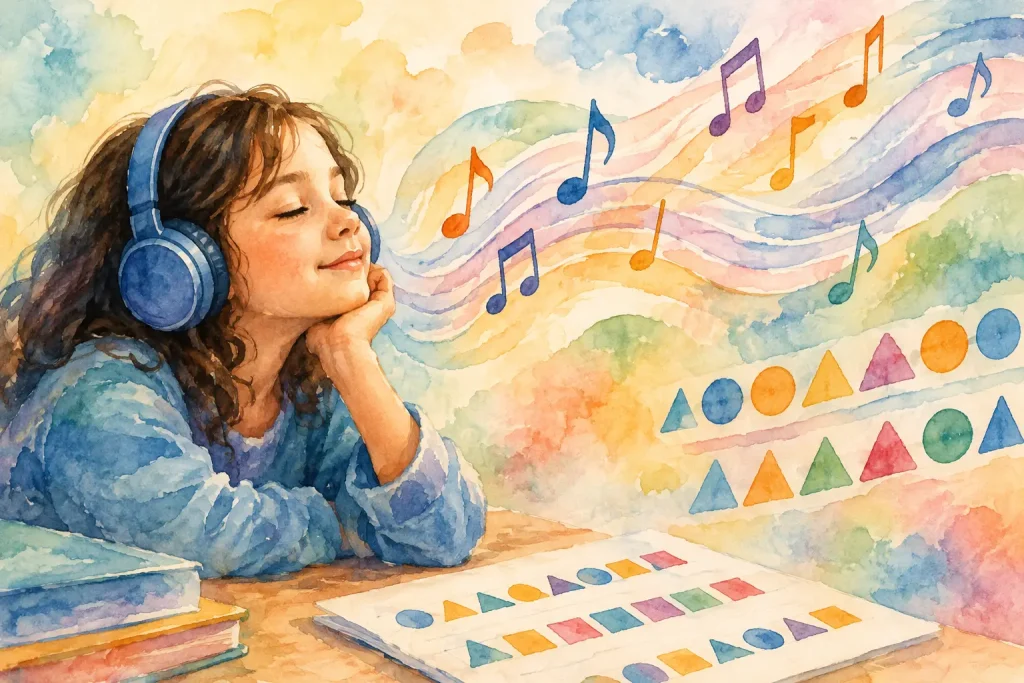
A child claps twice when a favorite song reaches the same beat. They fill in the last word of a familiar line before anyone asks. They sway, stop, and start again when the music changes. Those small moments are more than cute. They show a young brain noticing order. So, can music teach patterns? Yes. Music gives children a joyful, memorable way to hear, see, move, and repeat patterns long before they need to explain what a pattern is.
For parents, caregivers, and teachers, that matters because patterns support so many early skills. They help children make predictions, strengthen listening, build language, and prepare for early math. Best of all, music turns practice into something children want to join.
Can Music Teach Patterns? Yes, Through Repetition
A pattern is anything that repeats in a predictable way. It might be red, blue, red, blue. It might be clap, stomp, clap, stomp. In music, patterns appear everywhere: in the beat, the rhythm, the chorus, repeated words, rhymes, and movements.
When children hear a steady beat, they learn that something is happening again and again. When they sing a chorus, they recognize that the same words return. When they copy a clap pattern, they listen closely, remember what they heard, and try to reproduce it in order.
This is not about turning every song into a lesson. Young children learn especially well when learning feels like play. A happy song with a clear rhythm can invite attention without asking a child to sit still for a long time. That is useful for energetic preschoolers, shy singers, and children who learn best by moving their bodies.
Music also makes patterns easier to remember. A spoken direction can disappear quickly. Put the same words with a melody and rhythm, and children often hold onto them longer. That is why many families use songs for letters, routines, counting, and cleanup time.
The Skills Hiding Inside a Simple Song
Pattern learning is often connected with early math, but it reaches further. When a child notices that a song repeats, they are practicing prediction. They begin to expect what comes next. Prediction is a big part of reading, conversation, problem-solving, and everyday routines.
Rhyming songs support sound awareness, too. Children may hear that “cat” and “hat” share an ending sound, or that a line sounds different when one word changes. They do not need a formal explanation at first. Hearing and enjoying the sound pattern is a strong start.
Movement adds another helpful layer. A child who cannot yet describe an A-B pattern may be able to clap, tap, clap, tap. A child who struggles to stay focused during a worksheet may follow a drumbeat across the room. Their body is helping their brain understand the sequence.
There is also a social side to musical patterns. Taking turns in a call-and-response song teaches children to listen, wait, and answer. Making music together creates a shared rhythm. For a classroom, family, or community group, that can help children feel included while they practice a real learning skill.
Start With Patterns Children Can Feel
The easiest musical patterns are short and clear. Begin with two actions: clap, pat, clap, pat. Do the pattern several times while saying the actions out loud. Then pause and let your child take the next turn. If they clap when you expected a pat, keep it light. Try the pattern again, slower, and celebrate the effort.
Once that feels familiar, change one piece. Try clap, clap, pat, then repeat it. This introduces a longer pattern without making the activity feel complicated. Children often enjoy being the leader, too. Let them create an action pattern for you to copy. Even a silly pattern can build careful listening.
You can use household sounds as well. Tap a spoon on a table, shake a container of dry rice, then tap again. Ask, “What sound comes next?” A child does not need special instruments to explore rhythm. Hands, feet, tables, and safe everyday objects can make a lively little music session.
For toddlers, keep patterns very short and repeat them often. For preschool and early elementary children, add choices. Ask whether the pattern is fast or slow, loud or quiet, or whether it repeats the same way each time. Older children can create their own rhythm patterns and teach them to someone else.
Use Familiar Songs as Pattern Practice
Familiar songs work well because children can spend less energy learning the tune and more energy noticing what repeats. Pause before the final word in a repeated line and give your child time to fill it in. Sing one phrase, then invite them to echo it back. Clap the beat while you sing, then ask them to keep the beat going when you stop.
A chorus is especially useful. Point out that the chorus comes back. You might say, “We heard these words before. I think they are coming again.” This simple observation helps children connect music with the idea of repetition.
Songs with motions can make the pattern visible. If a song includes clapping, turning, waving, or marching, repeat the movements in the same order. After a few rounds, mix up the order on purpose. Children will often notice right away. That surprise can lead to a great question: “What changed?”
Alphabetical Man’s upbeat children’s music can be part of this kind of play. Choose one repeated phrase, beat, or movement from a song and make it a family challenge. The goal is not perfect performance. It is giving children a positive reason to listen, respond, and try again.
Connect Music Patterns to Daily Life
Pattern practice does not have to end when the song ends. Point out patterns during ordinary moments. At breakfast, arrange fruit in a simple color pattern. On a walk, notice steps, steps, jump, then repeat. During cleanup, use a short chant: pick up, put away, pick up, put away.
Children begin to understand that patterns are not only on a page. They are in sounds, colors, movements, routines, and words. Seeing the same idea in different places makes the learning stronger.
You can also pair music with coloring. Draw simple repeating shapes or use two or three colors in a repeating order while a steady song plays. There is no need to correct every choice. Ask children to describe what they made: “I see yellow, green, yellow, green. What do you think comes next?” Their answer matters more than whether the colors match your original plan.
Keep the Learning Joyful, Not Perfect
Music is a helpful teaching tool, but it is not a magic shortcut. Some children will quickly copy a rhythm but need more help spotting color or shape patterns. Others may understand a pattern quietly before they want to sing or perform it. It depends on age, attention, sensory preferences, and experience.
If a child seems overwhelmed by noise, lower the volume, slow the beat, or use gentle tapping instead of a full song. If they lose interest, stop before frustration takes over. A few playful minutes repeated across the week can do more than one long activity that feels like pressure.
It also helps to avoid treating mistakes as failures. When a child creates a different rhythm or movement, ask them to show it again. They may be making a new pattern of their own. Curiosity keeps the door open, and confidence helps children keep trying.
The next time a child hums a chorus, taps a table, or asks you to sing a favorite song again, join them. Listen for the repeat, add a clap, and leave a little space for them to predict what comes next. That small shared moment can help learning feel as natural as music itself.

Written by the Alphabetical Man team
We make songs, stories and a coloring book starring the superhero whose suit is made of letters. Our posts share simple, practical ideas for helping little ones love letters, music and kindness.
Meet Alphabetical Man