Why Music Education Belongs in Every Child’s Day
Music education helps children build language, confidence, focus, and connection through playful songs, rhythms, movement, and creative expression daily.
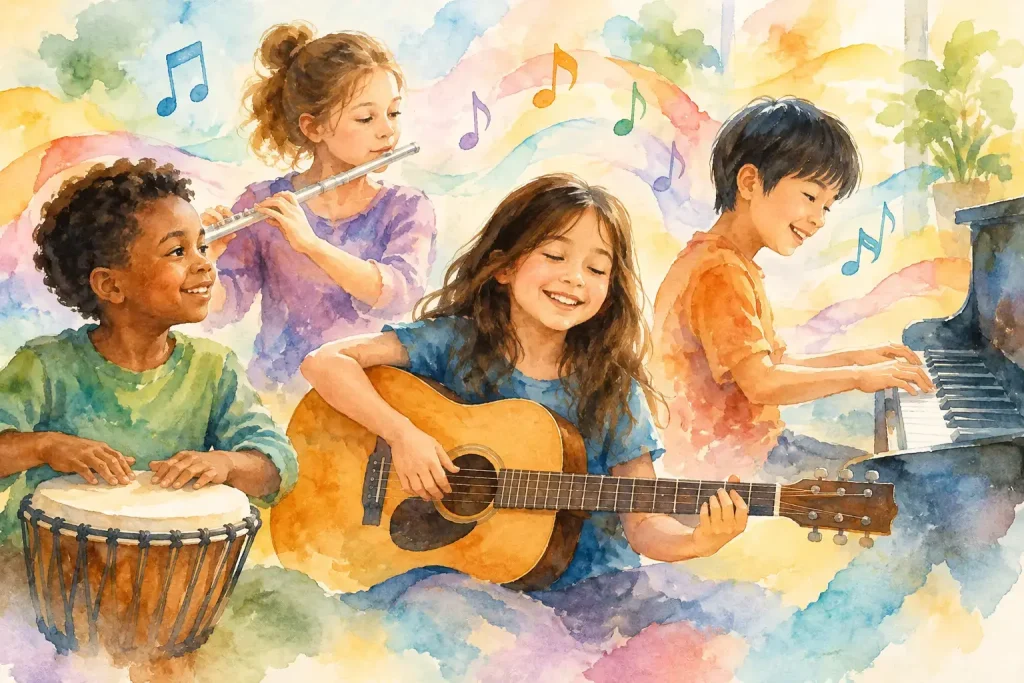
A child who is tapping a beat, singing a rhyme, or making up a silly verse is doing more than having fun. They are listening closely, practicing memory, using language, and learning how to share space with others. That is the everyday power of music education: it gives children meaningful ways to learn while they move, laugh, and create.
For parents, caregivers, and educators, music does not need to mean formal lessons or expensive instruments. It can begin with a familiar song at breakfast, a clap-along game in the classroom, or a few minutes of dancing before a big transition. Small musical moments can make learning feel welcoming instead of overwhelming.
Music Education Builds Skills Children Use Everywhere
Young children learn through repetition, play, and connection. Music brings all three together. A song with repeating words can help a child remember letter sounds, days of the week, classroom rules, or a new vocabulary word. A steady beat can support counting and pattern recognition. Movement songs can help children connect words to actions and ideas.
Music also gives children a safe place to practice communication. Some children are ready to speak right away. Others may feel more comfortable joining a group through humming, clapping, or copying a simple motion. Singing together lowers the pressure. There is room for every voice, including the quiet one.
For early learners, this matters because language development is not only about knowing more words. It is also about hearing differences in sounds, taking turns, listening for cues, and building the confidence to express an idea. A playful chorus can support those skills without making a child feel like they are being tested.
Rhythm Supports Focus and Self-Control
Children are not expected to sit still all day, and music gives their energy a positive direction. A rhythm game asks them to listen, wait, copy, and respond. Those are big skills for small children.
Try clapping a short pattern and inviting children to clap it back. Start with two or three beats. When they are ready, make the pattern a little longer or let them lead. The goal is not perfect timing. The goal is attention, participation, and the pride that comes from saying, “I did it.”
Rhythm can also make transitions easier. A short clean-up song tells children what is happening in a friendly, predictable way. A quiet song before story time can help the room settle. These routines work best when they are simple enough for children to learn and repeat on their own.
Songs Make Literacy Feel Personal
Many children meet letters, sounds, and words first through music. Rhymes help them notice that words can sound alike. Repeated lyrics help them hear syllables and remember phrases. Songs about the alphabet, names, feelings, or everyday routines turn abstract ideas into something children can sing, point to, and act out.
The strongest learning songs do not rush children through a long list of facts. They give children a clear idea, a memorable phrase, and a chance to participate. A child may not remember every word after one listen, but they may remember the chorus. That chorus becomes a bridge back to the lesson.
Parents can extend the learning with a simple question after the music ends: “What word did you hear more than once?” “What letter did we sing about?” or “Can you think of another word that rhymes?” A quick conversation helps children carry the song’s message into everyday language.
Music Education Creates Space for Confidence
Not every child wants to be the solo singer, and that is okay. Music offers many ways to belong. A child can shake an instrument, choose a movement, hold up a picture card, or help start the song. Participation does not have to look the same for everyone.
That flexibility can be especially helpful for children who are still building social confidence. Group music activities encourage teamwork without requiring a long conversation. Children learn to notice one another, follow a shared beat, and celebrate a friend’s idea. Over time, those small moments can make it easier to speak up in other settings too.
Creative music also teaches children that their ideas have value. Ask a child to add a sound effect to a story, choose a new ending line for a song, or invent a dance for the chorus. There is no single right answer. That freedom helps children see themselves as makers, not just listeners.
Simple Ways to Bring Music Into the Day
You do not need to turn every moment into a lesson. The best music experiences often fit naturally into what families and classrooms are already doing.
Start by choosing a few predictable moments. Sing a good-morning song, add a beat while getting dressed, or use a favorite tune during the ride to school. For educators, opening circle time with a welcome song can help children know that the day has begun and that they are part of the group.
Movement is a helpful partner for music. Invite children to march on the beat, reach high when the sound rises, or freeze when the music stops. These games support listening while giving growing bodies a chance to move. They are also easy to adjust for different ages and abilities.
Everyday objects can become instruments, too. Tap a wooden spoon gently on a container, shake a sealed box with dry rice inside, or clap hands at different speeds. Adults should always choose materials that are safe and age-appropriate, especially around toddlers. The point is not to create a perfect instrument. It is to help children notice sound, volume, rhythm, and cause and effect.
Original children’s music can be especially useful when it includes positive messages children can understand. Alphabetical Man brings together music, literacy, and a friendly superhero spirit to make those moments feel fun and encouraging. A memorable character can give children an extra reason to join in, sing along, and feel proud of what they are learning.
Keep the Experience Playful, Not Pressured
Music education works best when children are invited, not pushed. If a child does not want to sing today, they might be happy to listen, tap a foot, or watch someone else. Respecting that choice keeps music connected to joy.
It also helps to match activities to a child’s stage of development. Toddlers may enjoy short songs with repeated motions. Preschoolers often love call-and-response games and silly sound effects. Elementary-age children may be ready to write a verse, learn a longer rhythm, or talk about how a song makes them feel.
There are trade-offs to consider. Background music can make a room feel cheerful, but constant sound can be distracting for some children. Fast, high-energy songs can be wonderful for movement breaks, while quieter music may be better before reading or rest time. Watch how children respond and adjust from there.
Adults do not need musical training to make this meaningful. Children are not looking for a polished performance. They notice enthusiasm, kindness, and the willingness to try. When a grown-up sings even a little off-key and keeps going, children learn that creativity is not reserved for experts.
A song can teach a letter, a rhythm can guide a transition, and a shared chorus can make a child feel seen. Make room for one musical moment today, then let the child in front of you show you where it can lead.

Written by the Alphabetical Man team
We make songs, stories and a coloring book starring the superhero whose suit is made of letters. Our posts share simple, practical ideas for helping little ones love letters, music and kindness.
Meet Alphabetical Man