Washable Markers Review for Young Artists
Our washable markers review helps parents and teachers choose bright, kid-friendly markers that clean up easily and support creative learning at home.
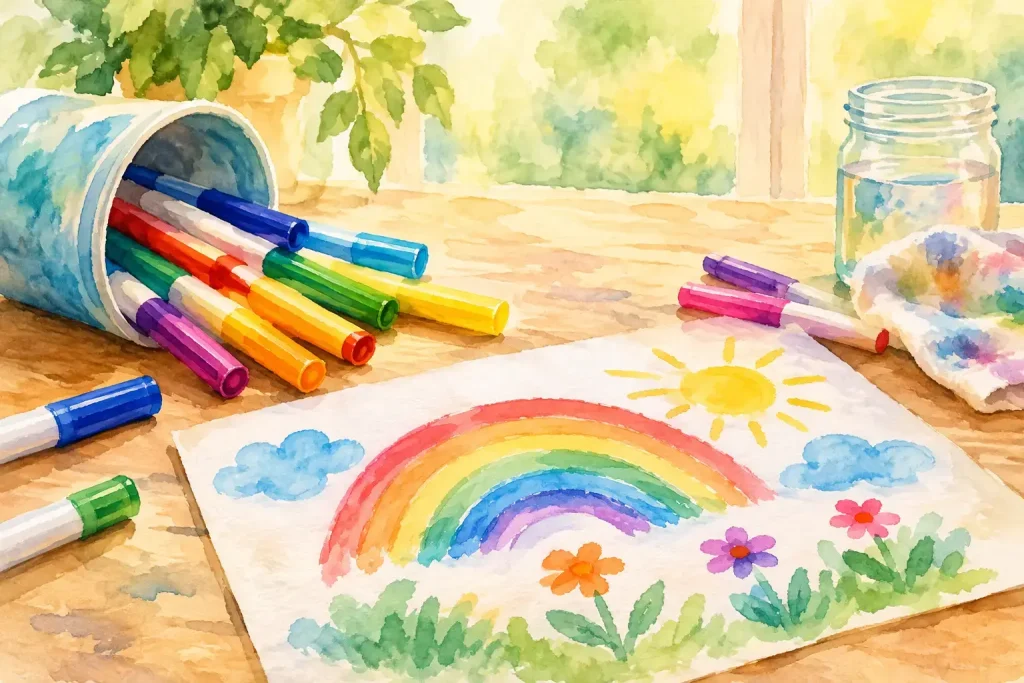
A coloring session should end with a proud picture on the refrigerator, not a stressful search for stain remover. This washable markers review looks at what parents, caregivers, and educators should expect from markers made for young artists: bright color, easy handling, dependable washability, and enough durability to make creativity feel fun instead of fragile.
For toddlers and early elementary kids, markers are more than art supplies. They help little hands practice control, give children another way to tell stories, and turn letter learning into something colorful and memorable. The best set is not always the one with the most colors. It is the one your child can use confidently and you can clean up without worry.
What Makes a Washable Marker Worth Buying?
“Washable” is the promise families notice first, but it should not be the only reason to choose a marker. A good washable marker needs to leave a clear mark on paper while still lifting from skin and most washable fabrics with normal washing. It should also be sized for children’s hands, have a cap that goes on and off without a struggle, and resist drying out after an accidental uncapped moment.
The trade-off is that washable ink is often gentler than permanent ink. It may not look as bold on dark paper, cardboard, or slick surfaces. That is usually a fair exchange for families with enthusiastic preschoolers. For coloring books, printer paper, classroom worksheets, and handmade signs, washable markers are usually exactly what children need.
Parents should also look closely at the package age guidance. A chunky marker designed for a three-year-old may feel awkward to an older child who wants finer details. Meanwhile, slim markers can offer better control for letter practice but may be harder for very young children to grip.
Washable Markers Review: What We Looked For
The most helpful way to compare washable markers is to think about the real moments when kids use them. Can a child make a smooth line without pressing too hard? Does red look red, rather than pale pink? Does the ink stay inside a coloring-book page instead of soaking through to the table? And, after a busy afternoon, does cleanup feel manageable?
Here are the qualities that matter most.
Color that shows up clearly
Children notice when a marker looks weak. Bright, consistent color helps a drawing feel finished and makes early learning activities easier to see. For alphabet practice, a clear blue B or green G gives children satisfying visual feedback. A set should include familiar primary colors plus enough variety for imaginative choices: purple for a superhero cape, brown for a puppy, and several greens for a park scene.
More colors can be wonderful, especially for older children, but a huge set is not automatically better. Young children can become overwhelmed by too many choices, and loose markers have a way of rolling under furniture. A smaller set of reliable colors often gets used more often.
A tip that matches the child’s age
Broad-line markers are a strong choice for toddlers and preschoolers. Their rounded tips cover larger spaces quickly, stand up to energetic coloring, and make thick lines that are easy to see. They work especially well for large coloring-book pages, poster projects, and simple letter shapes.
Fine-line markers are better for children who are ready to add details. They can trace letters, draw faces, and color smaller areas with more control. The downside is that fine tips can become bent or worn if a child presses hard. If your child is still learning gentle pressure, broad tips are likely to last longer.
Some families keep both types available. Broad markers are for everyday coloring and big creative play. Fine markers come out for school-age projects, cards, and careful drawing time.
Washability in everyday life
No washable marker should be treated as a reason to skip a smock or table cover. “Washable” means easier cleanup, not magic. Ink may come off hands with soap and water, but fabric usually needs a prompt wash. Results can vary by material, how long the ink sits, and whether an item has been dried with heat.
For the best chance of removing a fresh mark from clothing, rinse it with cold water and wash it as soon as practical. Avoid putting the item in the dryer until you know the stain is gone, because heat can make remaining color harder to remove. For a tabletop, follow the surface maker’s cleaning guidance rather than scrubbing with harsh products.
This is also why paper choice matters. Heavy coloring paper keeps ink from bleeding through as easily as thin copy paper. If children are working at a table they love, place a reusable mat or a few sheets of scrap paper underneath their artwork. A small setup step can protect a big cleanup job.
Caps, barrels, and staying power
Markers need to be easy for kids to open, but not so loose that they fall off in a backpack. A well-designed cap gives a satisfying click or snug fit. It also helps children build responsibility: cap the marker, return it to the box, save it for next time.
Barrel shape matters more than it may seem. Chunkier barrels are easier for small hands to hold and less likely to snap. Slim barrels are easier to pack and can encourage a more mature pencil-style grip. Neither is best for every child. Match the marker to the stage your child is in, not the age printed on a favorite character’s lunchbox.
Durability also depends on routines. Even good washable markers can dry out if left uncapped, and tips wear faster when used on rough cardboard or walls. A simple “markers stay on paper” rule protects both the supplies and the home.
Choosing Markers for Home, School, and Travel
At home, a medium-sized broad-tip set is usually the most practical starting point. It offers enough colors for big ideas without turning cleanup into a sorting project. Keep the set in a container with coloring pages, blank paper, and a few stickers. When art supplies are easy to reach and easy to put away, children are more likely to create independently.
For a classroom, church group, or community activity, prioritize durable caps, clear color labels, and a storage case that can handle frequent use. It helps to have several smaller sets rather than one giant shared box. Children spend less time waiting for the blue marker, and adults spend less time untangling a pile of supplies.
Travel calls for fewer markers and firmer boundaries. Choose a compact set, bring a coloring pad with thicker paper, and pack wipes for quick hand cleanup. Markers can make a long car ride or waiting room feel more peaceful, but only if every cap makes it back into the bag.
Are Scented or Specialty Markers a Good Idea?
Scented markers, glitter markers, and color-changing markers can make art time feel extra special. They are fun for occasional projects, party favors, or a rainy-day surprise. Still, standard washable markers are often the better everyday choice because they are straightforward, versatile, and less distracting for children who are practicing letters or following simple directions.
Specialty markers can also behave differently on paper. Glitter ink may take longer to dry. Scented ink may tempt younger children to put markers too close to their faces. Color-changing sets may be exciting at first but offer fewer dependable shades for regular coloring. Consider them a creative bonus rather than the foundation of an art bin.
A Simple Way to Encourage Creative Learning
Once you find a set that works for your family, the next step is not a complicated craft plan. Put out a page, name a color, and invite a child to make something. Ask them to draw three things that begin with M, color the first letter of their name, or create a picture for someone they care about.
Markers can support patience, confidence, and communication one small line at a time. When children know their creative space is safe to explore, they are more willing to try, make mistakes, and proudly show what they made.

Written by the Alphabetical Man team
We make songs, stories and a coloring book starring the superhero whose suit is made of letters. Our posts share simple, practical ideas for helping little ones love letters, music and kindness.
Meet Alphabetical Man