Best Preschool Art Materials for Big Ideas
Choose the best preschool art materials for bright, low-stress projects, with simple tips for safety, setup, cleanup, and young creative confidence, too.
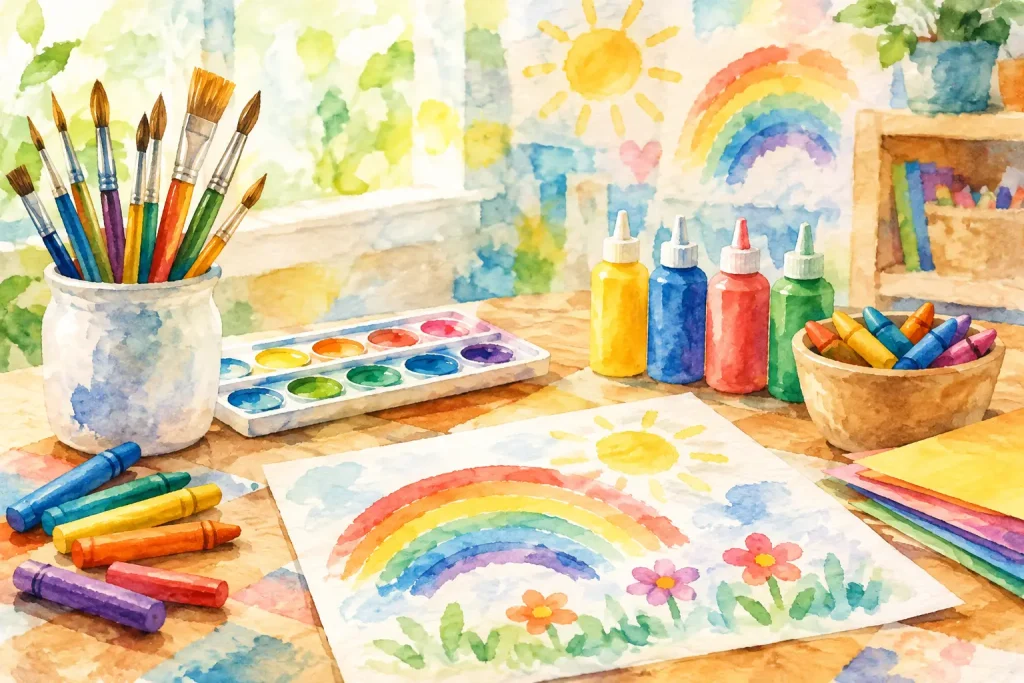
A preschooler holding a paintbrush is not trying to make a perfect picture. They are testing colors, practicing control, telling a story, and often making a happy mess. The best preschool art materials make that kind of learning feel easy, safe, and exciting for children and manageable for the adults beside them.
A well-stocked art space does not need every supply in the store. A few dependable, open-ended materials give young artists more room to imagine, create, and try again. Choose tools that fit small hands, wash up without a battle, and invite children to make their own choices.
What Makes Art Materials Right for Preschoolers?
For preschool children, the best materials are less about polished results and more about the experience. Young children are building hand strength, learning how tools work, noticing patterns, and finding words for what they create. A crayon line may become a road, a snake, or a superhero cape depending on the story in their mind.
Look for supplies marked non-toxic and made for young children. Washable options are often worth the extra cost, especially for paint, markers, and glue. Also consider the size of the material. Chunky crayons, short-handled brushes, and child-safe scissors are easier for preschoolers to control than tools designed for older kids or adults.
The right choice also depends on the child. Some preschoolers love a sticky collage project, while others dislike glue on their fingers. Some are ready to cut paper strips, while others are still strengthening their grip through drawing and painting. Offer choices without pressure.
Best Preschool Art Materials to Keep on Hand
Start with a simple collection that can be used again and again. These supplies support dozens of activities without turning a cabinet into a cluttered mystery box.
Crayons, colored pencils, and washable markers
Crayons are a preschool classic for a reason. They glide easily, work on many types of paper, and help children build the grasp needed for later writing. Choose thick crayons for younger preschoolers, but offer standard crayons too when children are ready for more detailed work.
Colored pencils create softer lines and can be a good next step for children who enjoy drawing small details. Washable markers offer bright, bold color and immediate results. Keep marker caps nearby and turn putting them back on into part of the routine. It is a small job that builds responsibility.
Paper with different textures and purposes
Plain white paper is useful, but variety keeps art invitations fresh. Construction paper, large drawing paper, cardstock, scrap paper, and paper bags all offer new possibilities. Large sheets encourage big arm movements and murals. Smaller paper can support card-making, simple pictures, and collage pieces.
Save clean cardboard from food packaging or deliveries for painting and building. A cereal box can become a puppet stage, a robot body, or a sign for a pretend store. Reusing materials also shows children that creativity does not always begin with something new.
Washable paint and useful painting tools
Tempera paint is a strong choice for preschool art because it is vivid, versatile, and generally easy to wash from hands and tables. Begin with a few basic colors, along with white for mixing lighter shades. Children do not need a huge rainbow of bottles to discover color.
Use sturdy, washable brushes in a few sizes. Flat brushes work well for broad strokes, while round brushes are fun for lines and dots. Sponges, cotton swabs, cardboard tubes, and toy cars can make interesting marks, too. These tools help children see that painting is about more than filling in a shape.
Paint is a wonderful sensory experience, but it is not a fit for every child every day. If a child hesitates, offer a brush with a longer handle or let them paint with water outside first. Comfort and curiosity matter more than convincing everyone to use the same material.
Glue, collage supplies, and tape
Glue sticks are less messy and easier for many preschoolers to manage than liquid glue. They are especially helpful for paper collage projects. Liquid school glue is useful for heavier materials, but adults may want to offer small amounts in a shallow tray or bottle cap rather than handing over a full bottle.
Keep collage materials simple and safe: paper scraps, yarn pieces, tissue paper, fabric squares, foam shapes, and clean natural items such as leaves. Avoid tiny objects that could be a choking hazard, especially in mixed-age spaces. Glitter can look magical, but loose glitter often brings more cleanup than creative value. Glitter glue or colorful paper can deliver sparkle with fewer surprises.
Painter’s tape and masking tape are also great preschool tools. Tearing tape strengthens hands, and children can use it to create roads, frames, designs, or simple 3D structures.
Modeling dough and simple tools
Modeling dough builds hand muscles in a playful way. Children can roll, pinch, flatten, squeeze, and cut while inventing food, animals, letters, or anything else they imagine. Store-bought dough is convenient, and homemade dough can be a fun activity when adults supervise.
Add child-safe dough tools, plastic knives, rolling pins, cookie cutters, and recycled lids for making prints. A small amount of dough goes a long way. Too many tools at once can distract from the creative play.
Child-safe scissors
Scissors deserve a place in preschool art, but readiness matters. Start with child-safe scissors and short strips of paper. Cutting is challenging, and a child may need plenty of practice snipping before they can follow a line or cut around a shape.
Sit nearby, demonstrate how to hold the scissors, and celebrate effort. A page full of snips is not wasted paper. It is practice in coordination, focus, and confidence.
Set Up an Art Space Children Can Use
The best materials are only helpful when children can reach and use them. Place a few supplies in clear, labeled containers at child height. Picture labels work especially well for early learners who are not reading independently yet.
Keep the selection small. Put out crayons, paper, and glue one day, then switch to paint and cardboard another day. A limited choice can make it easier for children to begin. It also helps adults keep the space organized without turning art time into a long setup project.
Protect surfaces with a washable tablecloth, tray, or old placemat. Keep wipes or damp cloths close by, along with a small trash bin. For painting, give each child a smock or an oversized old T-shirt. Preparation is not about removing every mess. It is about making room for creative messes that are easy to handle.
Let the Process Lead the Project
Preschool art does not need a sample for children to copy. A finished adult example can sometimes make children feel that there is one right answer. Instead, offer a friendly prompt: Make a picture using only circles. Create a home for a tiny animal. What colors would your favorite song look like?
Then let children decide. Ask about their work with open questions such as, Tell me about this part, or What happened here? These questions show genuine interest without guessing what the picture is supposed to be.
Music can make art time feel even more joyful. A positive children’s song can inspire a drawing, a color choice, or a movement break while paint dries. Alphabetical Man’s playful, learning-centered spirit is a good reminder that creativity and early literacy can grow together through simple, cheerful activities.
A Few Safety and Cleanup Habits That Help
Supervision is still needed, even with child-safe materials. Read labels, follow age recommendations, and keep supplies out of mouths. Wash hands after art time, especially after paint, dough, or outdoor nature collage projects.
Teach cleanup as part of the creative routine. Children can carry paper scraps to the trash, return crayons to a bin, wipe a table, and place artwork on a drying rack. These small tasks build pride in the space they share.
Display a few finished pieces at the child’s eye level, then rotate them when new work arrives. Children feel seen when their ideas are treated with care. The goal is not a spotless masterpiece. It is a child who sees a blank page, reaches for a tool, and feels ready to make something all their own.

Written by the Alphabetical Man team
We make songs, stories and a coloring book starring the superhero whose suit is made of letters. Our posts share simple, practical ideas for helping little ones love letters, music and kindness.
Meet Alphabetical Man