Coloring Books Versus Apps: What Kids Need
Coloring books versus apps: see how each supports creativity, focus, fine motor skills, and joyful learning for toddlers and young children at home daily.
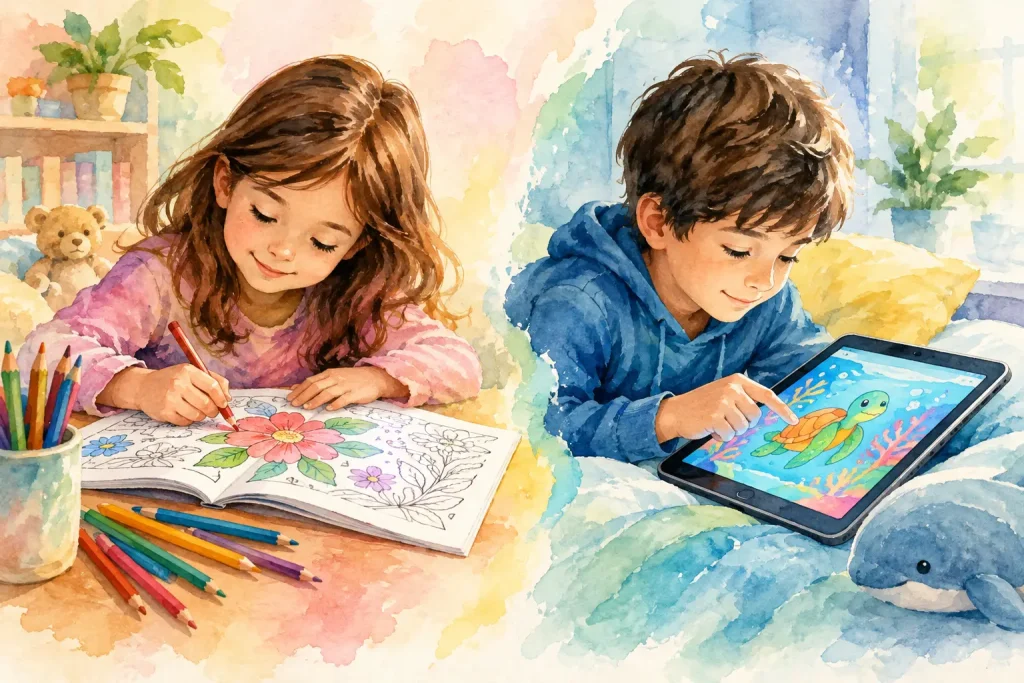
A toddler with a red crayon and a page full of big, friendly shapes is doing more than making a colorful mess. They are practicing grip, choice-making, patience, and pride. When parents compare coloring books versus apps, the best answer is rarely that one must replace the other. The question is what a child needs from that moment of play.
For young children, coloring can be a quiet reset after a busy day, a creative activity during travel, or a way to connect with a caregiver. Digital coloring apps can offer fun characters, music, and easy access. Printed coloring books offer something different: a real page, a real tool, and room to create without a screen asking for the next tap.
Coloring Books Versus Apps: The Real Difference
The biggest difference is not simply paper versus technology. It is how each activity asks a child to participate.
With a coloring book, children make physical movements that leave visible marks. They choose a crayon, press it to the page, adjust their hand, and see what happens when colors overlap. There is no undo button. A scribble can become a rain cloud, a superhero cape, or part of the fun. That freedom helps children learn that creativity does not have to be perfect.
An app often makes coloring easier. A child taps a section, picks a color, and watches the space fill neatly. This can be satisfying, especially for a child who is still building control with crayons or markers. Many apps also include animation, sound effects, and familiar characters that capture attention quickly.
Neither experience is automatically better. Paper tends to ask more from a child’s hands and attention. Apps can provide variety and accessibility. The right choice depends on a child’s age, temperament, needs, and the setting.
Why Paper Coloring Still Matters
Coloring books give early learners practice with skills that are easy to overlook because they look like play. Holding a crayon or colored pencil supports fine motor development. Moving across a page builds hand control. Trying to stay inside a shape encourages visual attention and coordination.
Just as valuable, paper coloring creates a slower pace. There are no pop-ups, alerts, or bright buttons competing for attention. A child can settle into one picture for five minutes or twenty. For some children, that calm focus is a welcome break from faster entertainment.
Paper also makes creativity feel personal. A finished page can go on the refrigerator, become a card for a grandparent, or be shared with a teacher. Children can return to it and say, “I made this.” That sense of ownership matters.
Coloring together adds another benefit. A caregiver can sit nearby and ask simple, open questions: “What color should the sky be?” “Tell me about this character.” “Who is that helping?” These small conversations build vocabulary without turning art time into a lesson.
For toddlers, choose books with bold outlines, large spaces, and simple pictures. Tiny details can feel frustrating when little hands are still learning. A book with positive characters, animals, letters, and everyday scenes gives children familiar ideas to talk about as they color.
Where Coloring Apps Can Help
Apps are not the enemy of creative play. Used thoughtfully, they can be helpful tools, especially when paper supplies are not practical. They are easy to bring along in a waiting room, on a long trip, or during a short break when a child needs a familiar activity.
Some children enjoy the instant response of digital coloring. They may feel encouraged when their picture lights up, moves, or plays a cheerful sound. Apps can also offer a wide range of images without needing a new book each time.
Digital tools may be especially useful for children who have difficulty gripping crayons, get discouraged by marks outside the lines, or benefit from larger touch-screen movements. An app can give them a low-pressure way to choose colors and tell stories through pictures.
Still, a colorful app is not always a calm one. Some include ads, in-app purchases, distracting games, or content that moves children quickly from one activity to another. Parents and caregivers should preview an app before handing it over. Look for simple controls, age-appropriate images, clear privacy settings, and no pressure to keep clicking.
The Trade-Offs Parents Should Consider
When deciding between coloring books and apps, think less about the label and more about the experience. Is your child creating, concentrating, and enjoying themselves? Or are they rushing, switching screens, and asking for more stimulation every few seconds?
A coloring book requires supplies and can create a little cleanup. Crayons roll away. Markers lose their caps. Pages may get torn or colored in surprising places. Yet those ordinary parts of art time are also chances to practice responsibility: choosing supplies, putting them away, and caring for a finished picture.
Apps are convenient and usually less messy, but they can make it harder to end the activity. A child may finish one digital picture and immediately ask for another game or video. Setting a timer before screen time begins can make the transition easier.
Cost can matter, too. A well-made coloring book can be used again and again as children revisit favorite pages, while apps may include subscriptions or extra purchases. On the other hand, a free or low-cost app may offer a useful option for a family on the go. The best choice is the one that fits your family’s routine without adding stress.
A Balanced Approach for Young Learners
Most families do not need to choose one forever. Coloring books and apps can each have a place, with paper as the regular hands-on activity and digital coloring as an occasional option.
Try keeping crayons and a simple coloring book within easy reach for quiet moments at home. Let your child choose colors freely, even if a purple dog or green sun is not what adults expect. The goal is expression, not accuracy. If they ask for help, show them how to make a small mark or hold a crayon comfortably, then let them take the lead.
Save an app for a specific purpose, such as travel, a short waiting period, or a rainy-day activity with a clear beginning and end. Stay nearby when possible. Ask about the picture they are making instead of treating the screen as a babysitter. The conversation is what turns any activity into a chance for connection.
You can also pair coloring with other learning experiences. A child might color a letter after hearing it in a song, color a character after listening to a story, or draw their own picture after talking about a kind choice. Alphabetical Man brings this kind of playful connection to life by joining colorful characters, music, and early learning in a child-friendly way.
Watch Your Child, Not Just the Activity
Children will often show you what works. One child may happily color for long stretches, carefully choosing every shade. Another may prefer a quick digital picture with sound and movement. Some children need both: a screen-based activity when they need novelty, and a coloring book when they need to slow down.
Pay attention to how your child feels afterward. Do they seem proud, relaxed, and ready to share what they made? Do they become frustrated, overstimulated, or upset when it is time to stop? Those responses offer better guidance than any one-size-fits-all rule.
The most meaningful coloring time does not require perfect pages or fancy technology. Offer a few colors, a welcoming picture, and a moment of attention. A child who feels free to create is building more than a picture – they are building confidence, one bright mark at a time.

Written by the Alphabetical Man team
We make songs, stories and a coloring book starring the superhero whose suit is made of letters. Our posts share simple, practical ideas for helping little ones love letters, music and kindness.
Meet Alphabetical Man