A Guide to Children’s Audio Players for Families
Our guide to children's audio players helps parents choose safe, simple devices for music, stories, learning, and calmer everyday family routines at home.
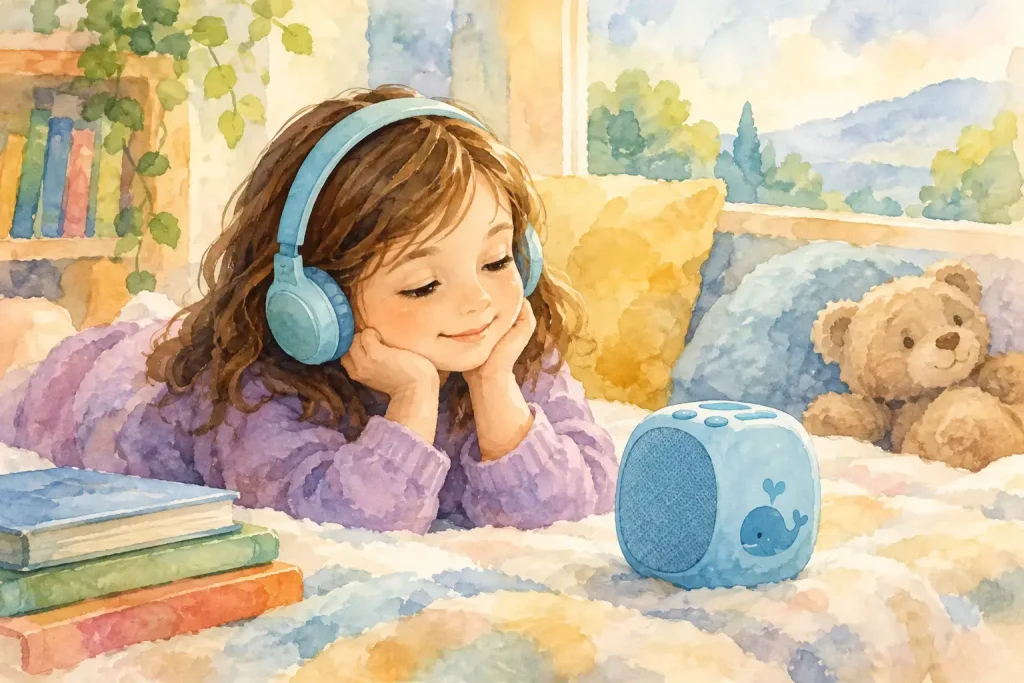
The right song can turn shoe time into a dance break. The right story can make a long car ride feel much shorter. This guide to children’s audio players is for parents, caregivers, and educators who want those moments without handing over a phone full of distractions.
A children’s audio player can give kids more independence while keeping entertainment simple, age-appropriate, and screen-free. But there is no single best choice for every family. A toddler who loves repeating the same alphabet song needs something different from an elementary-age listener who wants to choose audiobooks on their own.
What is a children’s audio player?
A children’s audio player is a device made primarily for listening. It may play music, stories, podcasts, calming sounds, or learning activities. Some use collectible figures, cards, or tokens to start audio. Others use buttons, downloaded files, Bluetooth, or a family-managed app.
The goal is not to make children listen all day. It is to give them a safe, focused way to enjoy sound without pop-up ads, scrolling feeds, messages, or videos competing for attention. For many families, that makes audio players useful at bedtime, during quiet time, in the car, or while a child colors, builds, or plays independently.
Why screen-free listening can help
Audio leaves room for imagination. When children hear a story, they picture the characters, settings, and action in their own minds. Songs can support memory, rhythm, vocabulary, and early reading skills, especially when children sing along.
It can also make routines feel friendlier. A familiar playlist may help signal that it is time to clean up, get dressed, or settle down. A gentle story can offer comfort after a busy day. These small supports work best when they feel like an invitation, not another task.
Audio is not automatically educational just because it is screen-free. Some content is noisy, rushed, or built around characters rather than meaningful ideas. The strongest choices combine a child-friendly format with music, stories, language, creativity, or positive messages that families feel good about hearing again.
Guide to children’s audio players: Start with your child
Before comparing brands or features, think about how your child listens now. Do they ask for music? Do they enjoy being read to? Are they likely to toss a device in a backpack, or will it stay near the bed? Their age, habits, and personality matter more than a long feature list.
For toddlers and preschoolers
Young children usually need a player that is sturdy, simple, and easy to operate with small hands. Large buttons, a limited number of choices, and a clear way to pause the audio are helpful. A device that requires an adult to set up may still be a good fit, as long as the child can use it independently afterward.
Look closely at volume controls. Toddlers may not recognize when sound is too loud, and headphones are not always practical for this age. A built-in maximum volume setting can bring peace of mind.
Content matters just as much as the device. Short songs, familiar stories, simple listening games, and calm bedtime tracks often hold attention better than long programs. Repetition is normal and useful. If your child wants the same song every day, they may be practicing words, patterns, and confidence.
For early elementary listeners
Children in kindergarten through early elementary school often enjoy more choice. They may be ready to select a story, make a playlist, follow a series, or listen to music while drawing. A player with easy navigation can build independence without opening the door to unlimited content.
This is also a great age for audio that supports interests. A child who loves animals may enjoy nature stories. A child learning to read may benefit from hearing expressive narration and songs with clear lyrics. Original children’s music, including upbeat learning songs like those from Alphabetical Man, can make letters, language, and positive habits feel more memorable.
For older elementary kids
Older children may want longer audiobooks, podcasts, and more control over their listening. Storage space, battery life, bookmarks, and headphones become more relevant. They may also care about how the player looks and whether it feels too young for them.
At this stage, a basic music player can work well if parents can manage downloads and settings. The trade-off is that more freedom usually requires more guidance around content, volume, and device care.
Features that matter most
It is easy to get pulled toward bright colors, character accessories, or a huge content catalog. Those can be fun, but a few practical features tend to make the bigger difference over time.
First, check how content is added. Some players work only with a specific collection of audio items. This can be very simple for children, but it may cost more as they want new stories and music. Other players let families add their own audio files. That gives you flexibility, though setup can take more time.
Next, consider internet access. A player that works offline is often easier to use in the car, at a grandparent’s house, or on a trip. It also reduces the chance of a child wandering into content you have not reviewed. If a device uses Wi-Fi, find out whether listening can continue after downloads are complete.
Battery life is another everyday detail. A player that needs charging every evening may be fine for bedtime listening. For travel or school use, longer battery life is more helpful. Check whether the device charges with a common cable and whether it can be used while charging.
Durability deserves real attention. Young listeners drop things. A soft outer shell, simple parts, and a design without tiny pieces can be worth paying for. If headphones are part of the plan, choose a comfortable pair made for children and use volume-limiting settings when available.
Build a library your child can grow with
A good audio player is only as helpful as the listening choices on it. Start small rather than loading the device with dozens of options. A few favorite songs, two or three stories, and one calming track can be plenty. Too many choices may lead to frustration, especially for younger children.
Mix fun with variety. Include music for movement, stories for imagination, and quiet audio for rest. Rotate content every few weeks to keep familiar favorites while creating a little surprise. You do not need to turn every song into a lesson. Joy, comfort, and family connection have value too.
When possible, listen together first. You will hear the pace, language, and message before your child does. This is especially useful with series-based content, where one episode may feel right for your family and another may not.
Set simple listening boundaries
Children do well when expectations are clear and easy to remember. You might decide that the audio player stays in the living room, comes on car rides, or is used for one story before bed. The best routine is one your family can keep without constant negotiation.
Keep the volume low enough that a nearby adult can still be heard. If your child uses headphones, take listening breaks and avoid turning up the sound in noisy places. You can also make a habit of asking, “What are you listening to?” This invites conversation instead of making audio feel separate from family life.
An audio player should support connection, not replace it. Share a funny song, talk about a character’s choice, or let your child show you how they found a favorite track. These small moments build language and trust.
A thoughtful choice is usually the best one
The best children’s audio player is not necessarily the one with the most buttons, the biggest library, or the trendiest character. It is the one your child can use safely, your family can manage easily, and your home will welcome hearing again and again. Choose a device that makes room for stories, songs, imagination, and a little more calm in the day.

Written by the Alphabetical Man team
We make songs, stories and a coloring book starring the superhero whose suit is made of letters. Our posts share simple, practical ideas for helping little ones love letters, music and kindness.
Meet Alphabetical Man