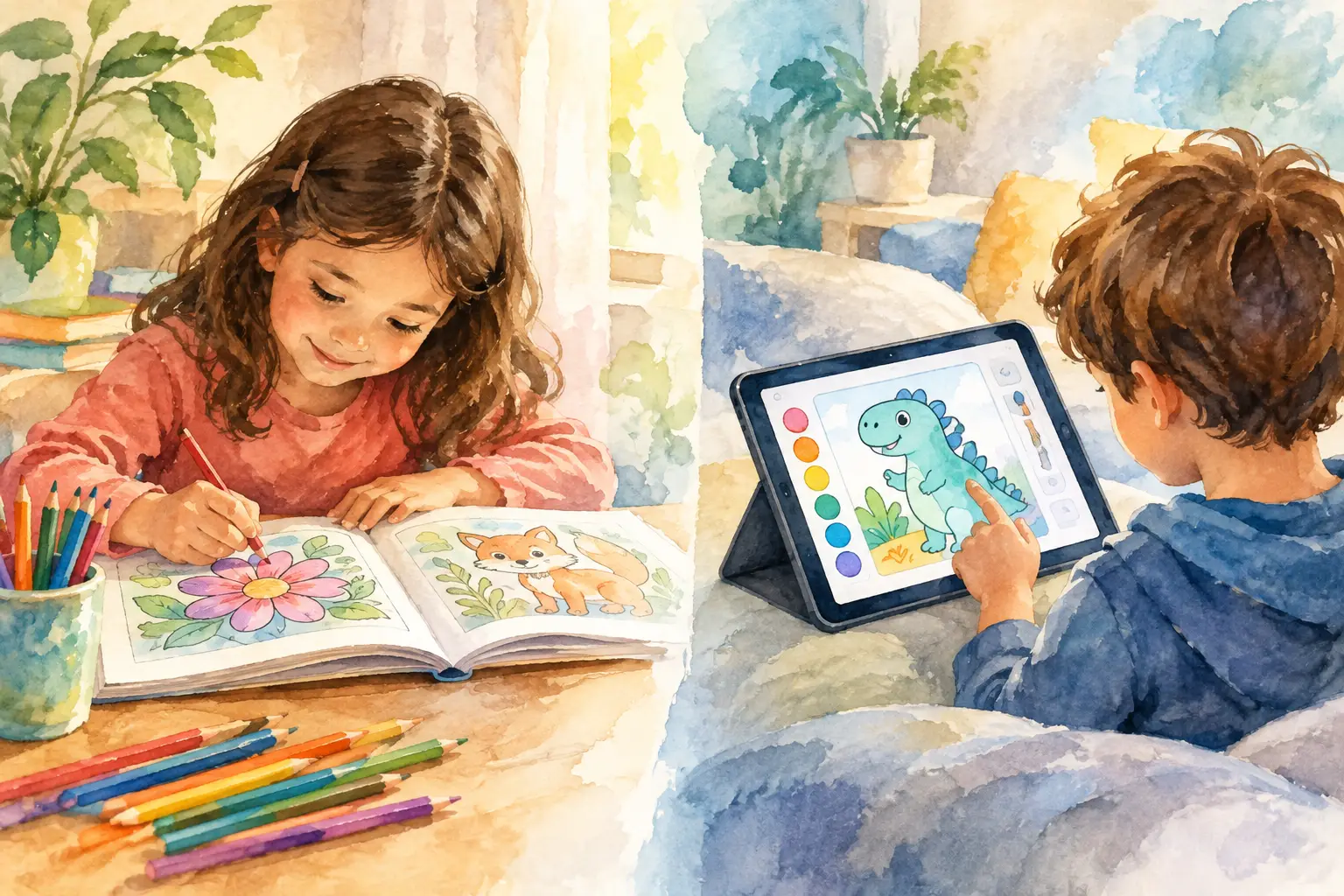
Some days, learning clicks best with a crayon in hand.
A good coloring book for early learners is more than a quiet-time activity. It gives young children a simple way to practice focus, build hand strength, notice shapes and letters, and feel proud of what they can do on their own. For parents, caregivers, and teachers, that matters because early learning works best when it feels playful instead of pressured.
Why a coloring book for early learners matters
Early learners are still building the basics. They are learning how to hold a crayon, how to stay inside a space, how to recognize lines and patterns, and how to connect pictures with words, sounds, and ideas. A coloring book meets children right in that stage.
Coloring slows things down in a good way. It invites a child to look closely, make choices, and stick with a task long enough to finish it. That can support attention span, patience, and confidence without turning the moment into a lesson that feels too formal.
There is also a physical side to it. Small coloring motions help strengthen the hand muscles children use later for writing, cutting, and other classroom tasks. It is not a replacement for broader learning, of course, but it can be a strong support tool when used with intention.
For many families, the biggest benefit is emotional. A child who is not ready for worksheets may happily color a letter character, an object, or a simple scene. That shift matters. When learning feels friendly, children tend to come back to it.
What makes a coloring book useful instead of just cute
Not every coloring book aimed at young children is built for early learning. Some have artwork that is too detailed, pages that feel visually crowded, or themes that entertain without reinforcing any foundational skill. Cute can hold attention for a minute, but useful design helps a child stay engaged longer.
The best pages for this age group usually have bold outlines, clear images, and enough open space for little hands to color without frustration. Simplicity is not a drawback here. It is often what helps a child succeed.
A strong coloring book also matches the child’s stage of development. Toddlers and preschoolers often do better with large shapes, familiar objects, and one main idea per page. If a page asks them to track too many details at once, the activity can quickly stop feeling fun.
Themes matter too. Letters, numbers, animals, community helpers, positive character traits, and everyday objects can all give coloring time a learning anchor. A superhero-style character can be especially effective because it gives children someone memorable to connect with. Familiar characters often help young learners stay interested and make the experience feel more like play than practice.
Skills a coloring book can help support
A coloring book for early learners can support several important skills at once, even when the child simply thinks they are having fun.
Fine motor development is one of the clearest examples. Gripping crayons, moving across a page, and trying to color within boundaries all help prepare children for writing. Some children develop these skills naturally with lots of hands-on play, while others benefit from repeated, low-pressure practice.
Visual discrimination also comes into play. Children begin noticing the difference between shapes, sizes, letters, and picture details. That kind of visual attention supports reading readiness later on.
Language growth can happen during coloring too. When adults talk with children about what they see on the page, name colors, describe actions, or ask simple questions, the activity becomes a natural conversation starter. A page with the letter A and an apple can open the door to sound recognition, vocabulary, and storytelling in a very relaxed way.
Then there is confidence. Young children need frequent chances to complete something manageable. A finished coloring page gives them visible proof that they can start a task, make choices, and see it through. That feeling carries over into other early learning experiences.
How parents and caregivers can use it at home
At home, the best approach is usually the simplest one. Offer the coloring book as an invitation, not a test. Sit nearby, talk a little, and let the child lead at their own pace.
If the page includes letters or simple educational themes, point them out naturally. You might say, “That’s the letter B,” or “You picked a bright blue for the balloon.” Short, cheerful comments often work better than turning the moment into a quiz.
Routine helps. Some families keep coloring books at the kitchen table for calm morning starts. Others use them after nap time, during quiet play, or before dinner when children need something steady and screen-free. The exact time matters less than making it easy to reach and easy to enjoy.
It also helps to let go of perfection. Young children do not need to color inside every line for the activity to be valuable. Scribbling, switching colors, or spending ten minutes on one corner of the page can still build useful skills. Progress at this age is rarely neat, and that is okay.
How teachers can make coloring time more meaningful
In classrooms, coloring works best when it supports a broader lesson without becoming filler. A page tied to a letter of the week, a seasonal theme, a music activity, or a character lesson can reinforce what children are already learning.
The trade-off is time. Coloring can be calming and purposeful, but it should not crowd out movement, conversation, read-alouds, and sensory play. Early learners need variety. A coloring book is one helpful piece of a bigger picture, not the whole picture.
Teachers can get more from coloring time by pairing it with guided language. Naming shapes, repeating letter sounds, and asking children what is happening in the picture turns a quiet task into an active learning moment. Even simple prompts like “What do you notice?” or “What color comes next?” can add value without making the activity feel heavy.
For group settings, clear page design becomes even more important. Children working at different levels need materials that feel accessible. Pages that are too busy can frustrate beginners and create unnecessary support needs.
Choosing the right coloring book for your child
The right fit depends on age, attention span, and learning goals. A toddler may need very large images and minimal instruction. A preschooler might enjoy simple alphabet pages and basic matching themes. A kindergarten child may be ready for more detail, early word recognition, or pages connected to stories and songs.
It is smart to look for a coloring book that feels warm and positive, especially for young children. Pages built around friendly characters and encouraging themes tend to invite more repeat use than books that feel random or overstimulating. Children often return to what feels familiar and safe.
Quality matters, but expensive does not always mean better. What matters most is whether the book is age-appropriate, easy to understand, and engaging enough that a child wants to come back to it. If it supports literacy, creativity, and positive messages at the same time, that is an even stronger win.
A character-driven option can be especially helpful for families who want learning tools that feel entertaining as well as educational. That is part of what makes a playful brand like Alphabetical Man appealing to early learners. The character gives children something memorable to connect with while the activity still supports real developmental growth.
Keep it playful, and the learning follows
Children rarely separate fun from learning the way adults do. If a page makes them smile, gives them something recognizable to talk about, and lets them feel successful, it is already doing good work.
A coloring book for early learners does not need to do everything. It just needs to meet children where they are, give them a positive way to practice foundational skills, and create small moments of focus, creativity, and confidence. Sometimes that is exactly the kind of learning support a child needs most.
The best pages are often the ones a child asks for again tomorrow.