A child who can sing the sound for m before they can name a dozen letters is already building an important reading skill. Phonics songs give children a cheerful way to connect what they see on a page with what they hear and say. For parents, caregivers, and teachers, they can turn a short car ride, cleanup time, or morning circle into a little literacy moment that feels like play.
Why Phonics Songs Work for Young Learners
Early readers have a big job: they need to notice that spoken words are made of separate sounds, connect those sounds to letters, and begin blending them into words. That is a lot to ask during a worksheet or a quiet lesson. Music can make the work feel more natural.
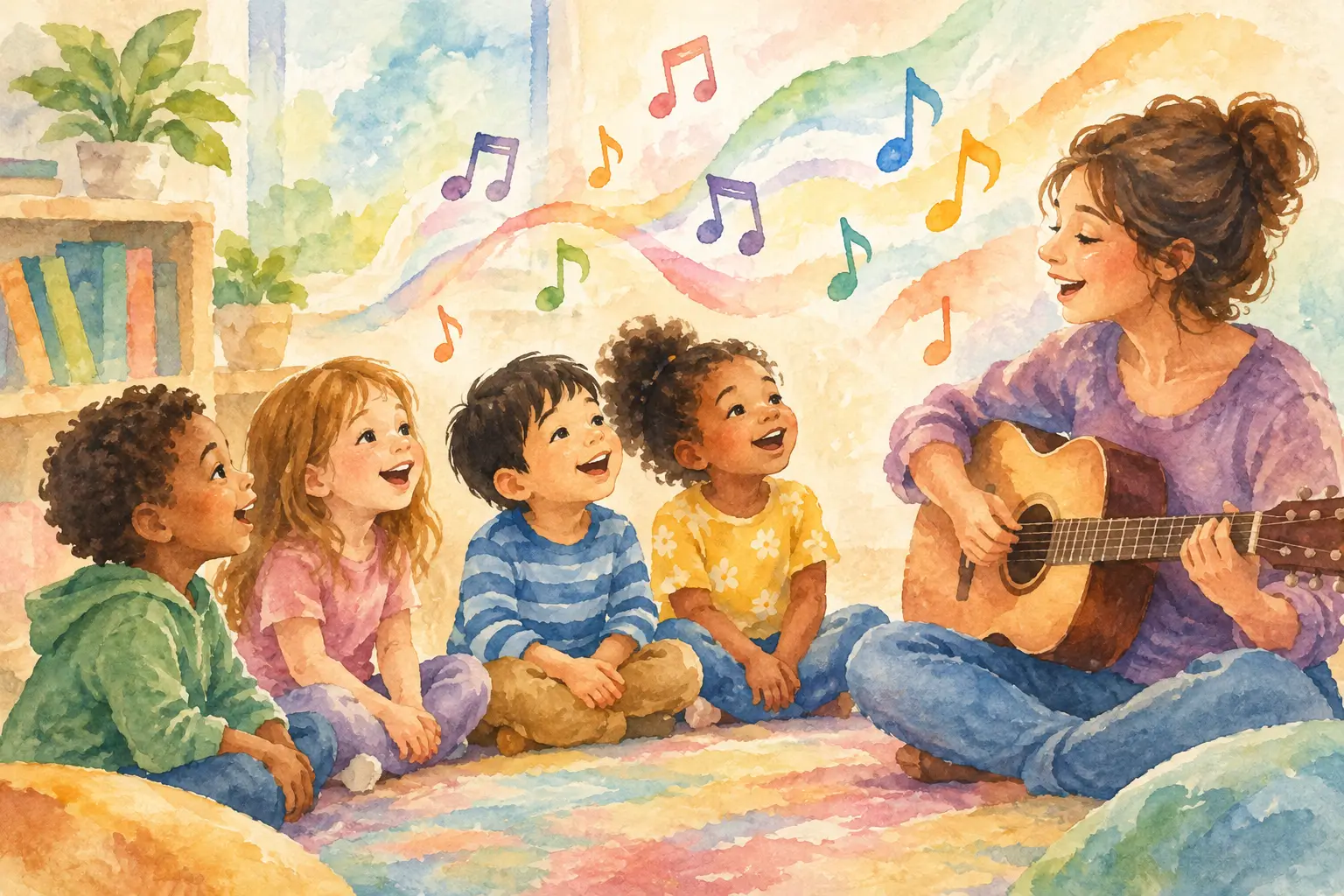
A steady beat gives children a pattern to follow. Repeated lyrics give them another chance to practice without feeling like they are being tested. When a song pairs a letter with its most common sound, such as “B says /b/,” children can begin to remember the connection through listening, movement, and repetition.
Songs are especially helpful for children who learn best when their whole body is involved. A child can clap for each sound in a word, point to a letter card, make a silly motion, or march in place while singing. Those small actions help keep attention focused and make the learning experience more memorable.
Still, music is a helper, not a shortcut. A child may sing every letter sound and still need practice using those sounds to read a real word. The best approach is to enjoy the song, then give the child a simple chance to use what they heard.
Choosing Phonics Songs That Teach Clearly
Not every alphabet song is a phonics song. Alphabet songs usually teach letter names in order. That is useful, but phonics focuses on the sounds letters make and how sounds work together in words.
Look for songs that say the sound clearly and do not add an extra vowel. For example, the sound for t is /t/, not “tuh.” The extra sound can make it harder for children to blend letters later. A child trying to read tap needs to hear /t/ /a/ /p/ as clean, separate sounds.
Good phonics songs also keep the message simple. One song may focus on a few beginning sounds. Another may practice short vowel sounds. A more advanced song may introduce blends such as st, bl, or cr. It is okay if a song does not cover the entire alphabet at once. In fact, a narrower focus often gives young learners more time to really hear each sound.
When choosing music for children, consider these four questions:
- Can my child clearly hear the target sound?
- Does the song repeat the sound enough to remember it?
- Is the pace comfortable for my child to sing along?
- Does it leave room for an easy follow-up activity?
The catchiest song is not always the best teaching tool. Fast lyrics, crowded visuals, or too many sounds in one song can be exciting but confusing. For preschoolers and beginning readers, clear and joyful usually wins.
Turn a Song Into a Reading Moment
The most useful phonics routine is short, warm, and repeatable. Start by listening or singing together. Then pause after the song and ask one simple question: “What sound did we hear?” Let the child answer with their voice, a gesture, or by pointing to a letter.
Next, find that sound in the room. If the song practiced s, look for a sock, spoon, or stuffed animal. Stretch the first sound together: “Ssssock.” Children do not need a perfect answer every time. The goal is to help them notice that sounds are part of everyday words.
You can also use coloring as a calm follow-up. Invite a child to color a picture of a sun after singing about s, then say the word slowly together. Ask what sound comes first. A simple page, crayons, and a familiar tune can create a meaningful learning activity without making the day feel overplanned.
For children who are ready, place two or three letter cards on the table. Sing the sound, then ask them to find the matching letter. Later, try blending cards into a short word such as sat, map, or pin. Keep the practice light. If the child is getting frustrated, return to singing, moving, or listening.
Match the Song to Your Child’s Stage
Children do not all learn phonics in the same order or at the same speed. A toddler may enjoy hearing sound patterns and copying motions. A preschooler may be ready to identify beginning sounds. A kindergartner may be starting to blend and read simple words. The right song depends on what the child can comfortably do now.
For the earliest learners, focus on listening. Try playful sound questions such as, “What sound does a monkey make?” or “Can you hear the /m/ in moon?” These moments build sound awareness before formal reading begins.
For children learning letter-sound connections, choose songs that feature one letter or a small group of letters. Show the letter while you sing it. Seeing, hearing, and saying the letter together reinforces the connection.
For beginning readers, use songs about short vowels, word families, and blending. After a song about the -at family, try saying cat, hat, and mat. Let your child hear what stays the same and what changes. That is where phonics starts becoming reading.
If a child has trouble with a particular sound, slow down rather than adding more songs. One favorite song sung several times across a week can do more than a long playlist that changes every day.
Keep the Routine Positive
The magic of phonics songs is not only in the lyrics. It is in the feeling children connect with learning. When adults sing along, smile at effort, and allow room for goofy voices, kids learn that letters and words are friendly things they can explore.
Praise specific effort instead of only correct answers. You might say, “You listened carefully for the first sound,” or “You kept trying that word.” This kind of encouragement supports confidence, especially when reading feels new or challenging.
It also helps to keep sessions brief. Five focused minutes can be plenty for a young child. End while they are still engaged, not after they are worn out. A child who asks to sing the song again tomorrow is building a stronger habit than one who is pushed through a long lesson.
Make Music Part of a Bigger Message
Positive children’s music can do more than teach a letter sound. It can make children feel capable, included, and excited to participate. A superhero-style character such as Alphabetical Man can add imagination to the routine, reminding kids that learning letters is an adventure they can take one sound at a time.
Use music as an invitation, not a performance. Your child does not need to sing on key, sit perfectly still, or remember every sound right away. They only need chances to listen, try, laugh, and try again. Those small, happy repetitions can become the building blocks of a lifelong relationship with reading.