A classroom giving project can begin with something as simple as a child asking, “How can we help?” That question is a powerful starting point. When you plan classroom giving projects with care, children do more than collect items or raise funds. They practice empathy, teamwork, literacy, problem-solving, and the belief that small actions can make a real difference.
For early learners and elementary students, the best projects are concrete, hopeful, and easy to understand. A big problem can feel scary. A clear mission – helping a local animal shelter, making cards for seniors, or gathering books for a community program – gives children a positive way to respond.
Start With One Need Children Can Understand
A meaningful project does not need to solve everything. In fact, a focused goal is usually more successful than a large, vague campaign. Choose one need that children can picture and explain in their own words.
A class might support a food pantry by collecting shelf-stable snacks, create cheerful notes for residents in a senior living community, or gather new socks for a family resource center. Another group may make encouragement posters for a children’s hospital, if the hospital accepts them. The right choice depends on your students’ ages, your school’s policies, and what local organizations actually need.
Before announcing a project, contact the organization or community partner. Ask what items, materials, or volunteer support they can accept. Needs change quickly, and a well-meant donation can create extra work if it is not useful. For example, a shelter may need unopened pet food rather than handmade toys, while a food pantry may prefer gift cards or specific pantry items.
Keep the conversation simple for children. Instead of sharing difficult details, explain the need with care: some families could use help with meals, some animals are waiting for homes, or some neighbors may enjoy a kind message. This protects children from feeling overwhelmed while still teaching them to notice others.
Invite Students to Help Shape the Mission
Giving feels more meaningful when children have a voice. Present two or three appropriate options and let the class talk about what matters to them. You can read a related picture book, listen to a child-friendly song about kindness, or use a drawing activity to help students share ideas.
Younger students may vote with picture cards. Older elementary students can research local needs, write short proposals, or create a class pledge. The goal is not to make every decision complicated. It is to show children that helping begins by listening, learning, and choosing thoughtful action.
As students discuss their ideas, guide them toward respectful language. Remind them that people who receive support are neighbors, families, and community members – not a project to be pitied. A strong giving project centers dignity. Children can learn that everyone sometimes needs help, and everyone has something valuable to offer.
Set a Clear, Reachable Goal
Once the class has chosen a cause, name a goal that is specific enough for children to track. “Collect 50 new books for the reading program” is easier to understand than “help literacy.” “Make 30 thank-you cards for local first responders” gives every student a clear role.
A goal should stretch the class without making success depend on families spending money. This matters. Not every household can donate supplies, funds, or extra time, and classroom giving should never create pressure or embarrassment.
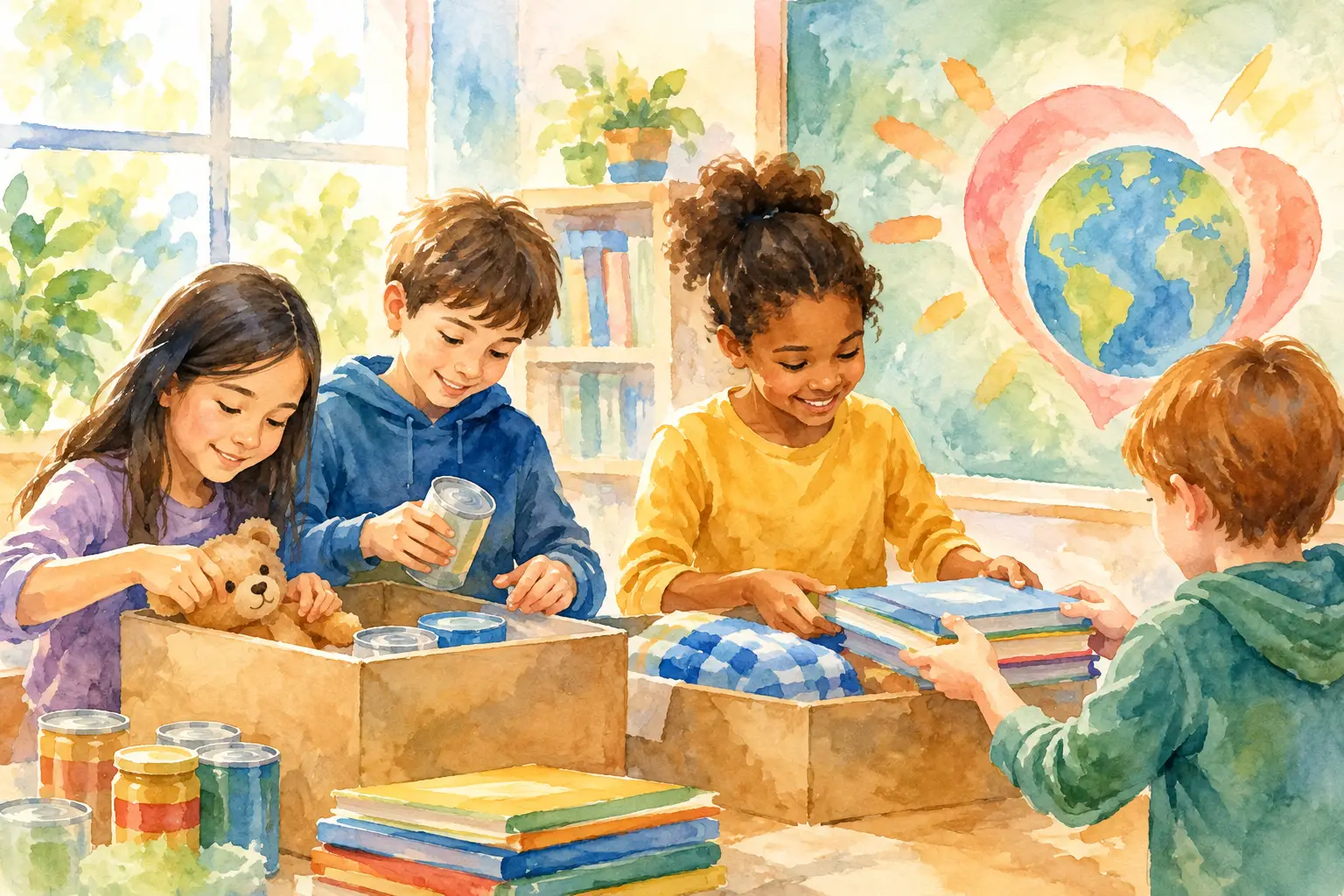
Build in free ways to participate. Students can draw, write notes, sort donations, design labels, count items, make posters, share a classroom announcement, or help deliver a message of thanks. If a collection is part of the project, make it optional and keep the request modest. A child’s effort and kindness should never be measured by the size of a donation.
Plan Classroom Giving Projects With Simple Roles
Organization helps the project feel exciting instead of chaotic. Create a short timeline with a beginning, a work period, and a finish. For young students, one or two weeks is often plenty. Longer projects can lose momentum unless there are regular, visible milestones.
Give children jobs that match their abilities. One group can decorate a collection box. Another can count and graph donated items. Students who enjoy writing can create thank-you notes or a short message for families. Creative helpers can make signs, while classroom leaders can give daily updates.
If you are working with preschoolers or early elementary students, keep tasks hands-on and brief. A child who adds one book to a box, colors one card, or places a sticker on a progress chart is participating in a real act of giving. Those small moments matter.
For older students, add learning connections. They can calculate totals, compare progress toward a goal, write persuasive announcements, or discuss how nonprofits use donated goods. This turns service into a natural part of math, reading, writing, art, and social studies.
Share the Project With Families Respectfully
Families want to support positive classroom experiences, but they need clear information. Send a short message that explains the cause, the project dates, and the optional ways to participate. Be direct about what is accepted and what is not. If the organization has rules about new versus used items, food packaging, or delivery dates, include them.
Use welcoming language. Let families know that encouragement is valuable even if they are unable to contribute items. They might talk with their child about kindness, help them draw a card, or simply celebrate their participation at home.
Avoid turning the project into a competition between classrooms or students. Friendly progress tracking can be motivating, but the focus should stay on the shared mission. A chart showing the class moving toward its goal is more inclusive than a leaderboard that spotlights who gave the most.
Make the Learning Visible
The giving itself is important, but reflection helps children understand why it mattered. Take a few minutes during the project for conversation, drawing, or writing. Ask what students noticed, what felt good, and what they learned about working together.
Simple prompts work well: Who are we helping? What can kindness look like? What was one job you did for the project? How did our class grow stronger by helping together?
A visual display can make the experience memorable. Add a paper heart, book, paw print, or star to a bulletin board for each completed action. Play a positive classroom song while students work, or invite them to create a kindness cheer. For young children, music and color can make a community lesson feel joyful and easy to remember.
If privacy rules allow, share a general thank-you from the receiving organization with the class. Do not expect personal stories or photos from recipients. The lesson is not about being praised. It is about showing up with care.
Celebrate the Finish Without Making It the End
When the project ends, pause to recognize the class’s effort. Count the items, deliver the cards, or share the final total. Then make room for gratitude. Thank students for their time, creativity, and teamwork. Thank families and school staff who supported the work.
A celebration can be small: a class cheer, a kindness certificate, extra reading time, or a chance for students to share what they are proud of. The best recognition connects back to the purpose. “We helped our neighbors” is more lasting than “We won.”
Not every project will go exactly as planned. A collection may bring in fewer items than expected. A partner organization may change its needs. Treat those moments as part of the lesson. Helping others requires flexibility, listening, and care.
The most lasting classroom giving projects do not ask children to be heroes all by themselves. They show children that communities are built when ordinary people notice a need and choose one kind action. That is a lesson they can carry far beyond the classroom.