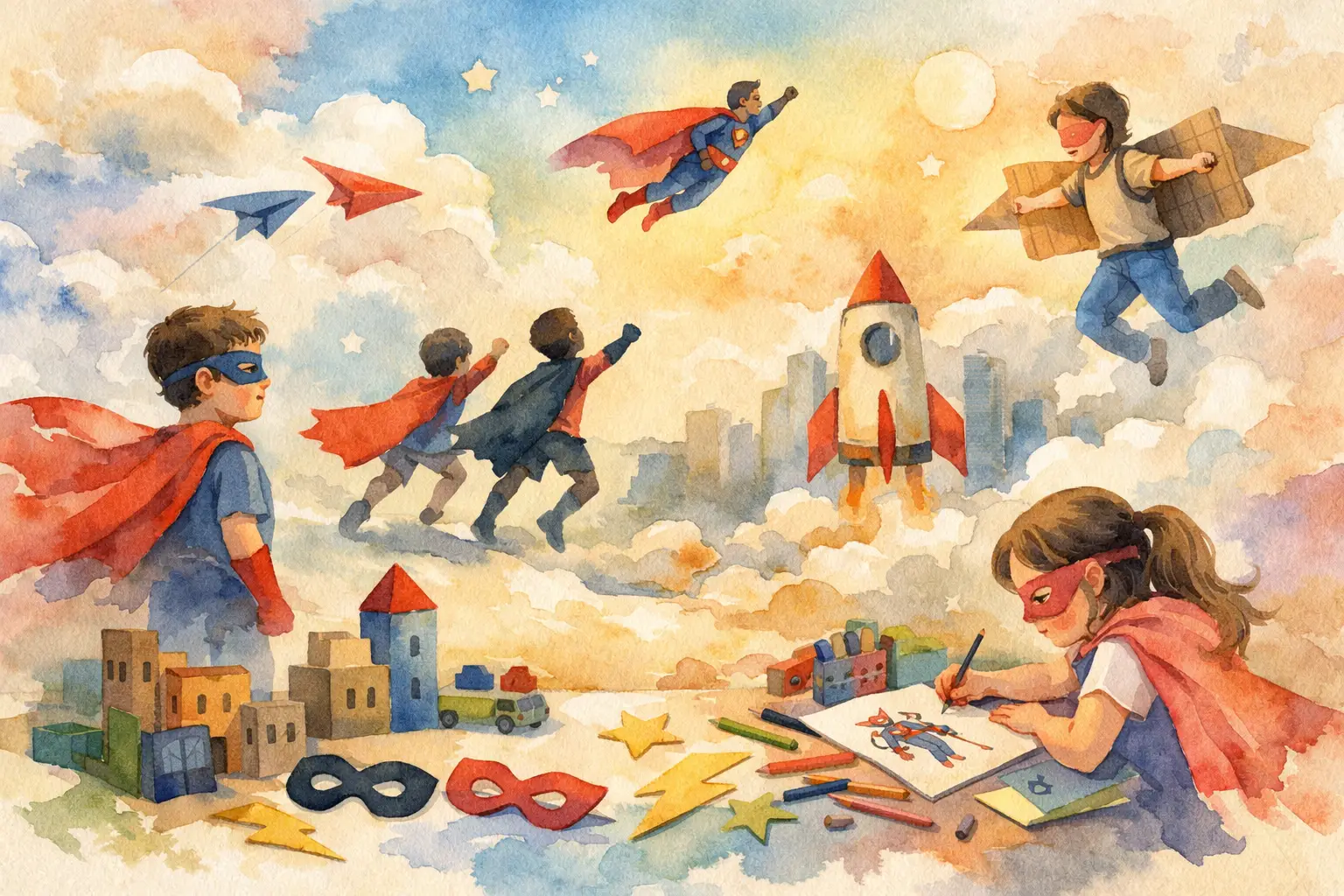
A cape can turn a living room into a learning headquarters. When children imagine themselves as helpers, heroes, and problem-solvers, everyday practice feels more like play. Superhero learning activities give early learners a positive role to step into while they build reading, math, creativity, movement, and caring habits.
The best part is that you do not need a costume closet or a big craft budget. A paper badge, a few crayons, music, and a clear mission can be enough to spark meaningful learning. Keep the focus on what heroes do: notice problems, practice skills, help others, and keep trying.
Why superhero learning activities work
Young children learn through repetition, movement, imagination, and connection. A superhero theme brings those pieces together. Instead of asking a child to practice letter sounds again, you can invite them to train their superhero hearing. Instead of presenting a page of counting problems, you can send them on a mission to count supplies for the community.
The theme also gives adults a helpful way to talk about character. A hero is not the child who is strongest or fastest. A hero can be someone who shares, tells the truth, listens carefully, and helps a neighbor. That message makes these activities useful at home, in classrooms, at libraries, and in community programs.
8 superhero learning activities to try
1. Build a letter-power badge
Give each child a paper circle, index card, or printable badge shape. Ask them to choose one letter to feature on it, starting with the first letter in their name if they are just beginning to learn the alphabet. They can color the letter, trace it, decorate it with stickers, or draw pictures of words that begin with that sound.
As they work, say the sound together: “M says /m/, like moon and music.” Older children can add three to five words around the edge of the badge. This is a simple activity, but it supports letter recognition, fine motor control, and confidence. Hang the badges where children can see their growing powers.
2. Go on a sound rescue mission
Choose a letter sound for the day and tell children that the sound needs rescuing. Walk around one room, a playground, or a classroom and look for objects that begin with that sound. For a /b/ mission, they might find a book, a ball, a blue bin, or a backpack.
You can make the mission easier by focusing on the beginning sound only. For children ready for more challenge, invite them to listen for sounds at the end of words or sort found objects by their first letter. The goal is not to find a perfect answer every time. Listening closely and trying again are superhero skills too.
3. Make a kindness command center
Set up a small box, jar, or corner of a bulletin board as the kindness command center. Write simple missions on slips of paper, such as “help put away toys,” “say something encouraging,” “hold the door,” or “draw a happy picture for someone.” Let children choose one mission each day.
Afterward, ask what happened and how their action made someone feel. This gives children language for empathy and helps them see kindness as something active. It also works well for siblings or classrooms because every child can contribute in a way that fits their age and ability.
4. Count the hero supplies
Gather safe household or classroom items such as blocks, crayons, buttons, paper clips, or toy cars. Tell children they are packing supplies for a mission. Ask them to count out a certain number, sort items by color, or make groups of two, five, or ten.
For example, a child might need six red crayons for the art team and four blue blocks for the building team. Older learners can write number sentences to match: 6 + 4 = 10. For younger children, simply touching each item as they count is valuable practice. Real objects make early math easier to see and understand.
5. Create a movement training course
Heroes need bodies that are ready to move, rest, and focus. Use painter’s tape, couch cushions, paper circles, or sidewalk chalk to create a short training course. Children can hop to letter spots, tiptoe across a balance line, crawl under a table, then freeze and name a color or number.
Keep the course playful and safe, with plenty of room to adjust it for your child. A child who does not enjoy jumping might prefer throwing a soft ball into a basket or completing a seated stretch. The purpose is not competition. Movement can help children reset their attention before reading, writing, or another quiet task.
6. Write a three-panel hero story
Fold a sheet of paper into three sections. In the first panel, children draw a problem. In the second, they draw what their hero does to help. In the third, they show the hopeful result. A lost puppy, a messy park, or a friend who feels sad can all become story starters.
Ask children to tell you the story aloud before they write. Younger children can dictate their words while an adult writes them down. Emerging writers can label pictures with simple words, and older children can add dialogue. This activity supports sequencing, storytelling, and the idea that helpful choices can change a situation.
7. Use music for memory powers
Songs make repeated practice feel lighter, especially for children who learn best by hearing and moving. Create a short chant for letters, sight words, days of the week, cleanup routines, or positive reminders. Add claps, stomps, or hand motions so children can participate with their whole bodies.
A line such as “Heroes try, heroes learn, heroes take their turn” can become part of a transition from playtime to learning time. Alphabetical Man’s music-centered approach is a reminder that a memorable character and a simple beat can help lessons stick. Keep songs short enough that children can join after hearing them a few times.
8. Design a community helper map
Draw a simple map of your neighborhood, school, or an imaginary town. Then ask children to add places where people help one another: a fire station, grocery store, library, hospital, school, park, or food pantry. They can draw community helpers and talk about what each person does.
This activity builds vocabulary and social awareness while showing children that heroes are all around them. You can extend the conversation by asking, “What is one way our family can help in this community?” Their answer may be as small and meaningful as picking up litter, donating a book, or welcoming someone new.
Keep the mission child-sized
The strongest superhero learning activities match the child in front of you. A preschooler may enjoy ten minutes of coloring and letter sounds, while an elementary-age child may want to build a story, solve number challenges, and plan a kindness project. If attention starts to fade, shorten the mission rather than pushing through it.
It also helps to give children choices. They may choose whether to wear a cape, which color to use, what problem their story hero solves, or which kindness mission feels right. Choice gives children ownership, and ownership makes learning more likely to continue after the activity ends.
A superhero theme is most powerful when it reminds children that their everyday abilities matter. A careful listener, a creative artist, a brave beginner, and a thoughtful friend all have powers worth practicing. Start with one small mission today, then watch what your child is ready to do next.