A toddler with a crayon in a tight fist and a big opinion about the “right” purple is usually more ready than they look. If you are wondering how to introduce coloring to toddlers, the best place to start is not with perfect lines or finished pages. It starts with curiosity, short moments, and tools small hands can actually enjoy.
Coloring can be a fun early learning activity, but it works best when adults keep expectations realistic. Toddlers are not trying to stay inside the lines. They are learning how their hands move, how colors show up on paper, and how creative play feels. That means a good introduction is simple, welcoming, and a little flexible.
Why coloring works so well for toddlers
Coloring gives toddlers a chance to practice several early skills at once. They build hand strength, experiment with motion, and begin to connect actions with results. A scribble may look random to an adult, but to a young child it can feel like a big discovery.
It also supports focus in a gentle way. Many toddlers are still learning how to sit with one activity for more than a minute or two. Coloring invites them to slow down without making it feel like work. There is no buzzer, no score, and no pressure to perform.
For families and educators, coloring is also easy to use alongside language and character-building. You can name colors, talk about shapes, describe pictures, and encourage patient effort. A page with letters, animals, or friendly characters can turn a quiet activity into a playful learning moment.
How to introduce coloring to toddlers without pressure
The fastest way to make coloring frustrating is to treat it like a test. Toddlers do better when coloring is presented as an invitation, not an assignment. Sit beside them, place a few tools on the table, and let the experience stay light.
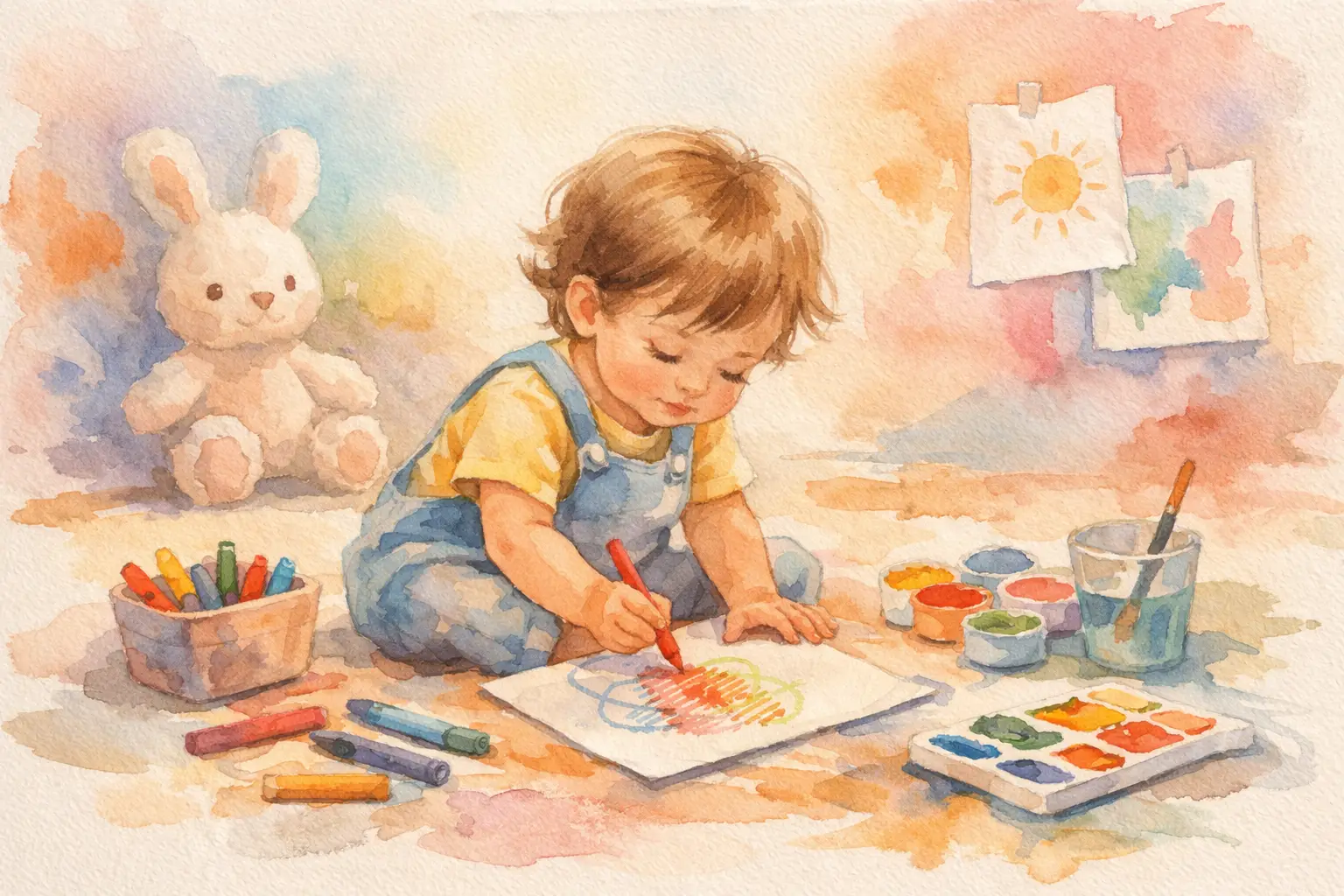
Start small. One sheet of paper and two or three crayons is often enough. Too many choices can feel exciting for adults but overwhelming for little kids. Short sessions also help. Five happy minutes is better than twenty cranky ones.
Your tone matters just as much as the materials. Instead of saying, “Color the whole picture,” try something simpler like, “Want to try the blue crayon?” or “Can you make some big circles?” That kind of language keeps the moment playful and builds confidence.
Pick toddler-friendly materials first
Not every coloring supply is a good fit for beginners. Toddlers usually need chunky crayons or thick washable markers that are easy to grip. Thin pencils and slippery tools can make the activity harder before they have built the control to use them.
Paper matters too. Large, simple images with bold outlines tend to work better than busy pages filled with tiny details. Open space gives toddlers room to experiment. If the page looks too crowded, they may lose interest quickly.
Washable supplies are worth it. Early coloring often includes tables, fingers, and sometimes faces. Choosing materials that clean up easily keeps adults calmer, and calm adults make better coloring partners.
If you use a coloring book, look for pictures that feel cheerful and familiar. Animals, letters, simple objects, and friendly characters are all strong options. A page that connects to music, story time, or the alphabet can hold attention longer because it already means something to the child.
Set up the space for success
A good coloring setup does not need to be fancy. It just needs to help toddlers feel comfortable and safe enough to explore. A flat surface, good light, and a seat that fits their size can make a big difference.
Try to protect the table without making the area feel off-limits. A placemat, tray, or simple sheet of paper underneath can help. That way, if a crayon wanders, nobody has to panic.
It also helps to time coloring well. Right before nap time or when a child is hungry is usually not the best moment to introduce something new. Toddlers are more open to creative activities when they are rested, fed, and not rushing to the next thing.
What to expect in the beginning
The first stage of coloring often looks like scribbling, tapping, switching colors, and wandering off. That is normal. In fact, scribbling is an important part of early writing and drawing development.
Some toddlers will color for thirty seconds and be done. Others will press hard, fill the page, and ask for another. It depends on the child, their age, their sensory preferences, and how familiar they are with crayons or markers.
You may also notice that toddlers do not use colors the way adults expect. Grass might be orange. A dog might be pink. That is not a mistake. It is exploration. Unless the goal is specifically to teach color matching, there is no need to correct every creative choice.
Make coloring interactive
Coloring becomes more meaningful when it feels shared. You do not need to hover or direct every move, but joining in can help toddlers stay engaged. Sit nearby and color your own page or section. Children learn a lot by watching.
Talk about what they see and do. You might say, “You made long green lines,” or “That red is really bright.” This kind of narration supports language development without judging the result.
You can also connect coloring to songs, stories, and pretend play. If a child is coloring a letter A, name words that start with A. If they are coloring a superhero cape, talk about helping others and being brave. These little connections make the activity richer while keeping it fun.
That is one reason character-based learning can be so helpful. A familiar, positive character can make a coloring page feel like part of a bigger world, not just a worksheet.
When toddlers resist coloring
Not every toddler takes to coloring right away. Some dislike the feeling of crayons. Some would rather move than sit. Others are still building the hand strength needed to enjoy it.
If a child resists, it does not mean coloring is a bad fit forever. It may simply mean they need a different entry point. Try drawing on a large sheet taped to the table, using broken crayons with easier grips, or offering a short session with no expectation to finish anything.
You can also build interest through related activities. Playdough, stickers, water painting, and chalk all support similar early motor skills. Sometimes coloring becomes easier after a child has had more practice pressing, pinching, and making marks in other ways.
How to keep coloring positive over time
Praise effort more than appearance. Toddlers respond well to comments like, “You worked hard on that,” or “You tried a lot of colors.” That helps them feel proud without believing there is only one correct way to create.
It also helps to display their work now and then. A page on the fridge or wall sends a simple message: what you make matters. For toddlers, that kind of encouragement can build the confidence to keep trying.
Routine can help too. A small coloring moment after breakfast or before story time gives toddlers a familiar chance to practice. The goal is not to force a daily art lesson. It is to make coloring feel like a normal, welcoming part of the day.
If you want to gently increase the challenge, do it slowly. Move from plain paper to simple coloring pages. Offer more color choices. Encourage circles, dots, or short lines. But let the child lead the pace whenever possible.
A simple approach for parents and caregivers
If you want a clear answer to how to introduce coloring to toddlers, think easy, cheerful, and low-pressure. Offer a few toddler-friendly tools, keep sessions short, and let scribbling count as success. Stay close, notice their effort, and treat creativity like play rather than performance.
Some days a toddler will color for ten minutes. Some days they will make one dramatic mark and call it done. Both days still count. What matters most is that coloring feels safe, fun, and full of possibility.
A crayon in a toddler’s hand is not just about making a picture. It is one small step toward confidence, expression, and joyful learning – and that is always worth making room for.