A child who is invited to roar like a bear, point to a picture, or guess what happens next is not just sitting through a book. They are building language, confidence, and a happy connection with reading. You do not need a classroom full of supplies to make storytime more interactive. A few small invitations can turn a familiar book into a shared adventure.
For toddlers and early elementary children, the goal is not to make every page busy. The goal is to help them feel that stories belong to them. Some children will jump in right away. Others may listen quietly at first, then join with a whisper, a gesture, or a favorite repeated phrase. All of those responses count.
1. Give the story a simple job
Before you begin reading, offer children one thing to listen or look for. It might be a sound, a color, a character’s feeling, or a repeated word. Say, “Every time you hear the word ‘blue,’ touch your nose,” or “Let’s listen for the part where the rabbit gets brave.”
This gives young listeners a purpose without turning the book into a test. Keep the job easy enough that children can succeed. For a longer story, change the job halfway through if their attention starts to drift.
2. Pause for real questions
Questions are one of the easiest ways to make storytime more interactive, but the best questions are not always the ones with one correct answer. Instead of asking, “What color is the hat?” every time, try asking, “How do you think the character feels right now?” or “What would you do if that happened to you?”
Give children time to answer. A pause can feel long for adults, especially when a child is thinking, but it gives them room to find words. If they do not answer, offer a choice: “Do you think she feels excited or worried?” Then accept their idea, even if it is different from yours.
You can also let children ask questions. A child who stops you to wonder why a character made a choice is paying attention in a meaningful way. Answer simply when you can, and when you cannot, say, “That is a great question. What do you think?”
3. Add a sound, a motion, or a song
Books already come with built-in action. Rain can be fingertip taps on the floor. A train can be a soft “choo-choo.” A sleepy character can invite a big stretch and a yawn. Repeated lines are especially good for call-and-response. Read the first part, then let children finish the words they know.
Music can help, too. A short made-up tune for a character’s name or a simple clap pattern between pages can bring energy without taking over the story. Children do not need a polished performance. They need permission to use their voices.
For children who have trouble sitting still, movement is often the answer, not a distraction. Ask them to stomp like a dinosaur, float like a cloud, or tiptoe like a mouse. Then bring the energy back down with a quiet page, a deep breath, or a whispered line from the book.
4. Let children help tell the story
A child does not have to read every word to become a storyteller. Invite them to turn pages, hold the book, point out details, or repeat a character’s line. If the book is familiar, pause before a key moment and let them tell you what comes next.
Try changing roles after the first read. You can be the narrator while your child supplies a sound effect. Or let them “read” the pictures to you. Picture reading builds observation, sequencing, vocabulary, and storytelling skills, even when a child cannot yet decode the printed words.
This works beautifully with older siblings, too. Ask an early reader to take one character’s voice while a younger child makes the sound effects. Everyone gets a part, and the shared story feels less like a performance and more like play.
5. Use a small prop, not a big production
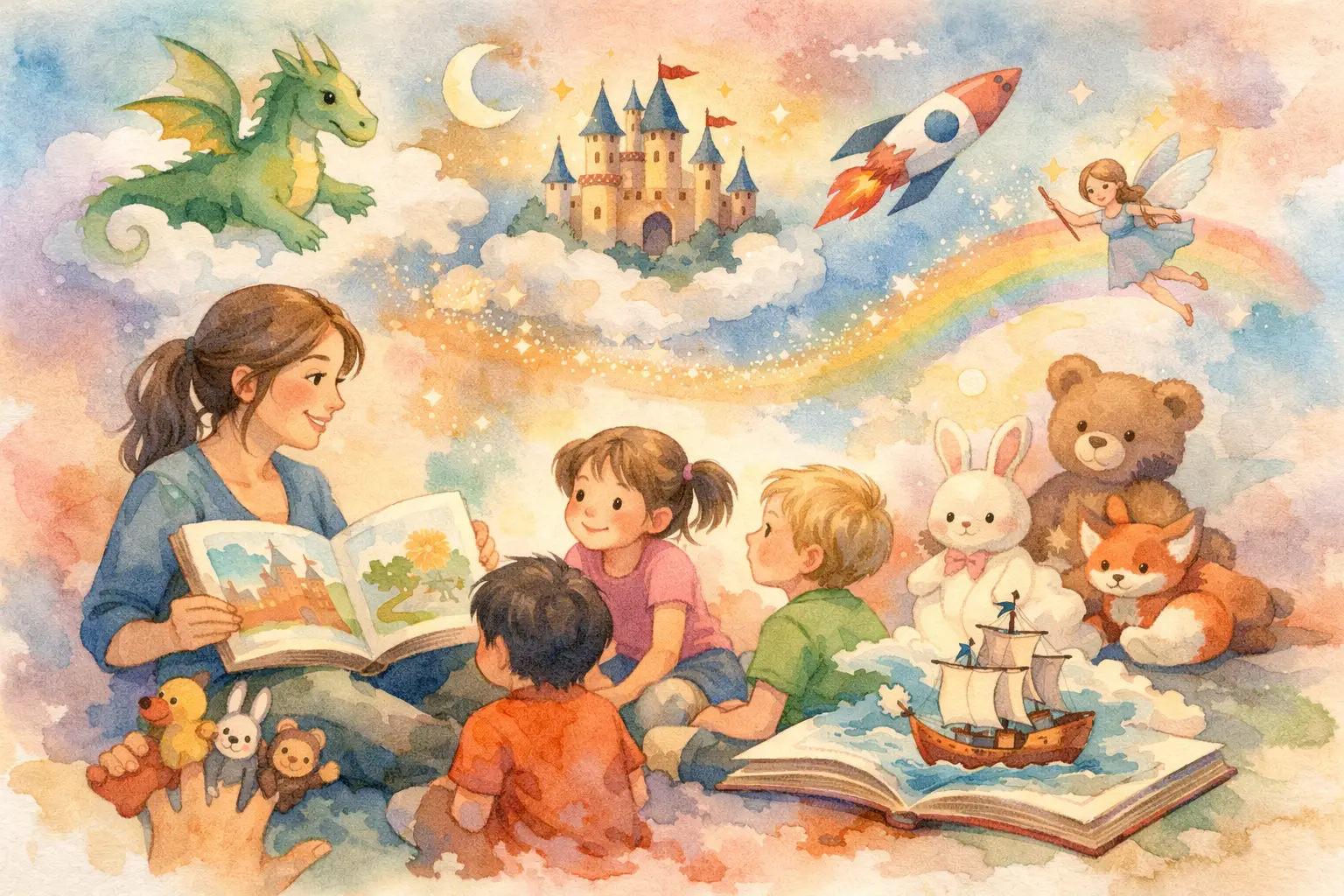
Props can make a story feel special, but they do not need to be fancy. A scarf becomes a superhero cape, a stuffed animal becomes a story character, and a paper bag can hold a surprise object tied to the book. Choose one or two items that support the story rather than pulling attention away from it.
For example, if a book includes a lost puppy, place a toy dog beside you before you start. When the puppy appears in the story, let the child hold it. If the book is about a garden, bring a leaf or a flower to touch and describe. Simple objects help children connect words to the world around them.
A coloring page can also extend the experience after the final page. Children can draw their favorite scene, color a character, or create a new cover for the story. Brands like Alphabetical Man make this kind of creative follow-up feel playful and purposeful, especially for children who learn best when music, pictures, and hands-on activity work together.
6. Follow the child’s attention
Interactive storytime is not about stopping on every page. Too many questions, motions, and props can break the flow of a good story. Watch the child in front of you. If they are deeply focused, keep reading. If they are wiggling, looking away, or talking over the book, add a chance to move or respond.
The right amount of interaction depends on age and temperament. Toddlers may enjoy a short board book with lots of repeated sounds. A kindergartener may love predicting what happens next. An older child may want to discuss why a character made a hard choice or invent a different ending.
It is also okay to reread the same book many times. Familiar stories are not boring to young children. Knowing what comes next helps them join in, notice new details, and feel capable. On the third or tenth read, they may begin to “read” the repeated lines with you.
7. Keep the ending connected to real life
After the book, take one gentle step beyond the page. Ask, “What was your favorite part?” or “Did this story remind you of anything?” If the character showed kindness, invite the child to name one kind thing they could do today. If the story was about trying again, remember a time when they practiced something hard.
Do not worry if the answer is silly, short, or off-topic. A child may say their favorite part was the purple socks, and that is still a conversation starter. You can respond with curiosity: “Those socks were funny. Would you wear purple socks like that?”
A simple ending ritual can help, too. You might sing a short goodnight song, choose tomorrow’s book, or let the child place the book in a special reading basket. These small routines tell children that storytime is a welcoming place where their ideas matter.
The best interactive storytimes are not the loudest or most complicated ones. They are the moments when a child looks at a book, joins the story in their own way, and begins to believe, “I can be part of this.”