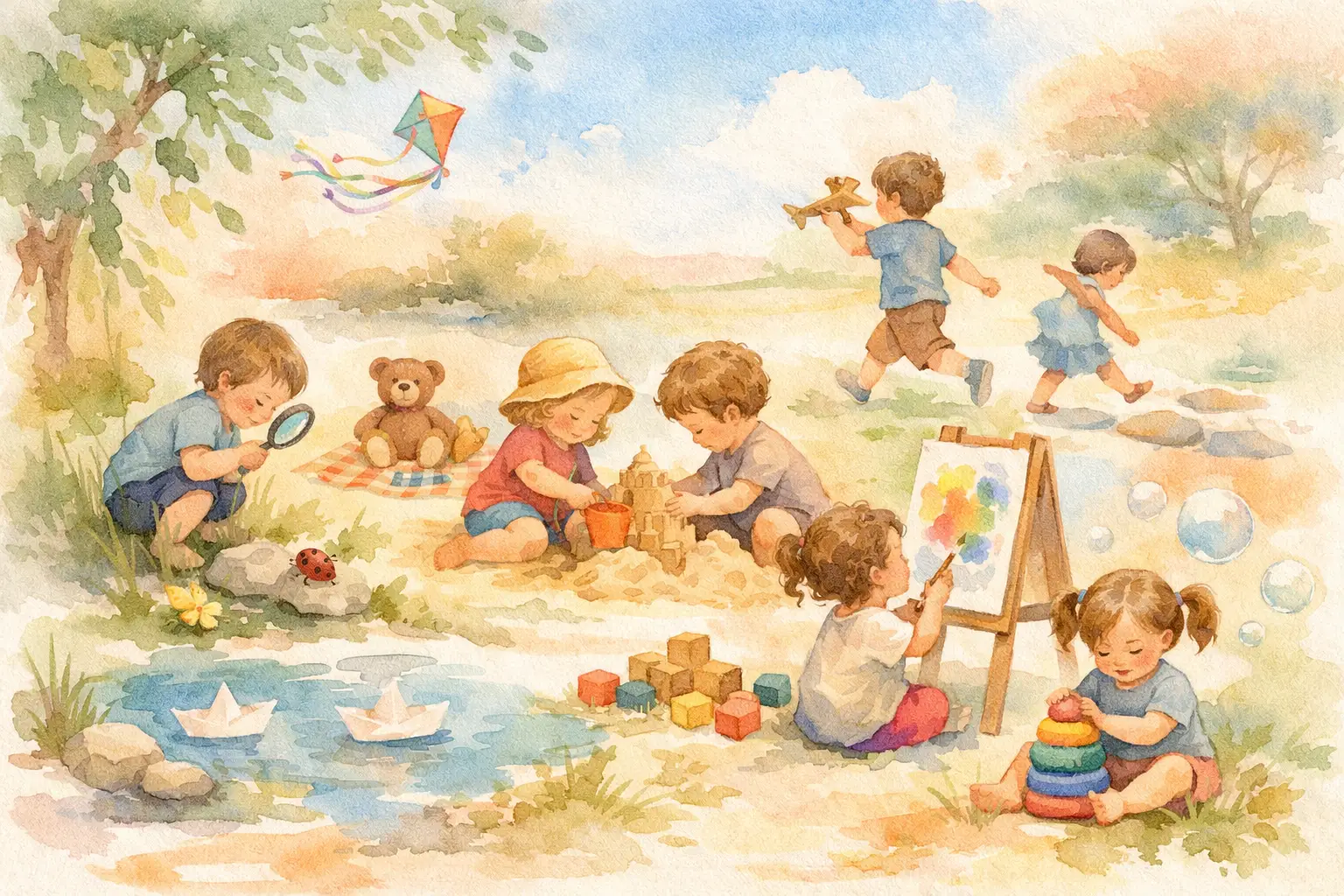
A toddler who has watched one more video than they can handle does not always look sleepy. They may look restless, loud, clingy, or suddenly unable to choose a toy. That is where screen free activities for toddlers can help. They give little ones a chance to move their bodies, use their hands, hear real conversation, and feel proud of something they made or did.
The goal is not to fill every minute with a lesson. Toddlers learn through repetition, mess, movement, and simple routines. Choose one activity, stay nearby, and let it be short. Ten happy minutes can be more meaningful than an hour of trying to make a toddler follow a plan.
Screen Free Activities for Toddlers at Home
1. Make a music-and-movement break
Put on a cheerful song and invite your child to march, clap, stomp, spin, or freeze when the music stops. Name what you see: “Your feet are stomping!” or “You froze like a statue!” This builds listening skills, body awareness, and vocabulary without making play feel like work.
For a calmer version, use a slow song and sway with scarves, dish towels, or ribbons. Young children often enjoy music most when an adult joins in instead of directing from across the room.
2. Create a color hunt
Choose one color and look for it together around the room. A red hunt might include a block, a sock, a book cover, and a cup. Place the finds in a basket, then try another color another day.
Keep the language simple: “You found blue,” “That is a big green ball,” and “Let’s look under the chair.” Toddlers do not need to identify every shade correctly. The fun is noticing, naming, and searching.
3. Build a pillow path
Lay couch cushions, pillows, and a folded blanket on the floor to make a safe path. Your toddler can step, crawl, balance, or hop from one soft spot to the next. Add a stuffed animal at the end as a friendly finish line.
This is especially useful on rainy days or during the late-afternoon wiggles. Keep the path low and clear of furniture corners, and stay close while your child explores.
4. Try a simple sink or water bin activity
A shallow bin with a small amount of water, cups, spoons, and plastic containers can hold a toddler’s attention surprisingly well. They can scoop, pour, fill, and empty while practicing coordination.
Water play needs full adult supervision, even with very little water. Put down towels first and call it part of the activity, not a problem to avoid. When play is over, invite your child to help wipe the area with a small towel.
5. Turn laundry into a matching game
Clean socks make excellent toddler learning tools. Spread out a few pairs and ask your child to find socks that match. At first, use pairs with bold colors or clear patterns.
They may not match every pair, and that is fine. Sorting, touching, comparing, and helping with a real household task all matter. Toddlers often feel more engaged when they get to do something that looks like grown-up work.
Creative Play That Builds Early Skills
6. Color with a tiny invitation
Instead of handing over a coloring page with no direction, make a small invitation: “Can you find a crayon for the sun?” “Let’s make marks that go up and down.” “What color should this hat be?” A few crayons at a time can feel less overwhelming than a full box.
Coloring strengthens the small hand muscles children will later use for writing. It also gives them a safe way to make choices. A toddler’s purple dog or green face is not a mistake. It is imagination at work.
7. Make play dough stories
With homemade or store-bought play dough, make simple objects together: a ball, a snake, a cookie, or a tiny pancake. Then add a story. Maybe the dough snake is looking for a leaf, or the cookie is going to a pretend birthday party.
This activity brings together language, pretend play, and hand strength. If your toddler is still putting materials in their mouth, choose taste-safe dough and supervise closely.
8. Start a sticker scene
Offer a sheet of large, age-appropriate stickers and a piece of paper. Your child can place stickers anywhere they like, while you narrate the scene: “That star is high in the sky,” or “Three animals are together.”
Peeling stickers can be tricky, so start the edge for them if needed. The challenge is useful. Small moments of effort help children build patience and confidence.
9. Make a family photo talk book
Print a few family photos or use pictures from old cards and magazines. Place them in a small notebook or tape them onto paper. Sit together and talk about who is there, what happened, and what your child remembers.
This is a gentle language activity for toddlers who may not want to sit through a longer story. Repeating familiar names and moments helps children feel connected and gives them words for their own world.
10. Sing the directions
Turn ordinary transitions into tiny songs. Sing, “Shoes on, shoes on, one foot and then the other,” or make up a cleanup tune with your child’s name in it. The song does not have to rhyme perfectly.
Music gives toddlers a pattern they can predict. That can make daily routines feel less like a demand and more like something they know how to do. A positive character such as Alphabetical Man can also make letter sounds, songs, and creative play feel like a special mission.
Everyday Adventures for Busy Toddlers
11. Go on a sound walk
Step outside or open a window and pause. What can you hear? A truck, a bird, wind in the trees, a dog, footsteps? Take turns pointing and naming sounds.
A sound walk works in a neighborhood, a parking lot, a park, or even on a porch. It asks toddlers to slow down and pay attention, which is a big skill for a very small person.
12. Let them be a helper
Toddlers can carry napkins to the table, place plastic utensils in a drawer, put books into a basket, or water a plant with help. Choose one small job with a clear ending.
Helping can take longer than doing it yourself. That is the trade-off. But when time allows, these little jobs teach capability, belonging, and responsibility better than a speech ever could.
13. Set up a pretend picnic
Spread a blanket on the floor and gather stuffed animals, toy dishes, and pretend food. Your child can serve, feed a bear, pour imaginary tea, and invite you to sit down.
Pretend play lets toddlers practice the social moments they see around them. Follow their lead. If the bear wants broccoli on its head, the bear has made an interesting choice.
14. Read one book many ways
You do not need a new book every day. Read a familiar favorite, then read it again with a new purpose. Look for a certain animal, count two or three objects, make the character’s sound, or ask what might happen next.
Toddlers love repetition because it gives them a sense of control. Hearing the same words again and again supports memory, early literacy, and the joy of knowing what comes next.
15. Make a cardboard-box creation
A delivery box can become a bus, a bed for dolls, a tunnel for toy cars, or a place to drop soft balls. Add washable crayons, paper, or a few safe cut-out windows prepared by an adult.
The best box play usually starts with very little instruction. Offer the materials, name the possibility, and see where your child takes it. Always remove staples, tape, plastic wrap, and any loose pieces before play begins.
How to Make Screen-Free Time Feel Easier
Screen-free play does not have to mean parents are entertaining nonstop. Set out two or three simple choices and let your toddler decide. A basket with crayons, chunky paper, a board book, and a few blocks can become a reliable starting point when you need an idea quickly.
It also helps to expect resistance sometimes. If screens have become part of a morning, meal, or car ride routine, changing that pattern may bring big feelings at first. Start with one predictable screen-free moment instead of changing the whole day at once. A short song after breakfast, a color hunt before lunch, or books before bed can become a comforting family rhythm.
The most memorable toddler activities are rarely the fanciest ones. Sit on the floor, sing the silly song, admire the scribble, and let the laundry matching take twice as long. Your attention tells your child that their small discoveries are worth celebrating.