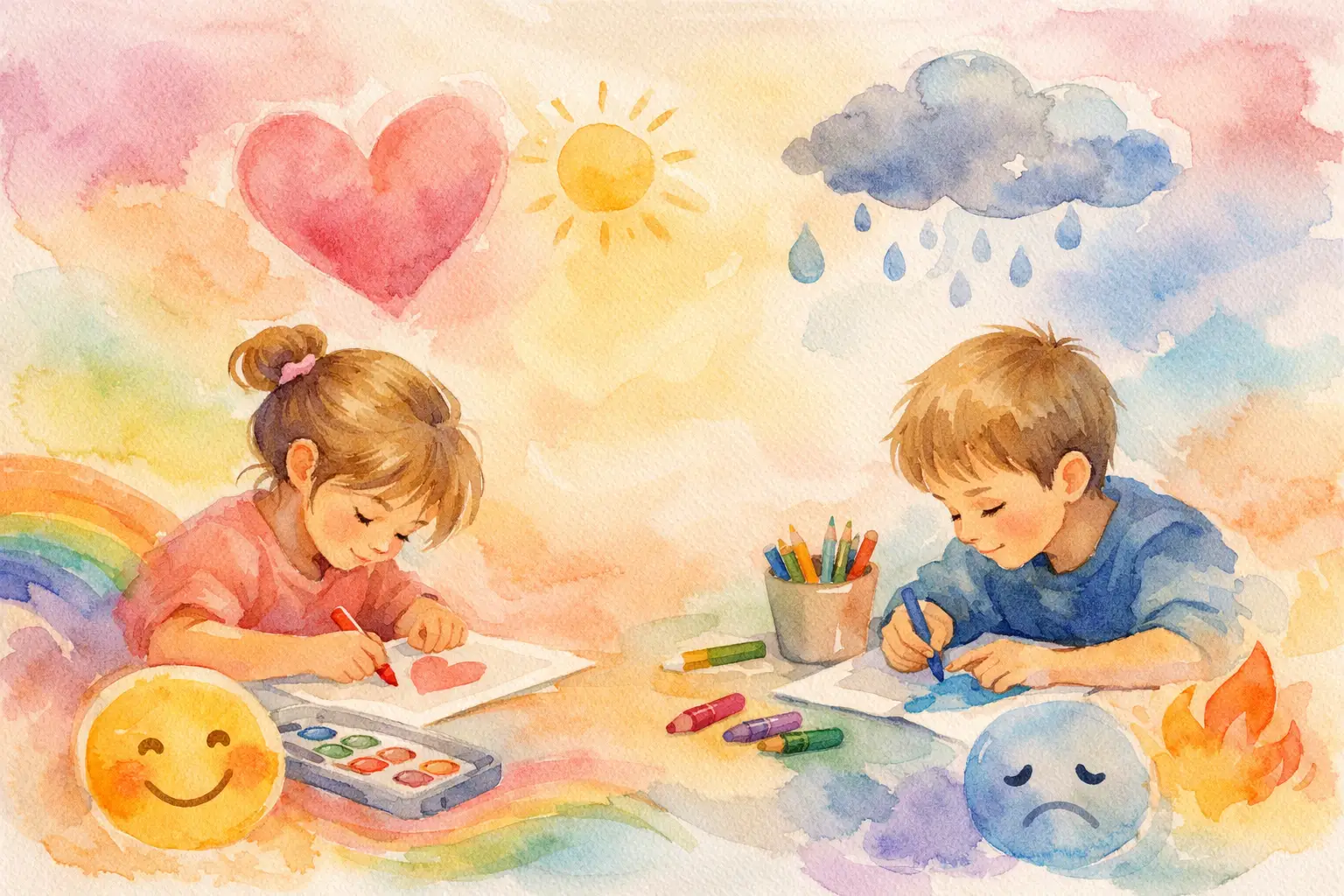
A child may not say, “I am frustrated because my tower fell down.” They may crumple a paper, go quiet, or color with big, fast scribbles instead. Coloring activities for feelings give children another way to communicate. With a few crayons and a welcoming question, a blank page can become a safe place to show what words cannot yet explain.
For toddlers and early elementary children, emotions can feel big, surprising, and hard to sort out. Coloring does not make every hard feeling disappear. It can, however, create a calm moment where children can notice what they feel, practice naming it, and feel heard by a trusted adult.
Why Coloring Helps Children Talk About Feelings
Coloring is familiar, low-pressure, and easy to start. There is no right answer when a child chooses purple for anger or black for excitement. That freedom matters. It tells children that their inner experience is welcome, even when it is messy or different from what an adult expects.
The repeated motion of coloring can also help some children slow down after a busy, upsetting, or overwhelming moment. A child who is not ready to talk may be ready to choose a crayon. As they color, conversation often becomes easier because their hands have something to do and they do not have to make constant eye contact.
This works best when coloring is an invitation, not a test. Instead of asking, “Why are you mad?” try, “Would you like to show me what your feeling looks like?” A child can pass, change the subject, or simply color. Giving that choice builds trust.
Set Up a Simple Feelings Coloring Space
You do not need special supplies or a perfect craft table. Keep crayons, colored pencils, plain paper, and a few printed coloring pages in an easy-to-reach spot. Include a range of skin-tone colors when possible, along with bright colors, darker shades, and simple shapes.
The setting matters more than the setup. Choose a time when no one is rushing out the door. Sit nearby and color too if your child seems unsure. Your job is not to interpret every mark. Your job is to be present, curious, and calm.
It can help to use a small group of feeling words that fit your child’s age: happy, sad, mad, scared, worried, excited, disappointed, proud, and calm. Young children do not need a long lesson on emotions. They need repeated chances to connect a feeling word with something they recognize in their body and day.
Start With Color Questions, Not Corrections
Ask open questions that let your child stay in charge. You might say, “What color feels peaceful today?” or “Which color matches the way your body feels after recess?” If they answer with a silly color choice, join the play. A green worried monster or an orange sleepy sun can lead to a real conversation.
Avoid telling a child that a color is wrong for an emotion. Some children see anger as red, while others see it as dark blue or a wild mix of colors. The point is expression, not a color chart.
Coloring Activities for Feelings to Use at Home or School
These activities are simple enough for a quiet afternoon at home, a classroom calm-down corner, or a small group at a community program. Pick one at a time. Too many choices can make a tired child feel more overwhelmed.
Draw a Feelings Face
Draw several large circles on paper, or use a page with simple faces. Invite children to color one face happy, one sad, one angry, and one worried. Then ask what the eyes, eyebrows, and mouth might look like for each feeling.
For younger children, keep it playful: “Can this face have a really wiggly worried mouth?” For older children, add a sentence below each face: “I feel this way when…” They can finish the sentence, dictate it to an adult, or leave it blank. Sharing should always be optional.
Make a Color Mood Map
Draw a simple outline of a person or use a large body shape. Ask your child where they feel different emotions. Maybe excitement feels like yellow sparkles in their hands. Maybe worry feels like gray swirls in their tummy. Maybe anger looks like red heat in their cheeks.
This activity helps children notice body clues before a feeling gets too big. You can gently connect the picture to a coping choice: “When your tummy has worried swirls, what could help? A hug, slow breaths, a drink of water, or sitting with me?” There is no one answer. Different tools help different children.
Create an “I Can Calm Down” Page
At the top of a sheet, write, “When I have a big feeling, I can…” Draw four simple spaces underneath. A child can color pictures of their favorite calming choices, such as taking belly breaths, squeezing a pillow, listening to music, asking for help, or sitting in a cozy spot.
This page is especially useful when made during a calm moment. It is harder to learn a new strategy in the middle of a meltdown. Later, you can point to the page and offer one or two choices without demanding that your child use them right away.
Color a Weather Report for the Day
Feelings change, just like weather. Draw a sun, rain cloud, wind, lightning, and rainbow. Ask your child which picture matches their morning, afternoon, or whole day. They can color more than one weather symbol because people can feel happy and nervous, proud and tired, all in the same day.
This activity teaches an important message: feelings move. A stormy feeling can pass. A sunny feeling can return. Children do not have to be cheerful all the time to be okay.
Design a Feelings Superhero
Invite your child to draw and color a superhero who helps with tough emotions. What is the hero’s name? What does their cape look like? Does their superpower help people take deep breaths, find kind words, or ask for a break?
A superhero theme can make emotional learning feel brave instead of heavy. Alphabetical Man’s positive, character-based spirit is a natural reminder that everyday heroes can use words, creativity, and kindness to help themselves and others.
Make a Kindness Coloring Card
Some feelings need connection. When a child is missing someone, feeling left out, or proud of a friend, invite them to color a card for that person. They might add a picture, a simple message, or a dictated note.
Do not turn the card into a requirement to “fix” a conflict. If a child is angry with a sibling, they may need space before they are ready for kindness. But when they are ready, creative expression can offer a gentle way back toward connection.
How Adults Can Respond Without Taking Over
The words you use while a child colors can make the activity feel safe or stressful. Describe what you see before asking questions: “I notice you used lots of sharp lines here.” Then leave room for the child to decide whether they want to explain.
Try to avoid guessing too confidently. Saying, “You must be angry,” can make a child feel misunderstood. Instead, say, “This picture looks powerful. Does it match a feeling?” If they say no, believe them. Their picture belongs to them.
Praise effort and honesty rather than making every page look pretty. “You worked carefully on showing that worried feeling” is more helpful than “That is the best picture ever.” Children learn that their ideas matter, not just the final product.
There are times when coloring is not the right tool. A child who is very upset may first need safety, quiet, movement, food, rest, or a caring adult nearby. Offer coloring later, once their body has settled. And if a child frequently seems overwhelmed, withdrawn, fearful, or unable to manage daily routines, talk with their pediatrician, school counselor, or another qualified support professional.
Make Feelings Coloring Part of the Routine
A short routine can be more useful than an occasional big activity. Keep a feelings page available after school, before bedtime, or after a transition such as moving to a new classroom. Even five quiet minutes can create a helpful pause.
You can also pair coloring with music. Play a calm song and ask children to color the sound, or choose a song that feels cheerful and use bright colors. Music and art give early learners more than one path to express what is happening inside.
Save a few pages over time, with your child’s permission. Looking back can help them see growth: “Last month you drew a huge storm when school felt hard. What does school feel like now?” Do not use old artwork to prove a point. Use it to celebrate how feelings can change and how children can keep learning about themselves.
A crayon cannot solve every problem, but it can open a door. When children are given space to color their feelings, they learn that every emotion has a name, every person deserves to be heard, and help can begin with one small mark on a page.