Coloring Pages vs Activity Books for Kids
Coloring pages vs activity books: learn which option best supports your child’s creativity, early skills, focus, and joyful screen-free play at home today.
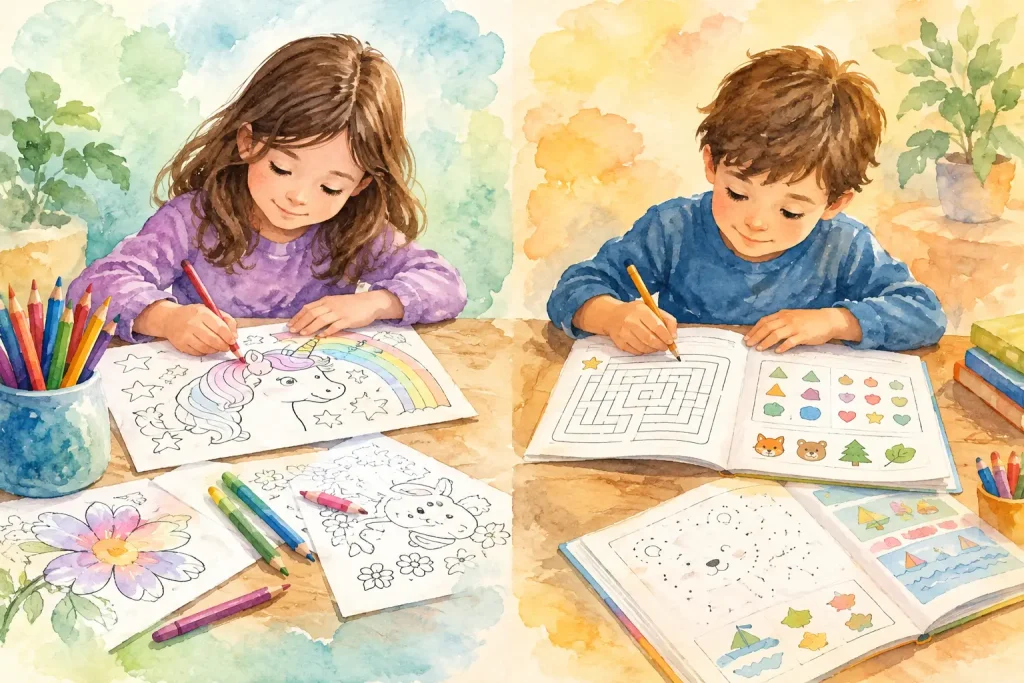
A quiet table, a box of crayons, and a few free minutes can become a meaningful learning moment. When parents and educators compare coloring pages vs activity books, the best choice is not always one or the other. Each gives children a different way to create, practice, and feel proud of what they can do.
For toddlers and early elementary kids, hands-on activities do more than fill time between meals, errands, or lessons. They build attention, encourage self-expression, and offer a welcome break from screens. The key is choosing an activity that fits the child in front of you, not simply the one with the most pages.
Coloring Pages vs Activity Books: The Main Difference
Coloring pages give children one clear, open-ended task: add color and make the picture their own. A child may choose a purple sun, a green superhero cape, or every color in the crayon box. There is no single right answer, which makes coloring especially inviting for young children who are still learning how to hold a pencil, make choices, and finish a simple project.
Activity books usually offer more variety. Along with coloring, they may include tracing, matching, mazes, letter practice, number games, spot-the-difference puzzles, cut-and-paste projects, or simple writing prompts. They can support specific school-readiness skills while keeping the experience playful.
Neither format is automatically better. Coloring pages are often easier to start and less demanding. Activity books can hold a child’s interest longer and provide more structured practice. The right fit depends on your child’s age, energy level, interests, and the moment you are trying to support.
What Children Gain From Coloring Pages
Coloring may look simple, but it gives little hands and growing minds plenty to do. As children grasp crayons, move across a page, and try to color inside a shape, they strengthen the small muscles used later for writing, buttoning, and using scissors.
Coloring also lets children make independent choices. They decide which colors belong on the page, where to begin, and when the work feels complete. That sense of ownership matters. A child who says, “I made this,” is practicing confidence as much as creativity.
For children who are tired, overstimulated, or still building their attention span, coloring can feel calming. The goal is easy to understand, and the pace belongs to the child. A single character, animal, letter, or familiar scene can invite conversation without turning play into a quiz.
Character-based coloring pages add another layer of connection. When a child colors a positive hero or a friendly figure they recognize, they can imagine stories, name feelings, and talk about helpful choices. A page becomes a small stage for big ideas.
When coloring pages are the better choice
Choose coloring pages when you need an easy, low-pressure activity. They work well for waiting rooms, travel, quiet time, a classroom center, or a few peaceful minutes while dinner comes together. They are also a strong option for younger children who may find multi-step directions frustrating.
Coloring pages are useful when a child wants freedom. If your child loves making up stories or insists that dinosaurs can wear rainbow sneakers, a page with room for imagination may be more engaging than a worksheet with one expected answer.
What Children Gain From Activity Books
Activity books bring several kinds of learning into one place. A child might color a picture, trace the first letter of a word, and then solve a simple maze. This variety can help children practice skills without feeling like they are doing a formal lesson.
For preschoolers and kindergarteners, activities such as tracing lines, matching pictures, and identifying letters can support early literacy and math foundations. For older children, word searches, logic puzzles, and reading prompts can encourage persistence and problem-solving.
Activity books can also help children get comfortable following directions. “Circle the biggest object” or “Find three items that begin with B” asks them to listen, notice details, and complete a task in sequence. These are helpful school skills, especially when the book keeps the instructions short and age-appropriate.
The trade-off is that more structure can sometimes mean more pressure. A child who is still learning to recognize letters may enjoy coloring the apple on a page but feel discouraged by a letter-matching challenge. That does not mean activity books are a poor choice. It simply means adults should offer support, skip a page when needed, and protect the feeling of play.
When activity books are the better choice
Activity books are a great match when a child asks for a challenge or needs more variety than one coloring page provides. They can be especially helpful on road trips, during school breaks, or as part of a short learning routine at home.
They are also useful for children who enjoy checking off completed tasks. Finishing a maze or finding every hidden object gives a clear sense of accomplishment. For some kids, that small win keeps them motivated to try the next activity.
Choosing by Age and Stage
Toddlers usually do best with large, simple coloring images and sturdy crayons. At this age, scribbling is progress. The goal is exploration, not neatness. Choose pages with bold outlines, familiar objects, and plenty of open space.
Preschoolers may enjoy both coloring pages and simple activity books. Look for tracing paths, picture matching, basic shapes, and letters connected to images. If an activity feels too hard, join in for a moment. You can say, “Let’s find the first one together,” instead of taking over.
Kindergarten and early elementary children are often ready for more detailed pictures, beginner puzzles, word games, and counting activities. Still, they may want coloring time even after they can complete more academic tasks. Creative play does not become less valuable once children start school.
A child’s interests matter as much as age. A puzzle-loving preschooler may enjoy an activity book beyond the usual level, while an artistic second grader may happily color for an hour. Follow their curiosity.
Make Either Option More Meaningful
You do not need to turn every page into a lesson. A few warm questions can extend the experience naturally: “What is happening in this picture?” “Why did you choose that color?” or “What would this character say to a friend?” These prompts build language without interrupting the fun.
Try displaying finished work on the refrigerator, a bedroom wall, or a small family art board. Children notice when their effort is valued. You can also keep a folder of favorite pages to look back on later. Seeing earlier work helps children recognize their own growth.
If you use activity books, keep a few coloring pages nearby as a choice. If one puzzle becomes frustrating, a child can shift to something calming instead of giving up on creative time altogether. Choice helps children stay engaged and teaches them to notice what they need.
Alphabetical Man coloring activities can be a cheerful way to pair creative time with familiar characters, positive messages, and letter-focused play. A cape, a crayon, and a little imagination can make learning feel like an adventure.
The Best Answer Is Often Both
Coloring pages and activity books serve different purposes, and families do not have to pick a permanent winner. Keep coloring pages available for calm, creative moments. Bring out activity books when your child is ready for variety, practice, or a satisfying challenge.
Watch what happens when your child sits down. Are they talking, concentrating, experimenting, and coming back for more? That is a better measure of value than whether every line stays inside the border. Give them materials that invite joy, then let their growing confidence color the rest.

Written by the Alphabetical Man team
We make songs, stories and a coloring book starring the superhero whose suit is made of letters. Our posts share simple, practical ideas for helping little ones love letters, music and kindness.
Meet Alphabetical Man