A worksheet can feel manageable at the kitchen table, then suddenly impossible when a TV is playing nearby and someone starts unloading dishes. That is why parents and educators often ask, what music helps kids focus? The short answer is: music that supports the task without competing for a child’s attention.
The best choice is not always the same song or playlist. A child who is coloring, building, or practicing handwriting may enjoy a bright, familiar tune. That same tune could make reading comprehension or spelling practice harder because the words pull attention away from the page. A little observation can help you find the sound that makes your child feel settled, capable, and ready to keep going.
What music helps kids focus during learning?
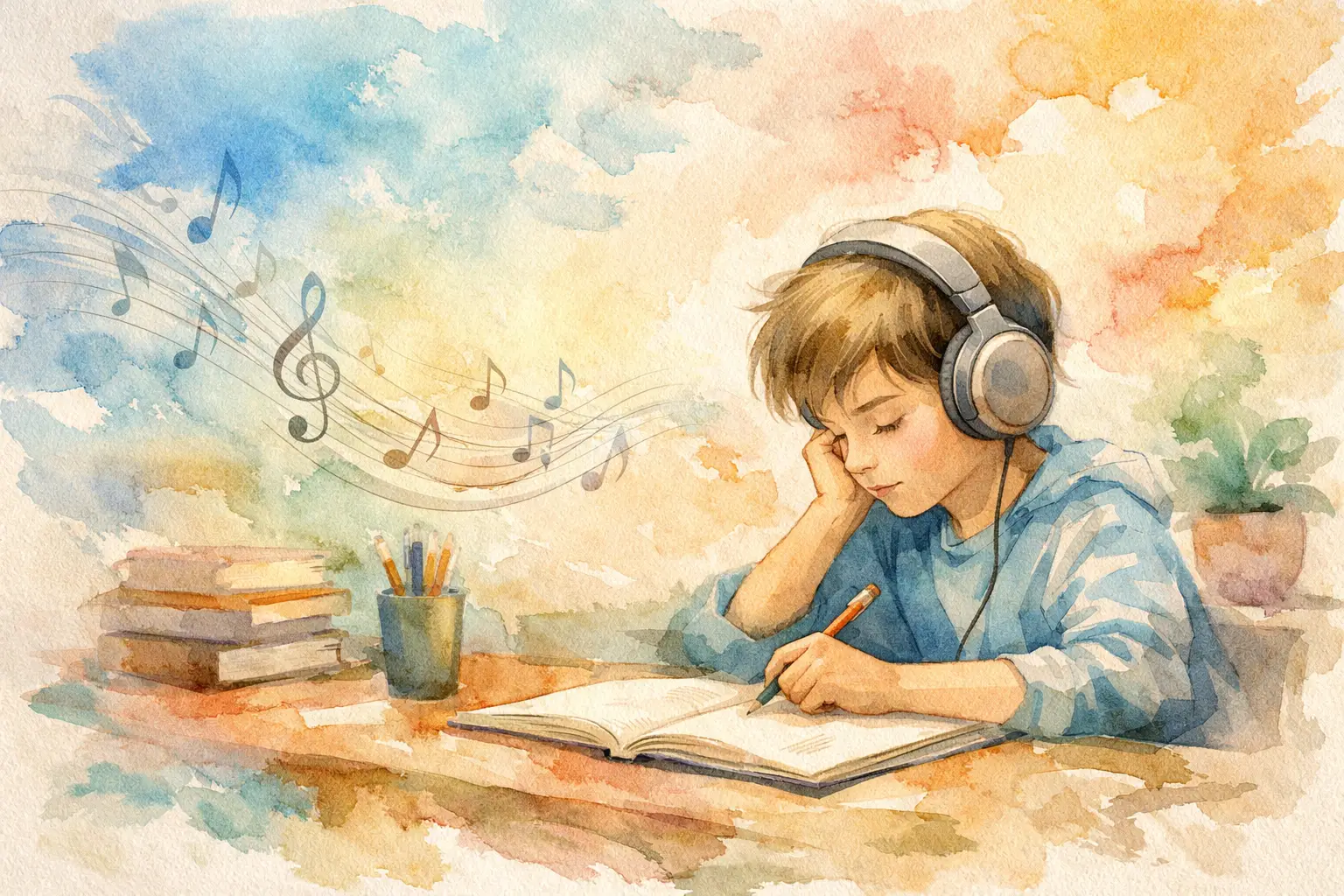
For many children, instrumental music is a strong place to start. Without lyrics to follow, the brain has fewer extra words to sort through. Gentle piano, acoustic guitar, light jazz, nature sounds, and calm classical music can create a pleasant background without becoming the main event.
Steady music also tends to work better than music with big surprises. A song that suddenly gets much louder, changes pace often, or includes dramatic sound effects may be exciting, but it can interrupt concentration. Think of focus music as a friendly helper. It should make the room feel calm, not make a child stop working to listen more closely.
That said, some kids focus well with music that has lyrics, especially during creative or repetitive tasks. Coloring, organizing supplies, cleaning up, or building with blocks may feel more enjoyable with upbeat children’s music playing softly. The goal is not silence at all costs. The goal is choosing sound that matches the job.
Match the music to the task
Different activities ask different things from a child’s brain. Reading, writing, and memorizing usually require more language attention. For those tasks, quiet instrumental music or no music may be the better choice.
Creative projects often leave more room for music. A child making a poster, drawing a picture, or coloring may stay engaged longer with positive background songs. Familiar, family-friendly music can also make a routine feel welcoming. For example, a child may look forward to a short coloring time when it is paired with a favorite song from Alphabetical Man or another encouraging children’s artist.
Movement breaks are different again. When children have been sitting for a while, lively music can help them reset. A two- or three-minute dance break may give a child the energy to return to a harder assignment. The key is to turn the music off or switch back to calmer sound when it is time for close listening, reading, or problem-solving.
Lyrics can help or distract
Lyrics are not bad. They can teach vocabulary, support memory, and make learning feel joyful. Songs about letters, numbers, routines, kindness, and other early learning topics can be especially useful when the child is meant to sing along.
But lyrics can compete with language-heavy schoolwork. If your child is trying to read a passage, write sentences, or learn spelling words, a song with clear vocals may crowd the same mental space. You might notice more skipped words, slower reading, or a child who starts singing instead of working. That is useful information, not a failure.
Try saving lyric-based songs for transitions, cleanup, car rides, and learning activities built around the song itself. During independent reading or homework, test instrumental tracks first. A child does not need to dislike a song for it to be the wrong choice at that moment.
Keep the volume low enough to ignore
Volume matters as much as genre. Even calm music can become distracting when it is loud enough to take over the room. A good rule is simple: if you have to raise your voice to speak normally, the music is probably too loud for focused work.
Low volume gives children a bit of comforting sound while leaving room for their own thinking. This can be helpful in a busy household where complete quiet is not realistic. A soft playlist may gently cover distracting noises like a neighbor mowing the lawn or a sibling playing in another room.
Headphones can work for some older children, but they are not always necessary. Younger children may be more comfortable with music played quietly from a speaker. If headphones are used, keep the volume low and check in often. Comfort and hearing safety come first.
A simple way to find your child’s focus music
Every child has a different attention style. One may work best in a quiet room. Another may become restless in silence and do better with soft piano in the background. Instead of guessing, run a small experiment over several days.
Choose one short task, such as ten minutes of math facts, reading, handwriting, or coloring. On one day, try quiet. On another, try low-volume instrumental music. On a third day, try a gentle playlist with lyrics if the task is creative or repetitive. Keep the routine as similar as possible, then notice what changes.
Look for practical signs. Did your child begin more easily? Did they stay with the activity longer? Were there fewer reminders to return to work? Did they seem calm, frustrated, energized, or overstimulated? Young children may not have the words to explain their experience, but their behavior tells a story.
You can also ask simple questions: “Did that music help you work, or did it make it harder?” “Would you like it softer, louder, or off?” Giving children a small voice in the routine helps them learn how to recognize their own needs.
Create a focus routine, not a perfect playlist
Music works best when it is part of a predictable rhythm. A child might hear one cheerful song while setting out pencils and paper, then switch to a calm instrumental track for work time. When the task is finished, another upbeat song can signal a stretch break or celebrate effort.
This pattern is especially helpful for children who struggle with transitions. They begin to connect certain sounds with certain parts of the day: get ready, focus, take a break, clean up. Over time, the routine can reduce arguments because the next step feels familiar.
Keep the setup simple. Avoid giving a child too many playlists to choose from when it is time to start. Too many choices can turn music into another distraction. Pick a short, parent-approved set of songs or sounds and use it consistently for a week before deciding whether it helps.
Watch for signs that music is not helping
Music is optional, not required. If a child keeps asking what song is playing, dances instead of doing the task, sings over instructions, or seems more frustrated, try turning it off. Some children, including those who are sensitive to sound, may focus better with quiet, ear defenders, or gentle background noise rather than music.
Also consider the time of day. A child who is tired after school may need a snack, water, movement, or a few minutes of rest before any playlist can help. Music can support a good routine, but it cannot replace sleep, encouragement, clear directions, and manageable work.
The most helpful sound is the one that lets your child feel confident enough to keep trying. Start small, listen to their response, and let music become one more positive tool in a learning space built with patience, creativity, and care.