Coloring Books That Build Skills and Smiles
Coloring books give young children a cheerful, hands-on way to practice focus, fine motor skills, early literacy, and positive self-expression at home.
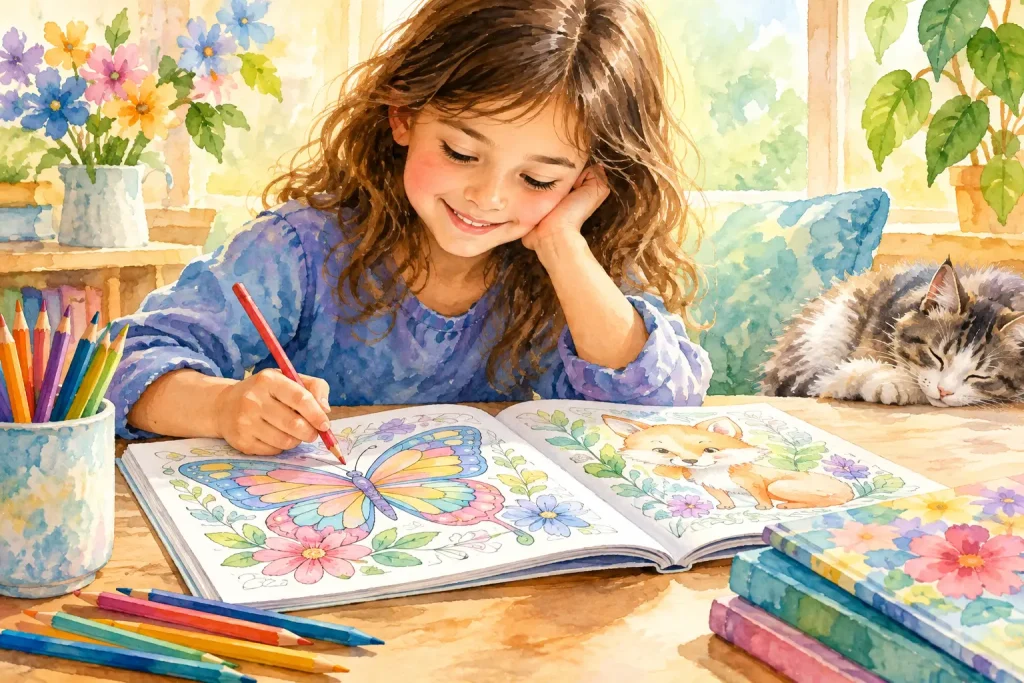
A child does not need a perfect picture to have a successful coloring session. The blue dog, purple sun, and bright green superhero may be exactly what makes the page feel exciting. Coloring books give young learners a screen-free way to create, make choices, and spend a few calm minutes with something that belongs to them.
For parents, caregivers, and educators, the value goes beyond keeping little hands busy. A well-chosen coloring page can support early skills while leaving plenty of room for fun. When the characters are positive and the images are easy to understand, children can connect coloring with stories, letters, music, and the good choices they are learning to make every day.
Why Coloring Books Matter for Early Learners
Coloring helps children practice control before they are expected to write neatly. Holding a crayon, choosing a color, and moving across a page all ask small hands to coordinate with growing minds. Those early movements strengthen fine motor skills and can help children become more comfortable with tasks such as tracing, drawing, cutting, and eventually forming letters.
The learning is not limited to hand strength. Coloring also gives children a chance to build focus. A toddler may color for only a few minutes, while an older child may stay with a detailed page much longer. Both experiences count. The goal is not to make a child sit still for a certain amount of time. It is to offer an activity that encourages them to slow down, notice details, and finish something in their own way.
Coloring can support language, too. As children work, adults can naturally introduce words such as circle, cape, letter, happy, brave, red, and yellow. A page featuring a character or an alphabet theme can become an easy conversation starter. Ask what the character is doing, what sound a letter makes, or what kind choice the character could make next.
That simple conversation turns a quiet activity into shared learning. It also gives children space to express ideas without needing the right answer. A child who says, “My hero is helping a friend,” is practicing storytelling, empathy, and confidence at the same time.
Choosing Coloring Books for Young Children
The best coloring book depends on the child’s age, interests, and comfort level. Younger children usually do better with large, open shapes and familiar objects. Pages with oversized letters, friendly faces, simple animals, or bold characters are easier to recognize and color. Very detailed designs may frustrate toddlers who are still learning how to guide a crayon.
For preschoolers and early elementary-age children, slightly more detail can be a good next step. Look for pages that invite them to notice patterns, identify letters, count simple objects, or imagine a scene. A superhero-style character can be especially engaging because it gives children someone positive to root for while they create.
The paper matters more than it may seem. Thin pages can tear or let marker ink show through, which may be disappointing for a child who worked hard on a picture. Crayons and colored pencils are usually a dependable match for most coloring books. Washable markers can be fun, but it helps to place a sheet of scrap paper behind the page first.
It is also worth thinking about the messages inside the book. Families and classrooms benefit from coloring pages that feel safe, encouraging, and welcoming. Characters who show kindness, courage, curiosity, and helpfulness give adults an opening to talk about values in a natural, child-friendly way.
Make Coloring Time More Meaningful
A coloring book does not need a complicated lesson plan. Often, the best approach is simply sitting nearby and showing interest. Instead of correcting a child’s color choices or asking them to stay inside every line, try comments that invite them to talk: “You chose so many bright colors,” or “Tell me about this part of your picture.”
Children learn differently, so it helps to keep the activity flexible. Some children like to color one page from start to finish. Others want to make a few marks, move on, and return later. One child may carefully fill every space, while another may color only the main character. These are not signs that a child is doing it wrong. They are signs that the child is making the activity their own.
Add Music, Story, and Letter Play
Coloring becomes even more memorable when it connects with another favorite activity. Put on a positive children’s song while your child colors, then ask them to draw a small picture inspired by a word they hear. If the page includes a letter, say its name and sound together. Think of a few words that begin with it, then let your child choose a color for each one in their imagination.
Story play works well, too. A character on the page might be on a mission to help a neighbor, clean up a park, or encourage a friend. Ask your child what happens before and after the scene. There is no need to write the story down unless they want to. Speaking it aloud is plenty of practice.
Alphabetical Man can fit naturally into this kind of play, especially for children who enjoy learning through bold characters, music, and positive missions. A familiar hero can help make letters and good values feel more exciting than a worksheet ever could.
Keep Supplies Simple and Ready
Children are more likely to use creative materials when they can reach them easily. Keep a small basket with coloring books, crayons, washable markers, colored pencils, and blank paper in a familiar spot. A kitchen table works well, but so does a quiet corner with a lap desk or a clipboard.
You do not need every art supply at once. Too many choices can be distracting, especially for toddlers. Start with a small set of crayons and a few pages, then add variety when the child is ready. If coloring becomes a regular routine, rotate books and supplies so the activity continues to feel fresh.
Coloring Books at Home and in the Classroom
At home, coloring can be a gentle transition after school, before dinner, or during a quiet weekend morning. It gives children a place to settle while still doing something active with their hands. It can also be a useful alternative when a parent or caregiver needs a few minutes to prepare a meal or finish a task nearby.
In classrooms, coloring pages can support a theme without becoming busywork. A page tied to a letter of the week, a community helper, a season, or a kindness lesson gives children another way to engage with what they are learning. Educators can display finished work to celebrate effort and creativity, not just neatness.
There are trade-offs to consider. Coloring should not replace outdoor play, reading aloud, hands-on building, or conversation. It works best as one part of a balanced day. It is also helpful to avoid turning every page into a test. If a child is enjoying the activity, learning is already happening.
Celebrate the Picture, Not Perfection
When a child finishes a page, the most powerful response is often simple: “You worked hard on that.” Ask if they want to hang it up, give it to someone, or keep it in a special folder. Displaying artwork at home or in a classroom tells children that their ideas have value.
A coloring page may look small to an adult, but to a young child it can be a proud announcement: “I made this.” Make room for that feeling. Offer the crayons, share a kind word, and let their imagination lead the way.

Written by the Alphabetical Man team
We make songs, stories and a coloring book starring the superhero whose suit is made of letters. Our posts share simple, practical ideas for helping little ones love letters, music and kindness.
Meet Alphabetical Man