A child notices that a character is left out at recess. Before the story is over, they may say, “That’s sad,” or suggest someone invite the character to play. That small response is a meaningful start. Can stories develop empathy? They can help children practice seeing a moment from someone else’s point of view, especially when caring adults make room to talk about it.
Stories do not turn children into kind, understanding people all by themselves. Empathy grows through real relationships, daily examples, and chances to repair mistakes. But a good story, song, or pretend-play adventure gives children a safe place to notice feelings before the same kinds of moments happen in real life.
Can Stories Develop Empathy? They Can Build the Skill
Empathy is the ability to recognize another person’s feelings and respond with care. For young children, that skill begins simply. A preschooler may not understand every reason a character is worried, but they can notice tears, a shaky voice, or a lonely face. An elementary-age child can begin to ask why a character made a choice, even when they would have chosen differently.
Stories make these lessons easier to explore because the child is not the one in trouble. A character can make a mistake, feel embarrassed, get frustrated, or need help. Children can react honestly without feeling blamed or put on the spot.
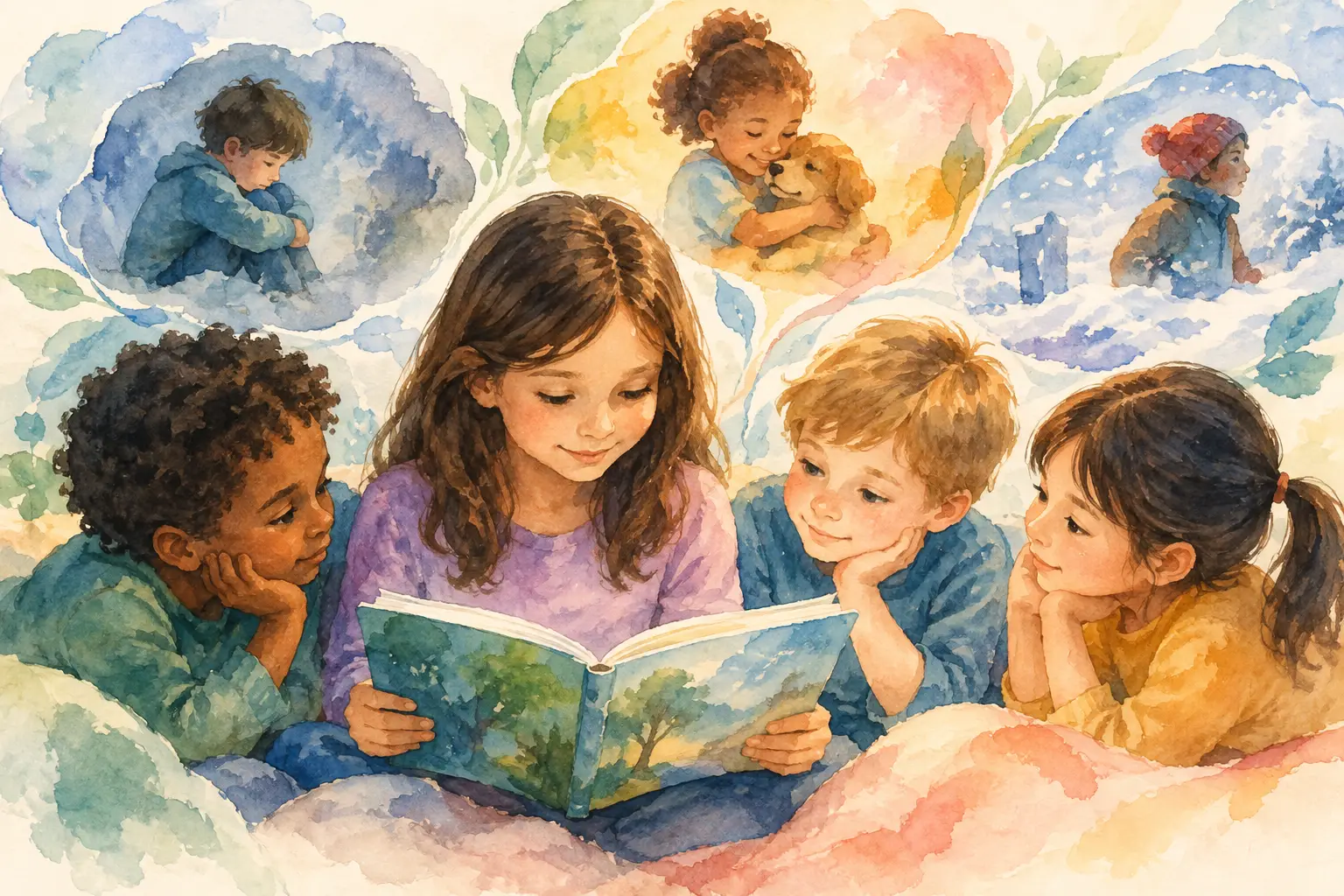
When a child follows a character from problem to solution, they get a small amount of practice in perspective-taking. They may think, “I would feel scared, too,” or “Maybe he did not mean to be mean.” That does not excuse hurtful behavior. Instead, it helps children understand that people’s actions and feelings can be complicated.
The most helpful stories show emotions clearly, but they do not need to be overly serious. A silly song about sharing crayons, a superhero who learns to ask for help, or a picture book about a new neighbor can all create an opening for empathy. Children often learn best when the message comes with rhythm, color, humor, and a character they remember.
Why Characters Reach Children So Well
Children are still learning how to name what is happening inside them. A character can give them words for feelings they have experienced but could not explain. “She felt left out” may help a child recognize their own lonely moment. “He was disappointed” can be more useful than hearing only, “Don’t cry.”
Characters also make emotional ideas feel less abstract. It is one thing to tell a child, “Be kind.” It is another to show a character deciding whether to include someone, returning a lost item, or apologizing after saying something unkind. The story gives kindness a shape.
For families and classrooms, familiar characters can become a shared language. A caregiver might say, “This feels like the time our story friend was nervous about trying something new.” That reminder is gentle and specific. It can help a child pause without turning every hard moment into a lecture.
There is a trade-off, though. If a story delivers its lesson too heavily, children may tune out. If every character is perfect, children may not see their own struggles reflected. The strongest children’s stories leave room for mistakes, feelings, and growth. They show that being caring does not mean never getting upset. It means learning what to do next.
Make Story Time a Conversation
Reading or listening quietly has value, especially at bedtime or during a calm classroom moment. Yet empathy grows more deeply when children are invited to respond. The goal is not to quiz them for the “right” answer. It is to help them notice, wonder, and connect.
Pause at the feeling
When a character faces a problem, pause for a moment. Ask, “How do you think she feels right now?” Young children may answer with one word: mad, sad, scared, happy. That is enough. You can build from there by saying, “Yes, she looks disappointed because her friend left without her.”
If a child gives an unexpected answer, stay curious. “What makes you think he is excited?” may reveal that they noticed something you missed. Empathy includes paying attention, and children learn that adults value their observations when we listen.
Ask about choices, not just feelings
Feelings matter, but children also need chances to consider caring actions. Try asking, “What could the character do?” or “What could a friend say?” A child might suggest a hug, an apology, a turn with the toy, or getting an adult for help.
Keep the choices realistic. Not every problem can be fixed by sharing or saying sorry. Sometimes the kind response is giving someone space, speaking up when something is unfair, or asking for help. Stories can show children that kindness has many forms.
Connect gently to real life
After the story, make a small connection if it fits: “Have you ever felt nervous like that?” Avoid pushing for a personal story, particularly if the topic is sensitive. Some children will talk right away; others will carry the idea with them and bring it up later.
A low-pressure follow-up can work well. Invite children to draw a new ending, act out a scene with toys, or make up a song about how the character helped. Creative play lets children rehearse caring behavior without needing the perfect words.
Choose Stories With Room for Many Experiences
Children benefit from meeting characters whose lives, families, abilities, cultures, and feelings may be different from their own. Seeing difference in a warm, everyday story can make the unfamiliar feel more human and less frightening.
At the same time, children also need stories that reflect them. Recognition says, “Your feelings and family matter.” Variety says, “Other people’s feelings and families matter, too.” Both are part of empathy.
Look for stories with characters who have real personalities, not just labels. A child who uses a wheelchair can also be funny, brave, annoyed, creative, and curious. A shy character can still lead. A character who makes a poor choice can still learn and belong. Full, believable characters give children more to understand than a simple lesson ever could.
Music can be especially useful for early learners. Repeating a lyric about taking turns, using kind words, or helping a friend gives children language they can remember in the middle of a busy day. A lively beat can hold attention, while repetition helps a positive message stick.
Empathy Needs Practice Beyond the Page
A story can start the conversation, but children learn most from what happens around them. When adults name their own feelings calmly, apologize when they make mistakes, and treat others with respect, children see empathy in action.
That also means allowing children to have big feelings. A child can be angry and still be guided toward a caring choice. Instead of demanding instant kindness, try naming what happened: “You really wanted that turn. It is hard to wait. Your friend is upset, too. Let’s figure out what we can do.” This approach holds a boundary while helping the child see more than one perspective.
Do not expect empathy to look the same at every age. A toddler may offer a stuffed animal to someone who is crying. A kindergartner may need reminders to notice a friend’s reaction. An older child may understand another viewpoint but still struggle to act kindly when frustrated. Growth is rarely a straight line.
Stories are also not a replacement for direct conversations about serious behavior. If a child is being bullied, grieving, experiencing conflict at home, or showing intense distress, a book or song may offer comfort, but adult support must come first. Stories are helpful companions, not complete solutions.
A Small Habit That Can Make a Difference
You do not need a long lesson plan to use stories well. Pick a book, song, or made-up adventure your child enjoys. Share it together, pause once to notice a feeling, and ask one caring question. Then let the story remain a source of joy.
Over time, those small moments teach children that feelings are worth noticing, other people’s experiences matter, and kindness is something they can practice. The next time a child sees someone sitting alone, they may remember a character who needed a friend and decide to make room beside them.