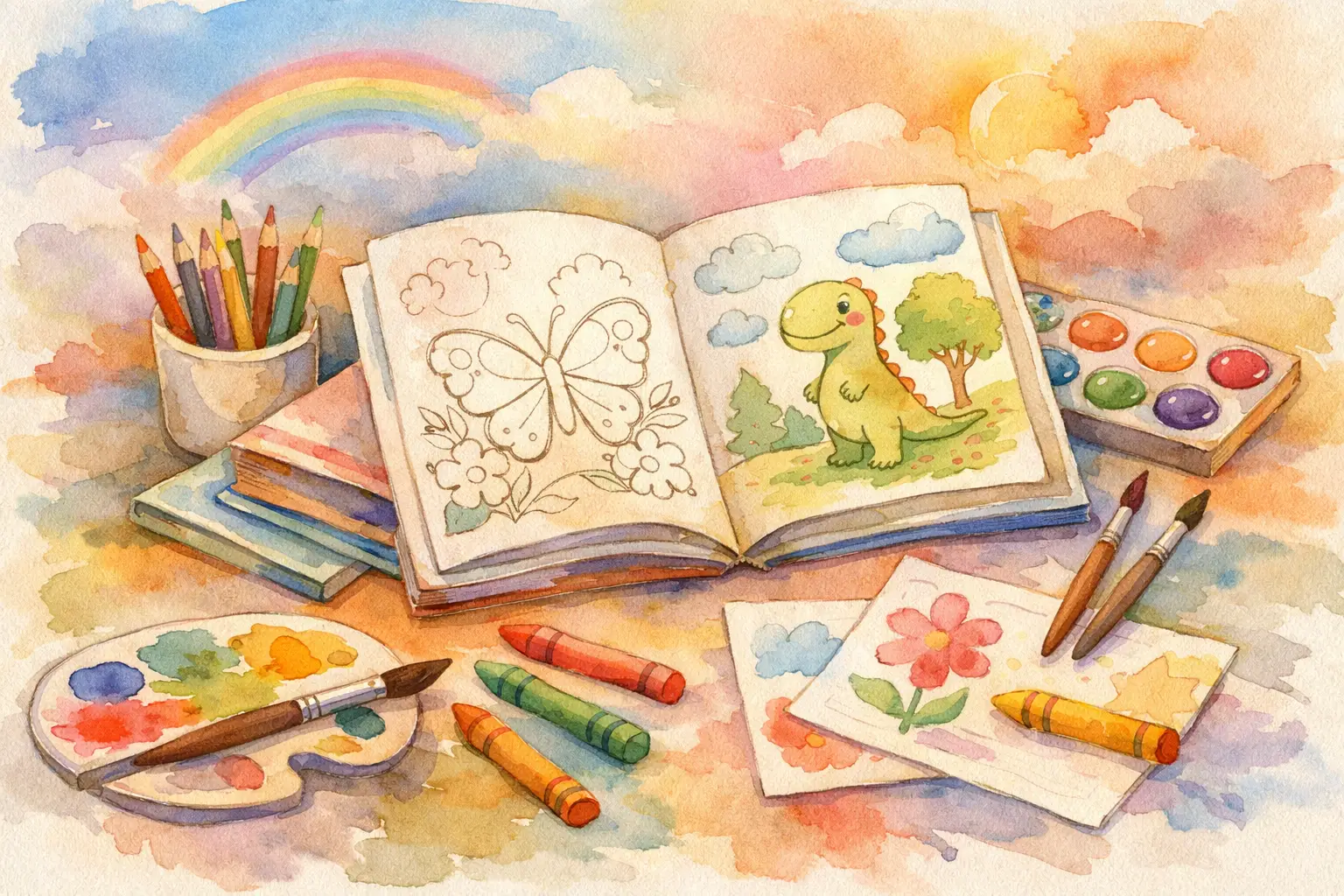
A toddler does not need a coloring book packed with tiny details to have a meaningful creative moment. A bold letter, a friendly character, and enough open space for a crayon can be far more inviting. This coloring book review looks at what makes a coloring book genuinely useful for young learners, not just something that keeps them busy for a few minutes.
For parents, caregivers, and educators, the best choice usually supports more than one goal. It gives children a chance to create, practice hand control, notice letters or familiar objects, and feel proud of what they made. Just as important, it should feel safe, cheerful, and easy to use.
What a Good Coloring Book Offers Young Children
A strong coloring book meets children where they are. Early learners are still figuring out how to hold crayons, press with the right amount of force, and guide their hands across a page. They do not need perfection. They need pages that make trying feel fun.
Large, clear outlines are a helpful starting point. Thick lines help toddlers and preschoolers see where a shape begins and ends. Big sections also give them room to make broad marks without becoming frustrated by narrow spaces. A page with one main character or object can hold a young child’s attention better than a crowded scene.
The subject matter matters, too. Familiar items such as animals, vehicles, foods, letters, and smiling characters give adults an easy way to start a conversation. While a child colors an apple or the letter A, a caregiver can name the object, repeat its beginning sound, or ask what color the child wants to use. That small exchange turns an art activity into language practice.
A good book also leaves room for imagination. A child may color a dog purple, make the sky orange, or give a superhero striped boots. Those choices are not mistakes. They are signs that a child is experimenting, deciding, and expressing an idea.
Coloring Book Review: The Details Worth Checking
When choosing a coloring book, look beyond the cover. A bright design can catch a child’s eye, but the inside pages determine whether the book will be used again and again.
First, consider the age range. Books made for older children often include small patterns, detailed backgrounds, and complicated scenes. These can be enjoyable for a child who likes careful work, but they may discourage a toddler who is still learning to control a crayon. For younger children, simple pictures with bold shapes are usually the better fit.
Next, look at the learning focus. Some books are purely about creative play, while others introduce letters, numbers, shapes, colors, or positive habits. Neither approach is automatically better. It depends on what your child needs and what the activity time is meant to support. A letter-themed book can be especially helpful when a child is beginning to recognize the alphabet, while an open-ended character book may encourage longer storytelling and pretend play.
Paper quality is another practical consideration. Thin pages can work well with crayons and colored pencils, but markers may bleed through to the next design. If your child loves markers, place a sheet of scrap paper behind the page or choose a book with heavier paper. Single-sided pages can be useful when a child wants to display a finished picture, although they may use more space.
Also pay attention to the emotional message. Children notice the faces, words, and situations they see in their books. Positive characters, kind interactions, and encouraging themes can reinforce the values families and classrooms already teach. A cheerful hero who promotes learning, helping others, or believing in yourself can make a simple coloring session feel more meaningful.
Learning Happens Between the Lines
Coloring is often treated as a quiet break, but it can build real early skills. Holding and moving a crayon strengthens the small muscles in a child’s hands and fingers. Those muscles are used later for writing, buttoning clothes, using scissors, and other everyday tasks.
Children also practice visual attention as they decide where to put color. They begin to notice boundaries, shapes, and directions. Staying inside the lines is not the main goal, especially for toddlers, but gradually learning to aim their marks is valuable practice.
Language grows when an adult joins in without taking over. Try simple prompts: “What do you see on this page?” “Can you find the letter B?” “What sound does bear begin with?” “Tell me about your picture.” These questions give children a chance to use words, make connections, and tell their own stories.
Coloring can support emotional growth as well. It offers a low-pressure way to make choices and complete a task. Some children will color for two minutes; others may stay with one page for much longer. Both are fine. Praise effort instead of neatness: “You worked hard on those colors” or “I like how you chose blue for the cape.” This helps children connect creativity with confidence rather than with getting everything right.
How to Make the Activity More Engaging
The book is only part of the experience. A few simple choices can make coloring time more useful and more enjoyable without turning it into a lesson children must perform.
Set out only a few crayons at first, especially for toddlers. Too many choices can be distracting. Offer a comfortable place to color, and let children decide which page interests them. If the book includes alphabet pages, try pairing a page with an everyday object. After coloring the letter M, look around the room for something that starts with the same sound.
Music can be a natural companion, too. A familiar alphabet song or upbeat children’s tune can help children settle into the activity. Alphabetical Man brings this kind of playful connection together through character-based learning, music, and coloring experiences designed for young children.
Finished pages deserve attention. Hang a favorite picture on the refrigerator, make a small folder of completed work, or invite a child to explain the drawing to a family member. Displaying their effort sends a clear message: what you made matters.
The Best Choice Depends on the Child
There is no single coloring book that is right for every child. A child who loves letters may be excited by alphabet pages, while another may stay engaged longer with animals, trucks, or superhero characters. Some children prefer crayons because they are easy to grip; others enjoy washable markers for their bright color. A child with a shorter attention span may do best with one page at a time instead of a whole book placed in front of them.
The most helpful coloring book is one a child wants to open. It should feel approachable, offer pictures that match their interests, and give adults opportunities to talk, encourage, and connect. Learning does not have to look like a worksheet to be valuable.
Choose pages that invite small hands to make big ideas visible. When children are free to color, talk, and proudly share what they created, a simple book can become a bright part of the day.