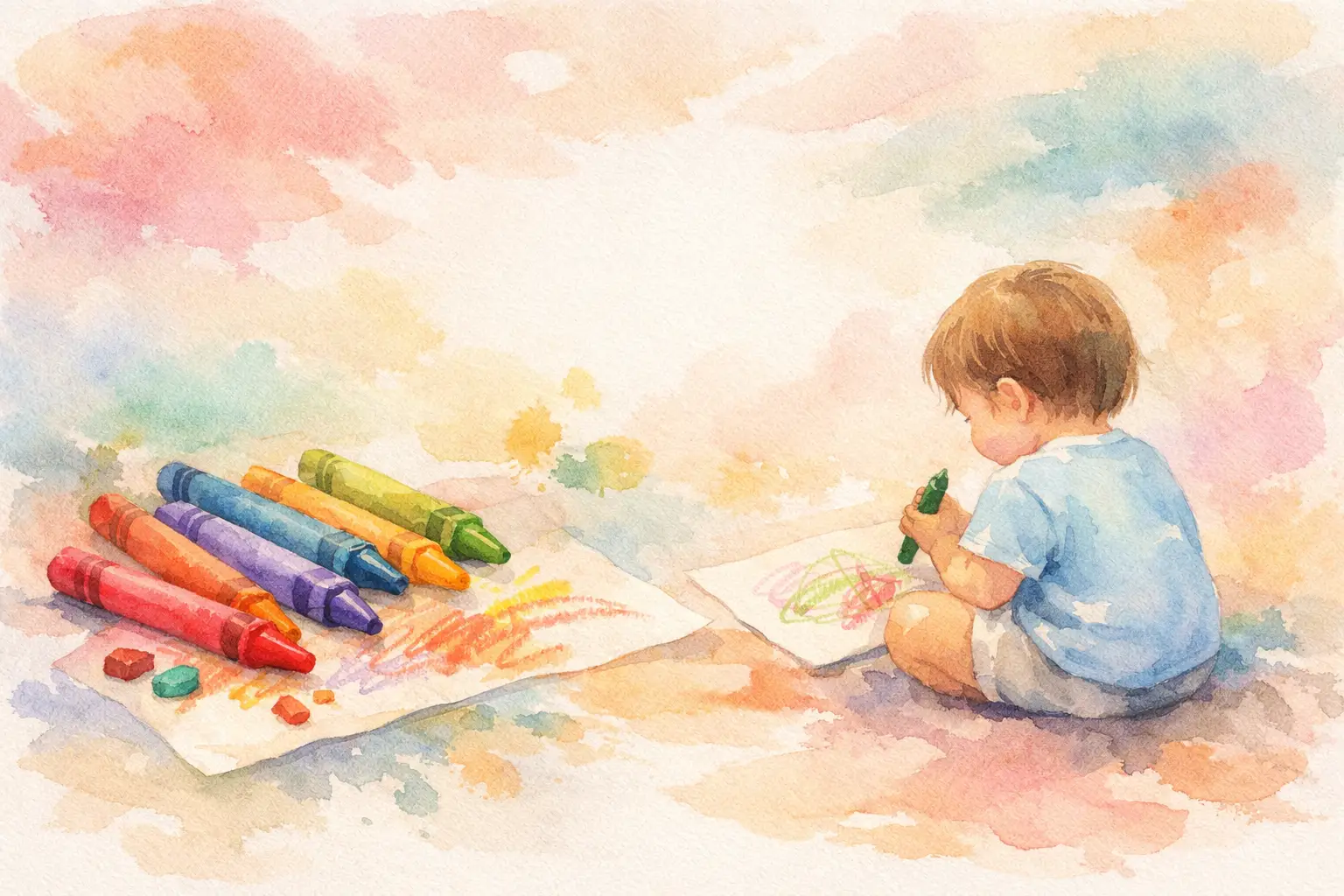
A toddler’s first crayon masterpiece may look like a few bright loops on paper, but the moment matters. Coloring builds hand strength, confidence, and early creativity. Toddler crayon safety helps keep that happy learning time focused on color and imagination, not preventable messes or worries.
Young children explore with their hands first and sometimes with their mouths, too. That does not mean crayons need to be scary. It means adults can choose supplies thoughtfully, stay nearby, and create a simple routine that makes art time feel positive for everyone.
Choosing Crayons for Toddler Crayon Safety
Start with crayons made specifically for young children. Look for packaging that identifies the product as non-toxic and age-appropriate. In the United States, art materials may also carry an ASTM D-4236 statement, which means the product has been reviewed for chronic health hazards when used as intended. That label is useful, but it does not replace supervision.
For many toddlers, chunky crayons are a smart first choice. Their wider shape is easier for little hands to hold and less likely to snap into tiny pieces during ordinary coloring. Egg-shaped, palm-grip, and triangular crayons can also work well, depending on how your child holds and uses them.
The trade-off is simple: large crayons are easier to grip, while standard thin crayons may offer more detail for an older child. For a toddler who is still learning control, comfort and durability matter more than precise lines.
Avoid using old, broken, unmarked, or homemade crayons with toddlers unless you know exactly what they are made of and how they were stored. A crayon that has been mixed with dirt, pet hair, cleaning products, or other mystery materials is no longer a good art supply.
Non-Toxic Does Not Mean Edible
Parents often see “non-toxic” and understandably feel relieved. It generally means a product is not expected to cause harm when used as directed. It does not mean crayons are food, and it does not mean a toddler should be allowed to chew on them.
A small accidental bite of a common non-toxic crayon is usually more of a cleanup issue than an emergency, but every situation is different. Remove the crayon, gently wipe the child’s mouth, and check the package for product information. If your child swallows a large amount, chokes, has trouble breathing, seems unusually sleepy, vomits repeatedly, or you are unsure what was eaten, contact Poison Help at 1-800-222-1222 or seek emergency care right away.
It also helps to use calm, clear language: “Crayons are for paper. Food is for eating.” Toddlers learn through repetition, not lectures. The same short reminder at each art session can become part of the routine.
Supervision Is Part of the Supply List
Even the safest crayon is best used with an adult close by. A caregiver does not need to direct every mark on the page. In fact, open-ended coloring gives children room to experiment. Supervision simply means being near enough to notice chewing, throwing, crayon trading with a younger sibling, or a broken piece that needs to be picked up.
This matters most for children under 3, children who still mouth toys frequently, and children with developmental needs that make chewing or swallowing more likely. Age labels are helpful starting points, but you know your child best.
Set up coloring at a child-sized table, on a clean floor mat, or in a high-chair tray when appropriate. Keep crayons away from stairs, bathtubs, and busy walkways, where a dropped crayon can become a slip hazard or disappear under furniture.
A small number of crayons is often better than a giant box. Offer four to eight colors at a time, then switch them out another day. This keeps the activity manageable and gives toddlers a chance to name colors, make choices, and focus.
Make the Art Space Safer and More Fun
A prepared art space makes safety feel natural instead of restrictive. Put down sturdy paper, choose washable surfaces when possible, and keep a damp cloth nearby for hands and small spills. Crayons can leave marks on walls or furniture, so a designated coloring spot helps children understand where art belongs.
Use paper large enough for broad toddler movements. A coloring book can be wonderful for children who enjoy familiar pictures and simple shapes, while blank paper invites big imaginative scribbles. Both have value. The goal is not to keep every line inside a shape. The goal is to let children practice creating.
If coloring is part of a group activity, give each child enough space to move their elbow and reach their own paper. Toddlers are still learning to share, and crowding can turn a cheerful activity into grabbing or tossing. A few extra crayons and a simple “one crayon at a time” reminder can go a long way.
Check Crayons Before and After Each Session
A quick check takes less than a minute. Before coloring, look for crayons that are cracked, heavily chewed, sticky, or broken into pieces small enough to fit fully in a toddler’s mouth. Put damaged crayons aside rather than trying to make them work.
After art time, count the crayons if you started with a small set. This is especially helpful in classrooms, playdates, and homes with babies or pets. A missing crayon may be under the table, in a pocket, or headed toward a place it does not belong.
Keep crayons in a labeled container with a secure lid and store them out of reach when not in use. A high shelf or closed cabinet works well. Avoid leaving them in a hot car, near heaters, or in direct sun for long periods, since heat can soften or melt wax and make a bigger mess.
Teach Gentle Crayon Habits
Toddlers do not need a long list of rules. They need a few easy habits practiced again and again. Show them how to hold a crayon, touch it to paper, and place it back in the box when finished. Celebrate the behavior you want to see: “You put the blue crayon on the paper. Great job!”
If a child throws crayons, pause the activity without shame. Try saying, “Crayons stay on the table. Throwing tells me we are all done for now.” Then put the crayons away and offer another active option, such as music, dancing, or a soft ball. This teaches a boundary while protecting the fun association with creative time.
For children who chew everything, keep sessions short and hands-on. You might color together for five minutes, sing a favorite alphabet song, and then move on. Short successful sessions build better habits than pushing a toddler to sit longer than they are ready for.
When to Replace a Crayon Set
Replace crayons when they have become very worn, hard to identify, or repeatedly damaged. It is also wise to replace supplies after a major contamination, such as a container falling into a sink of dirty water or being exposed to household chemicals.
You do not need a fancy collection to support creativity. A clean, age-appropriate set of basic colors, paper, and an attentive adult is enough for meaningful learning. Children remember the encouragement, the shared laughs, and the pride of showing someone what they made.
Coloring can be a small daily mission: make a mark, name a color, try again, and share a picture with someone you love. With simple safety habits in place, those little crayon adventures can stay bright, confident, and full of possibility.