A toddler does not need a coloring book packed with tiny scenes, fancy supplies, or a long lesson plan. They need pages that invite them to make a mark, name a picture, and feel proud of what they made. This guide to choosing toddler coloring books helps parents, caregivers, and educators find books that make creative time feel happy, safe, and meaningful.
Coloring can look simple from across the room. Up close, it gives young children chances to practice holding a crayon, making choices, recognizing familiar objects, and finishing a small task. The right book meets a child where they are instead of asking them to color like an older sibling.
Start With Your Toddler’s Stage
Toddler is a wide age range. A book that works beautifully for a 20-month-old may frustrate a child who is almost 4, and the reverse can be true too. Before choosing a book, think about what your child can comfortably do right now.
Younger toddlers usually enjoy broad outlines, single objects, and pages with lots of open space. A big apple, a smiling sun, a bus, or a friendly animal gives them room to explore without the pressure of staying inside narrow lines. At this stage, scribbling is not a mistake. It is practice. Those energetic marks help build hand control over time.
Older toddlers may be ready for a little more detail, especially when pictures connect to things they know. They may enjoy coloring a family, a playground, letters, simple shapes, or everyday community helpers. Even then, keep expectations light. The goal is participation and confidence, not a perfectly colored page.
Look for Big, Clear Pictures
The best toddler coloring books are easy to understand at a glance. Each page should have a clear main subject and bold outlines. Busy backgrounds can make it hard for young children to decide where to begin, while simple artwork gives them a welcoming place to start.
A page with one large character can lead to a full conversation: What is the character doing? What color should their cape be? How do they help a friend? That kind of talk turns coloring into language practice without making it feel like a lesson.
Simple does not have to mean boring. Look for cheerful faces, playful scenes, and pictures that leave room for imagination. Children do not need realistic colors. A purple dog, green hair, or rainbow shoes can be exactly right because the child chose them.
Avoid pages that are too crowded
Small patterns, tightly packed objects, and very thin lines often work better for preschoolers and older children. For a toddler, these pages can bring quick frustration. If a child turns away after one attempt, the activity may be asking too much of their current fine-motor skills.
Choose books with a mix of easy pages and slightly more detailed ones if you want a book that can grow with your child. Just make sure the easiest pages come first or are easy to find.
Choose Themes That Encourage Connection
Toddlers are more likely to return to a coloring book when it includes something they already care about. Familiar themes create an easy bridge between the page and a child’s daily life. Animals, vehicles, food, weather, family routines, music, letters, and friendly heroes are all strong choices.
Educational themes can be especially helpful when they stay playful. A page featuring the letter B and a big bear can support early letter awareness. A page with three balloons can invite counting. A picture of children sharing can open a gentle conversation about kindness. The picture should come first, though. Toddlers learn best when they are enjoying the activity, not when they feel tested.
Character-based coloring books can also be a wonderful fit. A positive character gives children a familiar friend to color again and again, and it can reinforce messages such as helping others, trying your best, or using kind words. Alphabetical Man is one example of a superhero-style character that can make early learning feel exciting and encouraging.
Check the Book’s Physical Design
The artwork matters, but so does the book itself. Toddlers are active creators. They may press hard, turn pages quickly, and color on the back of a page without realizing it. A well-made book helps everyone enjoy the moment longer.
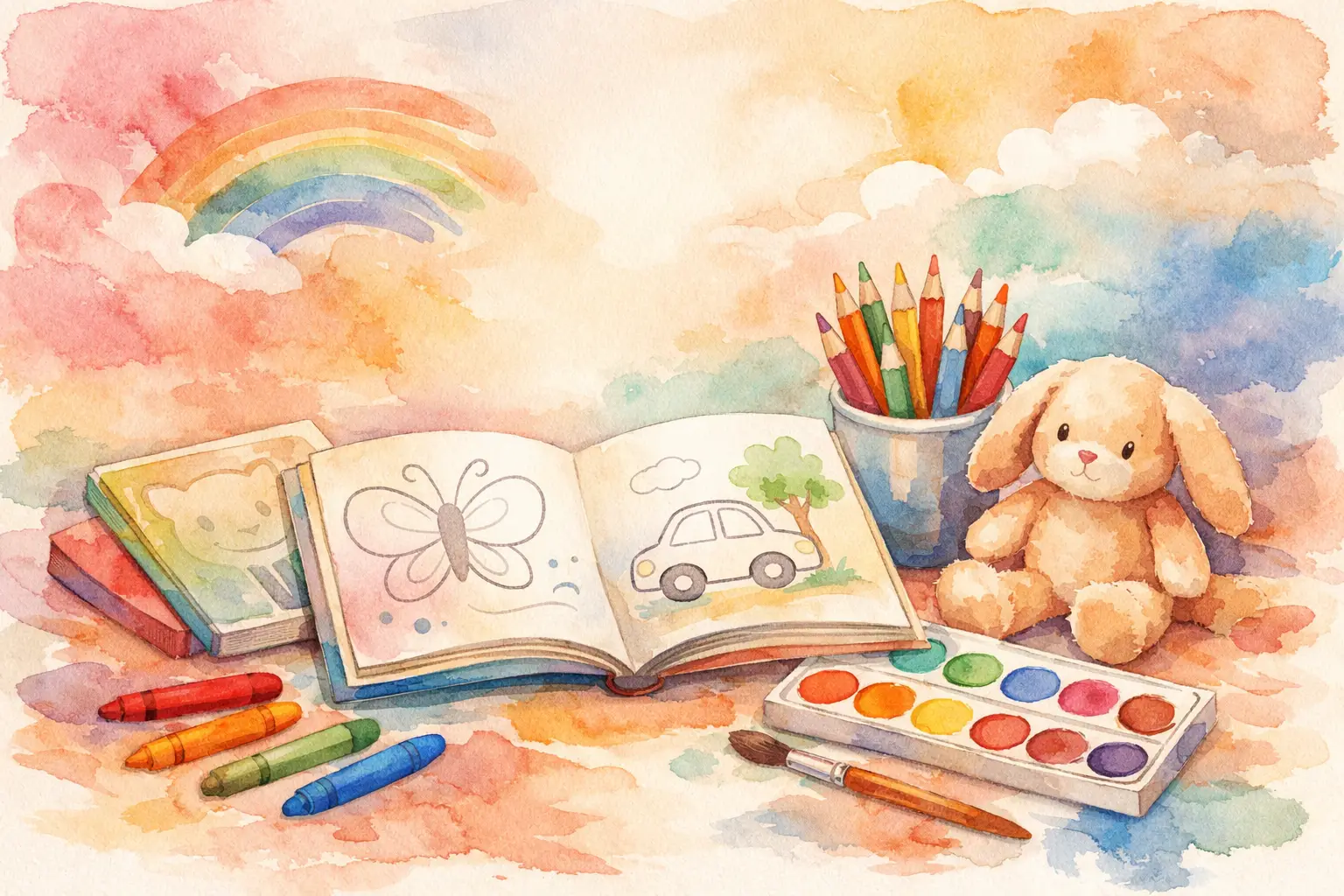
Look for paper that is thick enough to handle crayons and washable markers without tearing too easily. If you plan to use paint sticks or markers, single-sided pages can be useful because colors are less likely to show through onto another picture. Perforated pages are convenient if your child loves displaying their work, but they are not necessary for every family.
Book size is worth considering too. A smaller book is easy to bring to a restaurant, waiting room, or grandparent’s house. A larger book may be better for coloring at the kitchen table, where a toddler has more room to move their arm. Neither option is automatically better. Think about where the book will be used most.
Safety comes before supplies
Choose age-appropriate coloring books and pair them with non-toxic, washable crayons or markers designed for young children. Check for loose pieces, sharp binding edges, or decorations that could come off in little hands. Adult supervision is still a good idea, especially for children who are learning not to put art supplies in their mouths.
You do not need an overflowing art cart. A few chunky crayons in bright colors are often enough to make a toddler feel ready for creative work. Keeping supplies simple also makes cleanup easier, which means coloring is more likely to happen again tomorrow.
Pick Books That Leave Room for Success
A good toddler activity creates small wins. Coloring books can do that when adults resist the urge to correct every choice. If the blue crayon goes across the page, celebrate the effort before offering help. If your child colors only one corner and says they are done, that page is complete for today.
Watch for signs that a book is a good match. Your toddler may point at pictures, name objects, ask for another page, or bring the book back later. They may not sit for long, and that is okay. Five focused minutes can be more valuable than twenty frustrated ones.
It also helps to offer a choice between two books rather than asking an open-ended question. “Would you like animals or letters?” gives a child a sense of ownership without creating too many options. That small decision builds independence and makes coloring time feel like their own.
Use Coloring Time for Gentle Learning
A toddler coloring book can support early skills without becoming a worksheet. Sit nearby and describe what you notice: “You made long red lines.” “That truck has big wheels.” “I see two yellow stars.” These simple comments build vocabulary and show children that their ideas matter.
Ask easy, open questions when your child seems interested. What sound does the cow make? Where do you think this train is going? Which color feels happy today? If your toddler does not answer, keep coloring or talking naturally. Silence can mean they are concentrating.
You can also connect the page to music, movement, and daily routines. Sing a simple song about the picture, clap the number of objects you see, or act out what a character might do. A coloring book becomes more engaging when it leads to conversation, laughter, and a little imagination beyond the paper.
A Quick Checklist Before You Buy
When comparing toddler coloring books, look for these four qualities:
- Large, bold pictures with open coloring spaces
- Familiar, positive themes that interest your child
- Sturdy pages and an age-appropriate, safe design
- A level of detail that feels achievable, not frustrating
The best choice is not always the book with the most pages or the busiest cover. It is the one your child will happily open, explore, and make their own. Put a few crayons beside it, sit together for a moment, and let the colors tell the story.