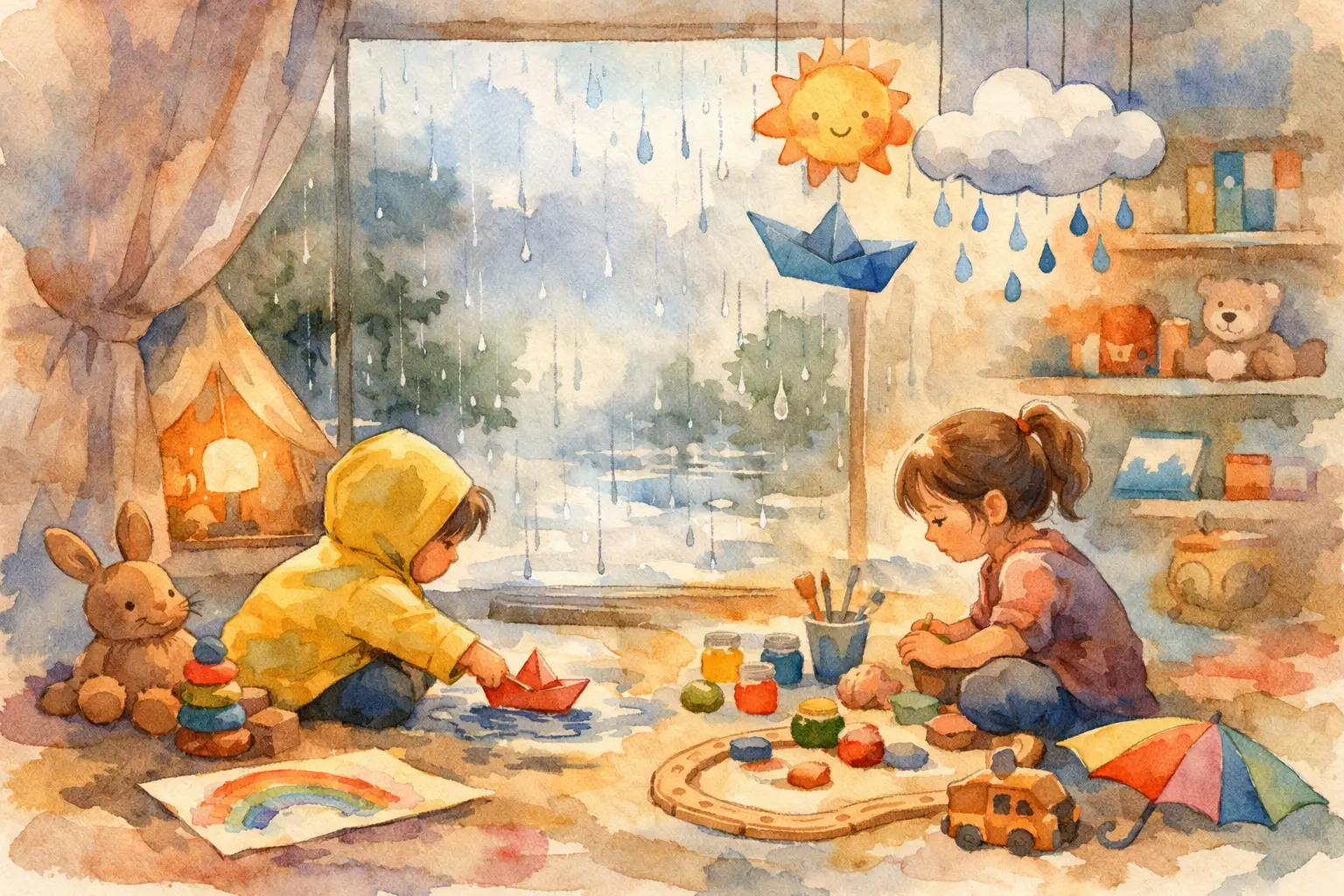
Rain on the windows can change the whole rhythm of a preschool day. Boots pile up by the door, outside plans pause, and little bodies still have plenty of energy to use. The best preschool activities for rainy days do more than fill time. They give children a happy way to move, create, talk, and practice early learning skills indoors.
A good rainy-day activity does not need a long supply list or a picture-perfect result. Preschoolers learn best when they can touch, repeat, imagine, and make choices. Start with one simple idea, keep it short enough for young attention spans, and follow your child’s interest when they want to keep going.
Set Up a Rainy-Day Space for Success
Before choosing an activity, make a small indoor space where children can play safely. Move breakable items, lay down a blanket or washable mat for art, and keep a basket nearby with crayons, paper, tape, blocks, scarves, and a few favorite books.
It helps to alternate quiet activities with active ones. A child who has been sitting and coloring may need a parade around the living room next. A child who has been jumping may be ready for a puzzle or story. This back-and-forth can make a long rainy afternoon feel much calmer for everyone.
Best Preschool Activities for Rainy Days at Home
1. Make a Puddle Jumping Path
Use paper, pillows, or small towels as pretend puddles. Place them across a clear floor and invite children to jump from one puddle to the next. Call out colors, numbers, or simple directions such as “jump to the blue puddle” or “take two giant steps.”
This game supports listening skills, balance, and coordination. For children who are not ready to jump, they can step, tiptoe, crawl, or march through the path. The goal is not perfect movement. It is joyful movement with a little learning built in.
2. Turn Music Into a Superhero Mission
Put on a child-friendly song and give it a mission. During the music, children can march like heroes, freeze like statues, flap like birds, or quietly sneak past an imaginary sleeping dragon. When the music stops, they freeze and listen for the next action.
Music gives preschoolers a natural reason to practice rhythm, self-control, and body awareness. Songs with repeated words are especially helpful because children can join in without feeling pressure to get every word right. A positive music moment from Alphabetical Man can also turn letter sounds and encouraging messages into an indoor adventure.
Keep the rules simple. Too many instructions can make a game feel like work. One action at a time is plenty for most preschoolers.
3. Create a Window Weather Station
Rainy days offer a ready-made science lesson. Stand by the window together and notice what is happening outside. Is the rain light or heavy? Are the clouds gray, white, or both? Do tree branches move in the wind?
Invite your child to draw what they see. You can add a simple weather chart with choices such as rainy, cloudy, sunny, or windy. If the rain lasts for several days, check the chart each morning and compare the results. This builds observation skills and gives children useful words for describing the world around them.
Avoid asking children to sit still for too long. Preschool science works best when it includes looking, talking, drawing, and acting things out. Let them wiggle like wind or tap their fingers like raindrops after they make their observations.
4. Build a Cardboard Box Town
A few empty boxes can become a grocery store, fire station, pet clinic, or tiny neighborhood. Add crayons for signs, blocks for roads, and small toys for people or vehicles. Children can decide who lives there and what problem needs to be solved.
Pretend play helps preschoolers use language in meaningful ways. They may practice taking turns, asking for help, solving small disagreements, and telling stories. If two or more children are playing, give them a shared mission: deliver a package, find a lost puppy, or help a neighbor get home before the rain starts.
There is no need to correct every detail. A cardboard box can be a bus in one minute and a bakery in the next. That flexibility is part of the learning.
5. Make Rainy-Day Collages
Set out paper, child-safe glue sticks, crayons, and scrap materials such as tissue paper, magazine pictures, yarn, or paper shapes. Children can make a rainy sky, a colorful umbrella, or whatever they imagine.
Collage is a strong choice when children want to create but are tired of drawing. Tearing paper builds hand strength, and choosing where to place each piece supports planning and decision-making. For younger preschoolers, offer larger pieces and help with glue. Older preschoolers may enjoy making patterns or adding the first letter of their name.
Mess is part of art, but it does not have to take over the house. Give each child a tray or placemat and limit materials to a few choices at once. A smaller selection often leads to more focused play.
6. Go on an Indoor Letter Hunt
Choose one letter and look for it around the room. Children might find it on a book cover, a food box, a toy label, or a family calendar. Say the letter name and its sound together when they find it.
You can make the hunt easier by writing a large letter on paper and letting your child carry it as a clue. For a bigger challenge, ask them to find objects that begin with that sound. The letter M might lead to a mug, a marker, or a map.
Keep this playful. Preschoolers do not need to identify every letter before kindergarten. The value comes from hearing sounds, noticing print, and feeling proud when they make a connection.
7. Run a Stuffed Animal Care Center
Gather stuffed animals, a small blanket, a spoon, empty cups, and a few bandages made from strips of paper. Your child can become a veterinarian, doctor, or animal helper. Ask gentle questions: “What does the bear need?” “How can we help the bunny feel better?”
This activity encourages empathy while giving children a safe way to work through feelings about being sick, visiting a doctor, or caring for someone else. Some children will want to tell a long story. Others may only want to wrap a toy in a blanket. Both approaches are valuable.
If your child becomes worried by pretend injuries, shift the story. The animals may simply be getting ready for a cozy sleepover or a rainy-day picnic.
8. Bake, Mix, and Measure Together
A rainy day can be a good time for a simple kitchen project. Stir muffin batter, mix fruit into yogurt, or make a snack plate with crackers and sliced fruit. Let preschoolers scoop, pour, count, and describe what they notice.
Cooking supports early math without turning it into a worksheet. A child can count three spoonfuls, compare a full cup and an empty cup, or talk about crunchy and soft foods. It also gives them a real job that matters to the family.
Choose tasks that fit your child’s age and supervise closely around appliances, knives, and hot foods. The activity does not need to end with a fancy recipe. Even washing berries and arranging them on a plate can feel important to a young helper.
9. Make a Blanket Fort Reading Nook
Drape a blanket over chairs or a table, add pillows, and bring in a small stack of books. A fort can make familiar stories feel new. Let your child choose the first book, then pause to notice pictures, guess what might happen next, or repeat favorite phrases.
For children who do not want to sit for a full story, try reading in small pieces. Read a page or two, then let them act out what happened with stuffed animals. The purpose is to build a warm connection with books, not to finish every page.
10. Try a Color-and-Count Rescue Game
Place small toys around the room and tell children that the toys need to be rescued from a rainy-day storm. Give each child a basket and a simple instruction, such as finding three red items or two animals and one car.
This game combines movement, colors, counting, and pretend play. It is especially useful when children need a quick reset between quieter activities. Change the challenge based on their confidence. A child who is learning colors may only need to find one blue toy, while another may enjoy sorting everything by type.
Let the Day Be a Little Different
Rainy days do not have to follow a perfect schedule. Sometimes the best plan is a few minutes of dancing, a snack at the fort, and an afternoon spent making paper puddles across the floor. When children see adults stay calm and curious about a change in plans, they learn that an unexpected day can still hold something good.
The next time rain keeps everyone inside, choose one activity that brings a little movement, one that invites imagination, and one quiet moment to connect. Those small moments can make the house feel bright, even when the sky is not.