A child does not need a glowing screen to practice letters, solve problems, or feel excited about learning. A song in the kitchen, crayons at the table, and a silly alphabet game on the way to the store can all do meaningful work. When families ask how to create screen free learning, the best answer is not to fill every minute with lessons. It is to make curiosity part of everyday life.
Screen-free time can give children something many busy days leave out: room to notice, move, make choices, and try again. It also gives parents and caregivers a chance to connect without needing to become a full-time teacher. A few simple routines can turn ordinary moments into positive learning experiences.
How to Create Screen Free Learning That Kids Enjoy
The goal is not to make every activity look like school. Young children learn best when a skill has a purpose and play is allowed to lead. If a child is singing, sorting, building, pretending, or telling a story, learning is already happening.
Start by choosing one small focus for the week. It might be a letter, a color, a number, a feeling word, or a helpful habit such as taking turns. Repeating that idea in different ways helps it stick without making the day feel repetitive. For example, if the focus is the letter B, children can listen for the /b/ sound, draw a big B, find a book with a bear, and name bananas at snack time.
Keep activities short enough to end while your child is still interested. Five focused minutes can be more valuable than 30 minutes of pushing through frustration. Some children will want to keep going, while others will be ready to move on quickly. Both responses are normal.
It also helps to make screen-free learning easy to begin. Keep a small basket with paper, crayons, washable markers, picture books, letter cards, and a few simple objects for counting. The best materials are often the ones already in your home. Socks can be sorted by color. Cups can be stacked and counted. A cardboard box can become a mailbox, a store, or a rocket ship.
Use Music and Movement to Build Skills
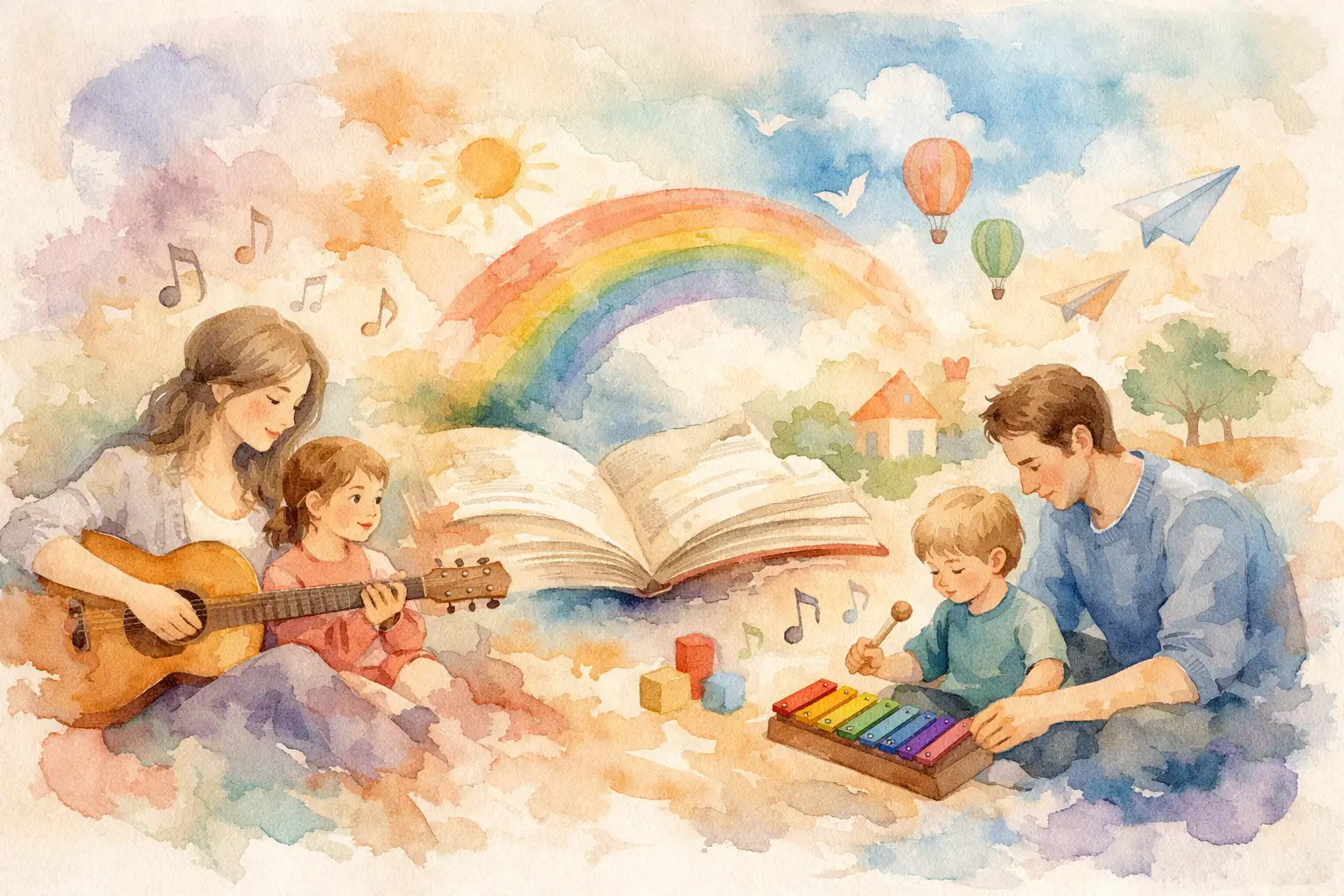
Music gives children a friendly way to practice language, memory, listening, and rhythm. A repeated chorus can help early learners remember letter sounds, days of the week, or kind words to use with others. Movement makes that practice active, which is especially helpful for children who find it hard to sit still.
Try making a movement cue for each learning idea. Clap when you hear a chosen letter sound. March while counting to 10. Freeze like a statue when the music stops. Act out opposite words such as high and low, fast and slow, or loud and quiet. These games do not need special equipment, and they work well in a classroom, living room, or backyard.
For children who enjoy characters and songs, positive children’s music can make a routine feel like an adventure. Alphabetical Man is built around that kind of upbeat, superhero-style encouragement: learning can be brave, creative, and fun. The key is participation. Invite children to sing a line back, create a new verse, or invent a matching hand motion.
Music is not the right tool for every moment. If a child is overstimulated or tired, a calm read-aloud, a puzzle, or quiet coloring may be a better fit. Screen-free learning should support a child’s needs, not add more noise to the day.
Make Reading an Active Experience
Reading together is one of the simplest ways to grow vocabulary, comprehension, and a love for stories. It does not require a long book or a perfect reading voice. A board book, a library book, a comic, or a family recipe can all become a shared reading moment.
Instead of reading every page straight through, pause to invite your child in. Ask what they notice in a picture. Wonder what a character might do next. Point to a familiar letter in the title. Let your child turn the pages, repeat a phrase, or tell part of the story from memory.
For early readers, place labels on a few everyday objects, such as door, bed, cup, or table. Keep the words simple and useful. Children begin to see that print is not just something inside a book. It is part of the world around them.
Storytelling matters too. At dinner, ask everyone to share one part of their day using a beginning, middle, and end. During play, encourage a child to explain what their toy characters are doing. These small conversations build language skills while showing children that their ideas are worth hearing.
Let Hands-On Play Do the Teaching
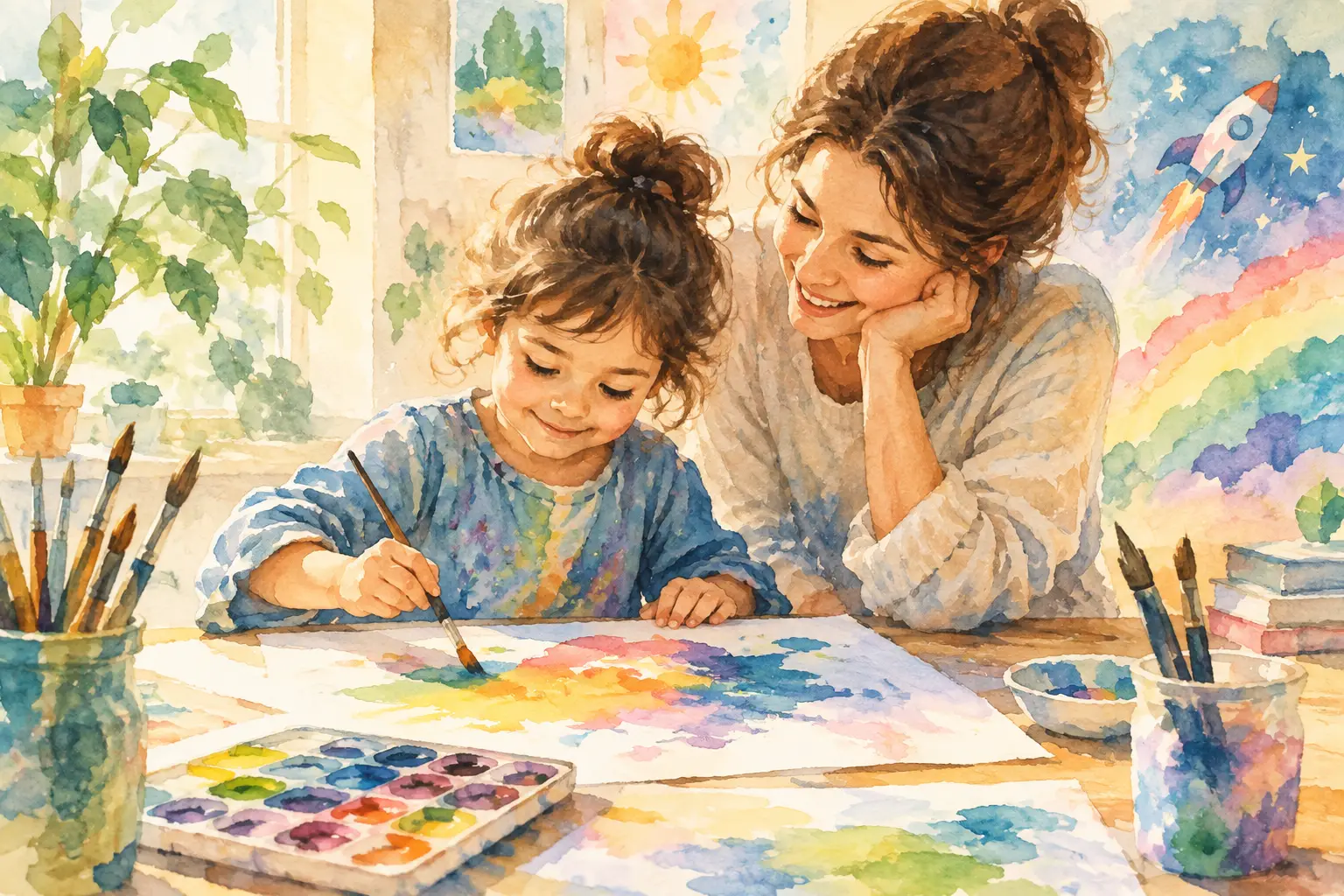
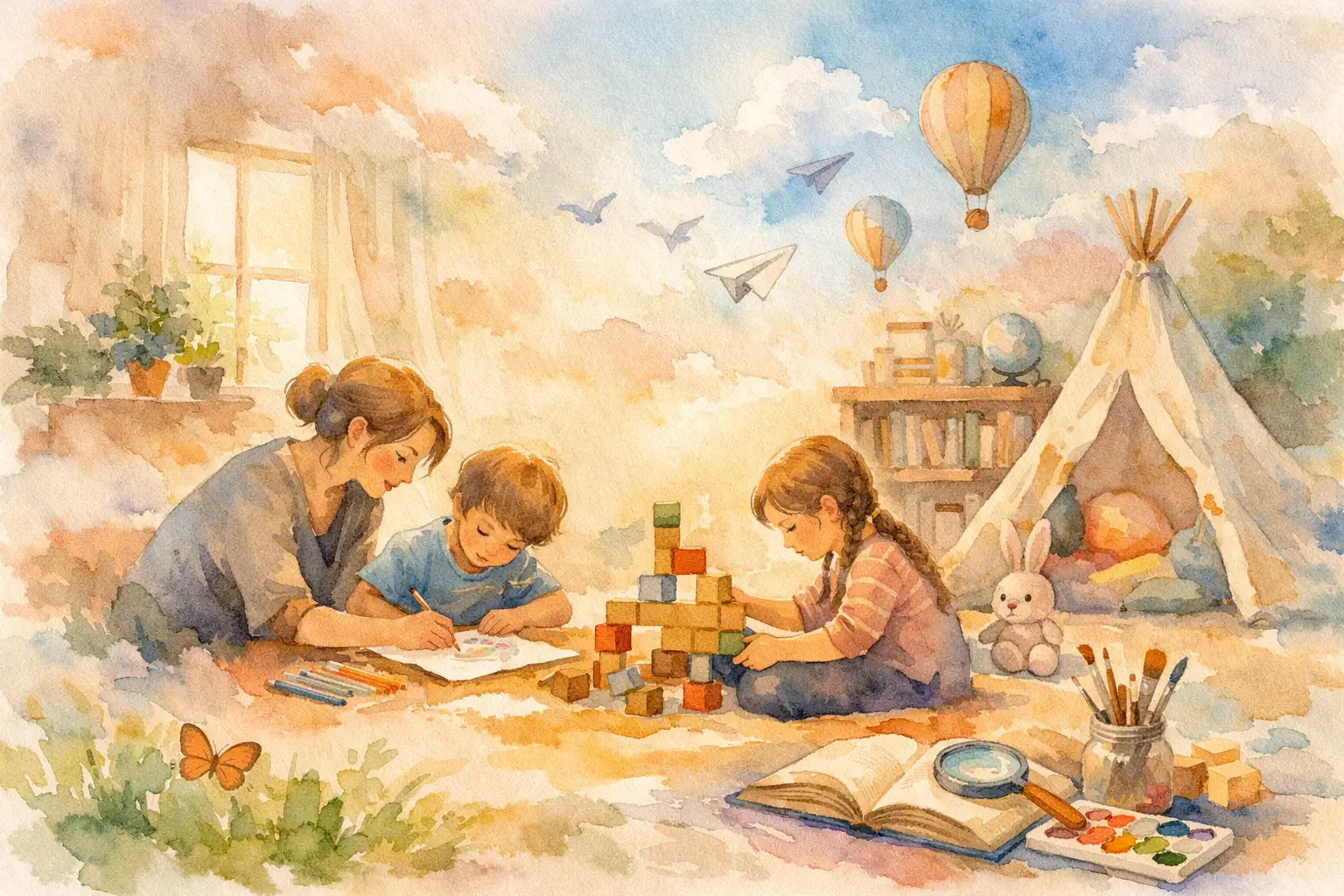
Hands-on activities build skills that worksheets cannot always reach. Coloring supports hand strength, pencil control, color recognition, and creative decision-making. Building with blocks introduces balance, planning, shapes, and problem-solving. Pretend play helps children practice empathy, communication, and flexible thinking.
Offer an invitation, not a strict assignment. You might set out a few craft supplies and say, “Can you make a home for this small animal?” Or put five spoons on the table and ask, “How many people can we set places for?” The child gets to decide what happens next, while you can add gentle questions that stretch the learning.
Nature also gives families a ready-made learning space. On a walk, collect leaves in different sizes, listen for bird sounds, count steps to the corner, or look for shapes in signs and buildings. At home, children can sort their finds, draw what they saw, or make up a story about a tiny creature living under a tree.
Mess is part of the trade-off. Paint, dough, water play, and crafts can create cleanup, so choose activities that match your time and energy. A simple coloring page and a good conversation can be just as valuable as a larger project.
Build a Rhythm Instead of a Rigid Schedule
Families do not need a packed screen-free calendar. A predictable rhythm is usually more helpful than a strict schedule. You might read after breakfast, play a song during cleanup, bring crayons to the table before dinner, and tell stories before bed. Repeated moments become familiar cues that make participation easier.
When screens are part of family life, it can help to decide what will happen before and after screen time. For example, a child might choose a book or a building activity before a show, then help with one small household task afterward. This keeps screens from becoming the only source of entertainment without treating them as forbidden.
Give children choices within clear boundaries. Ask whether they want to color or build, hear a story or make one up, dance to a song or play a listening game. Choice builds independence, while the boundary keeps the day manageable for the adult.
Notice Progress Beyond the Right Answer
Screen-free learning often grows in quiet ways. A child may use a new word during play, recognize a letter on a cereal box, wait more patiently for a turn, or keep trying when a block tower falls. These moments count.
Praise effort with specific words. Instead of only saying, “Good job,” try, “You kept working until the pieces fit,” or, “You noticed that both of those start with the same sound.” Specific encouragement helps children understand what they did well and gives them confidence to try again.
The most lasting learning moments are rarely perfect. They may happen while folding laundry, singing in the car, or making a crooked drawing at the kitchen table. Give your child the time, tools, and encouragement to explore, and let everyday life become the lesson.