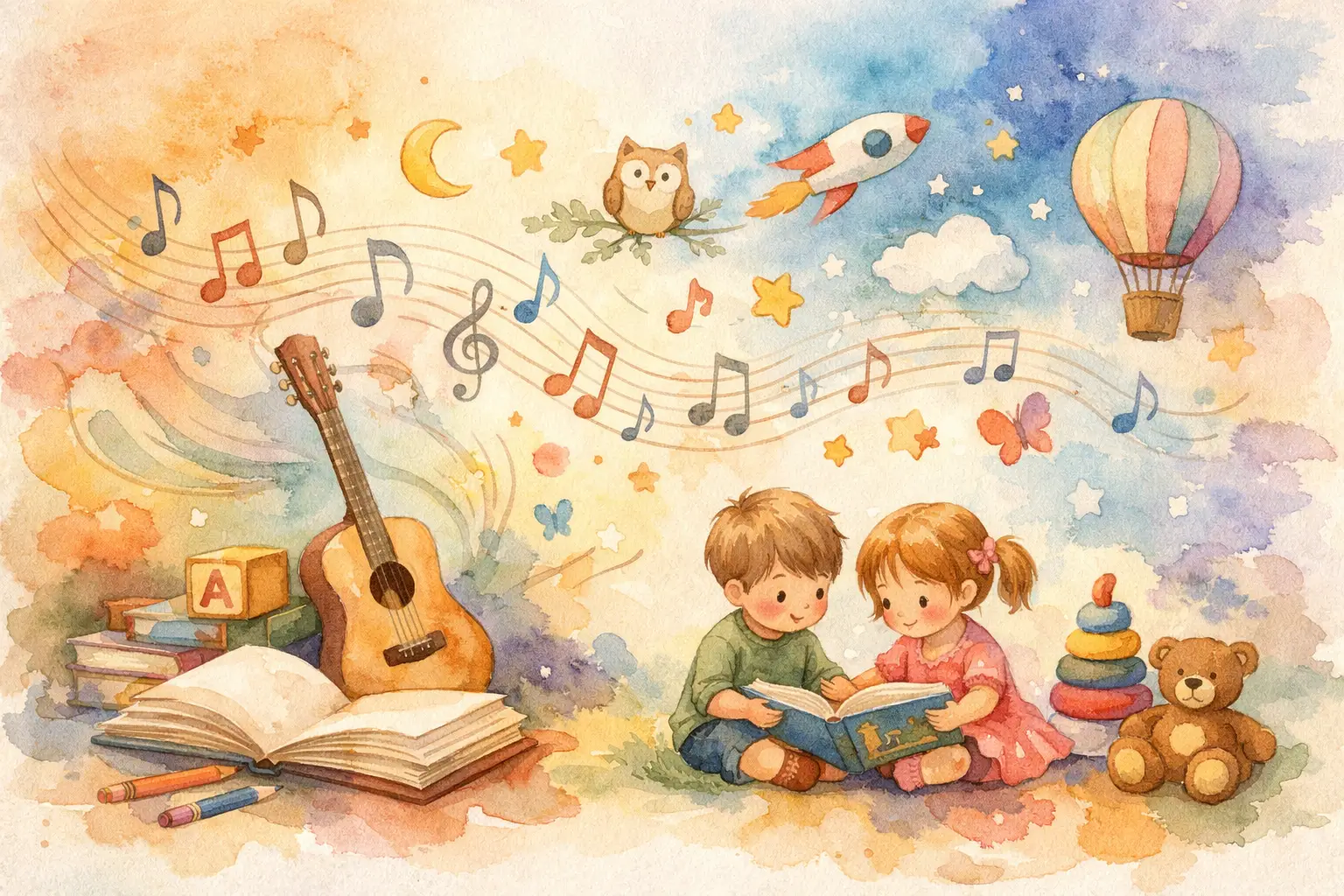
Some songs get preschoolers moving. The best ones get them moving and noticing how words work at the same time. That is why the best literacy songs for preschoolers are not just catchy. They help children hear rhymes, recognize letter sounds, remember new words, and build confidence before formal reading begins.
For parents, caregivers, and preschool teachers, music can turn early literacy practice into something children ask for again. A strong song gives kids a pattern they can predict, a beat they can follow, and language they can repeat without pressure. That matters, especially for young learners who are still building attention, speech clarity, and comfort with books and print.
What makes the best literacy songs for preschoolers?
A good literacy song for this age group is usually simple, repetitive, and easy to act out. Preschoolers learn through doing, so a song that invites clapping, pointing, stomping, or call-and-response often works better than one that is packed with too many words.
It also helps when a song focuses on one skill at a time. Some songs are great for rhyme. Others support alphabet knowledge, syllables, listening, or vocabulary. A song that tries to teach everything at once can be fun, but it may not give children a clear path to practice one foundational skill well.
The best choices also leave room for adult interaction. If a parent or teacher can pause, repeat a line, ask a question, or connect the lyric to a book or object in the room, the learning becomes stronger. That is one reason familiar songs often stay useful. Their structure is easy to adapt.
12 best literacy songs for preschoolers
1. The Alphabet Song
This one is a classic for a reason. It helps children remember letter names in order, which is still a helpful starting point for early literacy. It is not enough on its own to teach reading, but it builds familiarity with the alphabet and gives kids a simple framework they can return to often.
The trade-off is that some children rush through certain letter groupings and do not clearly hear each name. Slowing it down and pointing to letters while singing can make it much more effective.
2. B-I-N-G-O
This song supports letter recognition, sequencing, and listening. As letters are removed and replaced with claps, children have to track what is missing. That kind of playful attention is useful for print awareness and memory.
It is especially helpful for preschoolers who enjoy routine with a little challenge. If a child is still very new to letters, though, you may want to begin with visual supports so the song does not become just a clapping game.
3. Old MacDonald Had a Farm
At first glance, this seems more like a vocabulary song than a literacy song. But vocabulary is a huge part of reading success. This song introduces animal names, animal sounds, and category knowledge while encouraging children to predict repeated phrases.
You can make it more literacy-centered by asking children to hear the first sound in each animal name. Cow starts with /k/. Pig starts with /p/. That small shift turns a familiar favorite into a stronger phonological awareness activity.
4. Down by the Bay
If you want to build rhyme awareness, this song is a winner. Its silly lines help preschoolers hear word endings and enjoy language play without worrying about getting the answer perfect.
That playful quality matters. Children often learn rhyme best when it feels funny and surprising. You can invite them to invent their own verses, even nonsense ones. When kids hear that hat and cat go together, they are beginning to notice sound patterns that support later reading.
5. Twinkle, Twinkle, Little Star
This song works well for print tracking and listening because most children know it quickly. Once they are familiar with the words, adults can point to lyrics on a chart or in a simple printed version while singing.
Its calm pace also helps children connect spoken words to written words. Not every literacy activity needs high energy. Some preschoolers learn best when the rhythm is steady and the language is clear.
6. If You’re Happy and You Know It
This song is useful for action words and listening comprehension. Clap, stomp, shout, and wave are all words children can hear, act out, and connect to meaning right away.
That may sound basic, but strong comprehension starts with knowing what words mean in real life. You can also swap in new verbs to build vocabulary and attention. Tap, wiggle, march, and stretch all keep the song fresh while expanding language.
7. Wheels on the Bus
Repetition makes this song a strong early literacy tool. Children hear the same structure again and again while changing just one part of the verse. That helps with memory, prediction, and oral language.
It is also great for sequencing. You can ask children what comes next or invite them to create a new verse. When preschoolers learn to anticipate language patterns, they are building skills that later support reading fluency.
8. Five Little Ducks
Counting songs are not only about math. They also support listening, sequencing, and story structure. In this song, children follow a simple narrative while hearing repeated language.
That combination helps preschoolers retell events in order, which is an important early comprehension skill. Songs with a beginning, middle, and ending can quietly prepare children for understanding stories in books.
9. Miss Mary Mack
Clapping songs like this one are excellent for rhythm and syllable awareness. When children clap to the beat of words, they start noticing that language has parts and patterns.
This matters because syllable awareness is one step toward stronger phonological skills. The words do not have to be perfectly understood for the rhythm practice to help, but it is wise to choose versions with simple, child-friendly wording.
10. Name Songs
Songs that use a child’s name are powerful because they make literacy feel personal. Singing a simple tune such as spelling a child’s name, tapping its syllables, or identifying its first letter can make print feel meaningful right away.
For many preschoolers, their own name is the first word they recognize in print. That makes name songs one of the best literacy songs for preschoolers in a classroom or home setting. They build identity and early reading habits at the same time.
11. Rhyming Call-and-Response Songs
These songs do not always have one fixed title, but they are worth using. An adult sings or says a line and children respond with a rhyming word or phrase. This creates active listening instead of passive singing.
The advantage here is flexibility. You can keep it simple with familiar pairs like star and car, or make it more playful with made-up words. What matters most is helping children hear how sounds match and change.
12. Original letter-sound songs
Songs that focus on letter sounds rather than just letter names can be especially helpful as preschoolers get ready for kindergarten. A strong song might highlight one letter at a time, connect it to a keyword, and repeat the sound clearly.
This is where character-driven music can really shine. When a child connects a fun voice, a memorable rhythm, or a positive hero figure with a sound like /m/ or /b/, practice feels exciting instead of forced. That kind of playful repetition is often what helps the learning stick.
How to choose the right song for your child or class
Not every preschooler responds to the same style of music. Some children love loud, active songs. Others do better with gentle repetition and fewer distractions. The best choice depends on the child’s age, attention span, sensory needs, and current literacy skills.
If a child is just starting out, begin with songs about names, rhymes, and simple repetition. If they already know many letter names, move toward songs that highlight beginning sounds or sound matching. For children with speech delays or language processing challenges, slower songs with motions may work better than fast ones with lots of lyrics.
It also helps to rotate with purpose. You do not need a giant playlist. A small set of songs used consistently over a few weeks often teaches more than a new song every day.
Simple ways to turn songs into stronger literacy practice
The song itself is only part of the learning. What happens right before and after the music matters too. You can hold up a letter card, show a picture, tap out syllables, or ask one short question after the song ends.
Keep it light. Preschoolers do not need a quiz after every tune. They just need little moments that connect music to sound, meaning, and print. Singing B-I-N-G-O and then finding the letter B in the room is enough. Singing a rhyme song and then asking for another rhyming word is enough too.
If you create a routine around music, children start expecting that words are something to notice, not just hear. That is a strong early literacy habit.
Why songs work so well in preschool
Music slows language down and repeats it in a way children can hold onto. That repetition supports memory. The rhythm supports attention. The fun supports participation, which is half the battle with young learners.
Songs also create a safe place to practice. A preschooler who feels shy during direct instruction may happily sing along in a group. A child who cannot yet identify a letter on command may still remember its sound in a song. Those small wins count.
And because songs are easy to revisit in the car, at circle time, during cleanup, or before bed, they fit real family life. That is what makes them so useful. Early literacy does not have to live only at a table with flashcards. It can live in everyday moments, carried by a melody a child wants to hear one more time.