A child lines up stuffed animals, gives each one a name, and starts taking attendance. It may look like a simple game, but that child is practicing language, memory, social skills, and early math. The question of guided play versus lessons is not really about choosing fun over learning. It is about choosing the right way to help a child learn at a particular moment.
For young children, play is serious work. It is how they test ideas, build confidence, and make sense of the people and places around them. Lessons have a place too, especially when children need a clear introduction, extra practice, or support with a specific skill. The best learning experiences often use both.
What Guided Play Looks Like
Guided play begins with a child doing something active and meaningful. An adult adds a gentle purpose without taking over. The child still has choices. The adult notices what is happening, asks a helpful question, introduces a word, or offers one new challenge.
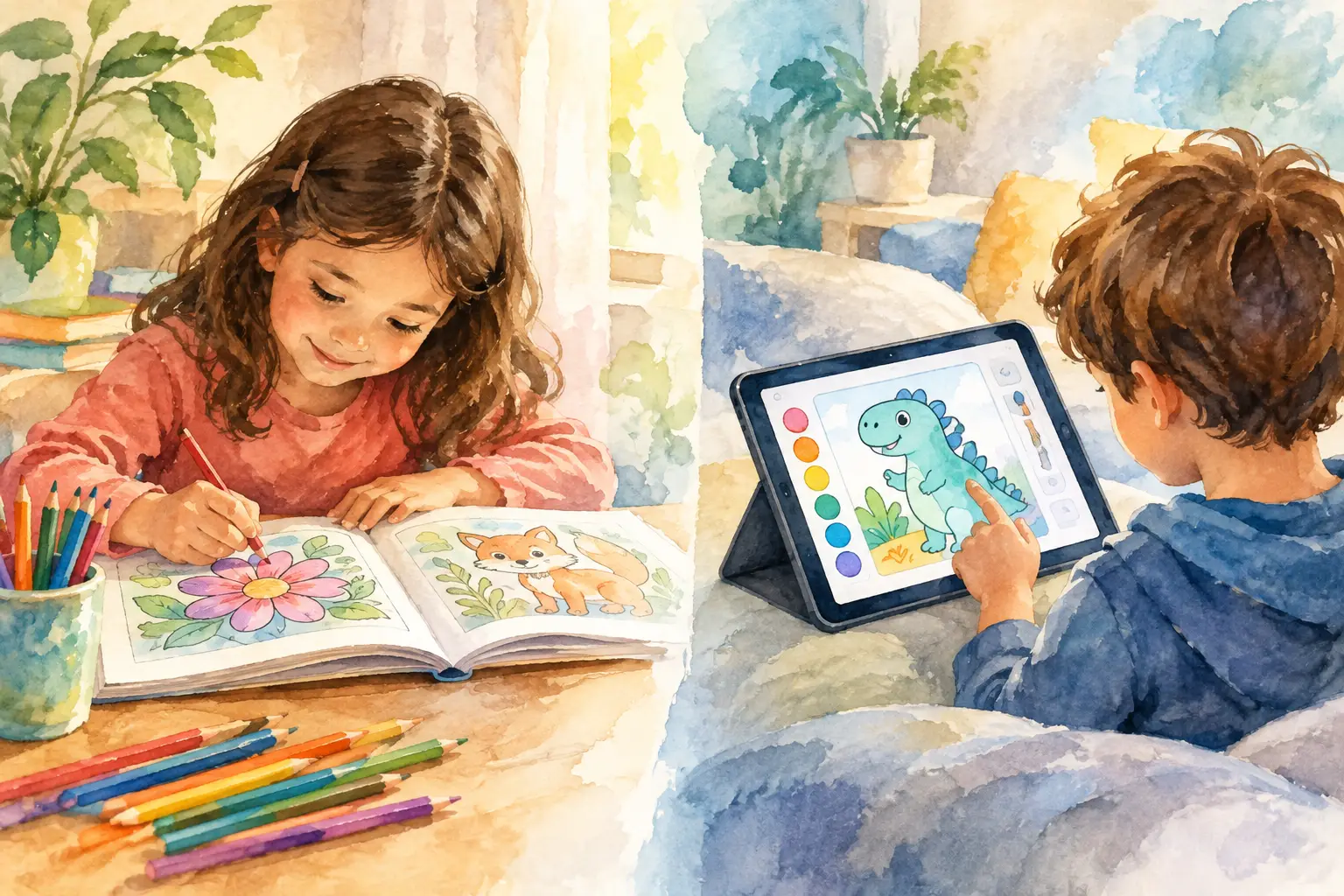
Imagine a child coloring a picture of a superhero. Instead of saying, “Color inside the lines,” a caregiver might say, “You chose blue for the cape. What kind of job does this hero do?” The child leads the story. The adult helps grow vocabulary, imagination, and conversation.
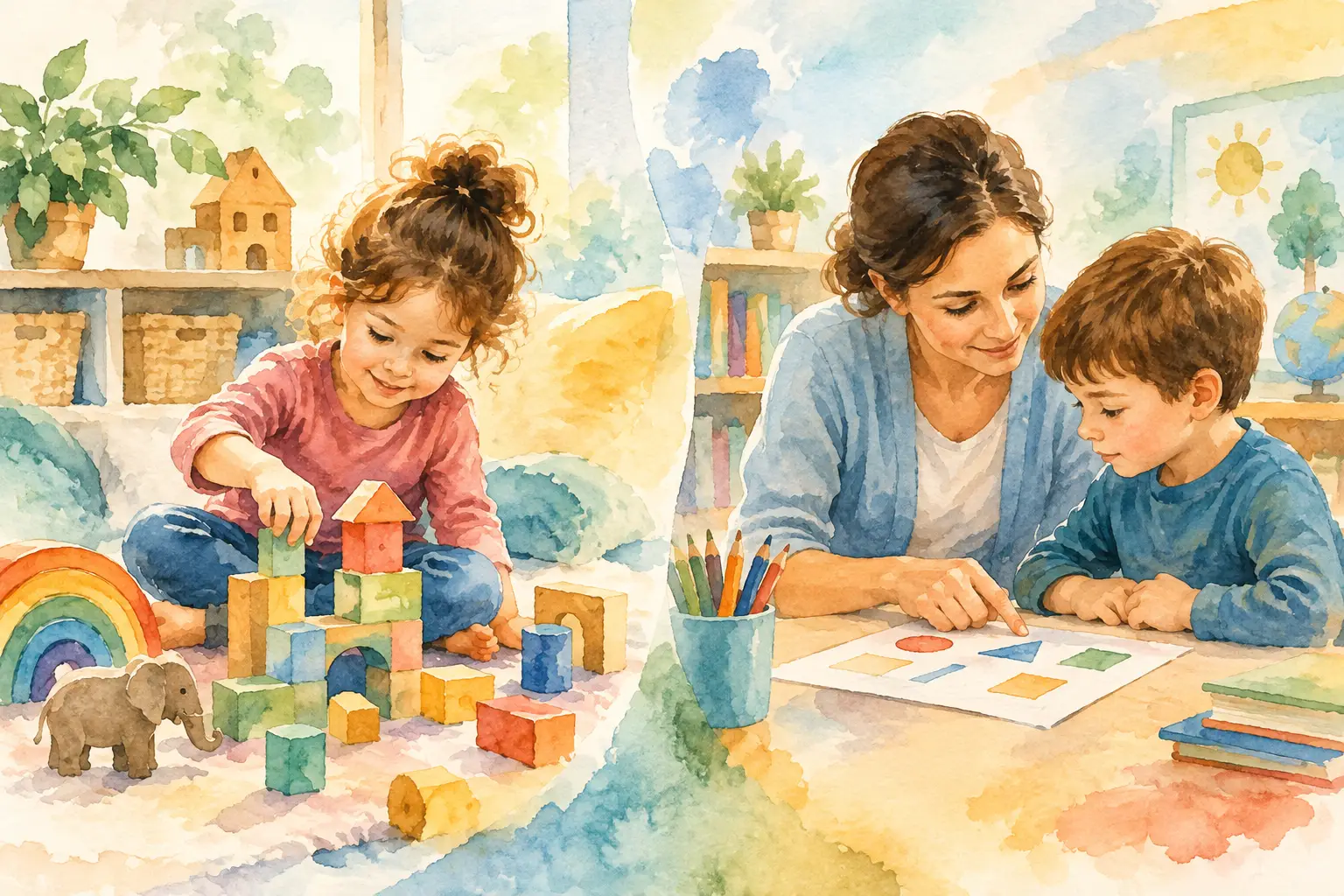
Or picture children building a tower with blocks. A teacher may ask, “What could make the bottom stronger?” That small prompt invites problem-solving. It does not turn play into a quiz or demand one correct answer.
Guided play works because children stay involved. They are not only listening or repeating. They are deciding, trying, changing their minds, and seeing what happens next. Those experiences help learning stick.
The Adult Has a Role, Not the Whole Stage
Guided does not mean hands-off. Children benefit when adults are nearby, interested, and ready to respond. The goal is to follow the child’s lead while keeping a learning purpose in view.
A good guide may model a new word, count objects together, sing a familiar letter sound, or help two children work through a disagreement. Then the adult steps back again. This balance gives children room to feel capable.
For parents and caregivers, this can be reassuring. You do not need a classroom setup or a perfect script. A grocery-store sorting game, a song during cleanup, or a conversation while coloring can all become guided play.
When Lessons Help Children Learn
Lessons are more direct. An adult chooses the skill, explains or models it, and gives the child a chance to practice. For example, a caregiver may show a child how to write the first letter of their name, say the sound it makes, and offer a few minutes to try it.
Direct instruction can be especially useful when a skill is brand new or when a child needs clear support. Letter formation, counting in order, using scissors safely, and learning the steps of a daily routine are all areas where a short lesson can help.
The key word is short. Young children have limited attention for sitting still and listening. A lesson that lasts five focused minutes can be more effective than twenty minutes of correction and frustration.
Lessons also work best when they connect to something the child already cares about. A child who loves trucks may be excited to count wheels. A child who enjoys a favorite song may want to clap the syllables in its words. Interest gives practice a reason.
Lessons Can Become Too Much
Problems arise when every moment becomes a lesson. Children need time to play freely, move their bodies, make noise, invent stories, and even be bored for a little while. Constant adult direction can make learning feel like a performance.
Too many worksheets or drills may also hide what a child actually understands. A child might recite letters on a page but have trouble noticing those same letters in a book, on a sign, or in their own name. Real understanding grows when children can use a skill in different ways.
This does not mean lessons are bad. It means they should be one tool in the toolbox, not the entire toolbox.
Guided Play Versus Lessons: The Real Difference
The biggest difference is who carries the learning experience forward. In a lesson, the adult usually leads the sequence. In guided play, the child’s interest leads the activity, while the adult adds support at the right time.
Neither approach is automatically better. It depends on the child, the skill, and the moment. If a preschooler is excitedly arranging toy animals, guided play may be the perfect setting to practice sorting, counting, and describing. If that same child is frustrated because they cannot recognize the letters in their name, a brief, cheerful lesson may provide the clarity they need.
Think of lessons as giving children tools. Think of guided play as giving them a place to use those tools. A child may learn that the letter B says /b/ during a short activity, then spot B on a book cover, build it with craft sticks, and sing it in a song. That repeated, playful use is where confidence grows.
A Simple Way to Use Both at Home
Families do not need to schedule every learning moment. A natural rhythm often works best: offer a small lesson, then make room for play that lets the child explore it.
After introducing a few colors, invite a child to hunt for those colors around the room. After reading a story about kindness, let stuffed animals act out a problem and solve it together. After practicing a letter sound, ask the child to find objects that begin with that sound.
Music can make this especially easy. A repeated chorus gives children a structure they can remember, while movement, singing, and pretend play let them make it their own. Alphabetical Man’s music and coloring activities can be used this way: begin with a simple letter, word, or positive message, then let children sing, color, talk, and create around it.
Keep your language encouraging. Instead of saying, “No, that is wrong,” try, “Let’s look at that together,” or “You are working hard on that.” Children are more willing to try again when they feel safe making mistakes.
How Educators Can Keep Learning Active
In early learning spaces, direct teaching is often necessary for routines and foundational skills. Children may need clear guidance for washing hands, using materials, or joining a group activity. But those moments do not need to crowd out play.
A teacher can introduce a shape during circle time, then place blocks, paper shapes, and drawing tools in a center for children to explore. The teacher watches for chances to ask questions: “How are these two shapes alike?” “What could you use to make a triangle?” The learning goal stays present, but the children have meaningful choices.
Observation matters here. Some children may be ready to name and compare shapes. Others may still be learning to notice edges and corners. Guided play lets adults meet children where they are without making every child move at the same pace.
It also supports social learning. When children plan a pretend restaurant, build a shared city, or make a group mural, they practice listening, negotiating, and recovering from small setbacks. Those skills deserve as much attention as letters and numbers.
Watch for the Child’s Signals
A child who is deeply focused, asking questions, or eagerly trying again may benefit from a little more challenge. Add one new word, one extra object to count, or one thoughtful question. A child who is turning away, getting silly, or becoming upset may need the activity simplified, changed, or paused.
There is no prize for pushing through a learning activity that has stopped being productive. A snack, a movement break, or free play may be the better next step. Children learn best when they feel seen, not rushed.
The most helpful question is not, “Should we do guided play or lessons?” Ask, “What does this child need right now?” Sometimes the answer is a clear demonstration. Sometimes it is a box of crayons, a favorite song, and an adult willing to listen to the story that follows.