A child with a fresh box of crayons often has a plan before the first color touches the page. They may name the character, tell a story, or proudly show every finished picture to the nearest grown-up. Printed books versus coloring apps is not a question of which choice is always better. It is a question of what your child needs in that moment: a calm hands-on activity, a little creative freedom, a portable option, or a shared learning experience.
For parents, caregivers, and educators, coloring can be more than a way to fill a quiet afternoon. It can support fine motor practice, color recognition, storytelling, focus, and confidence. Both paper books and apps can play a positive role when they are chosen with care and used with purpose.
Printed Books Versus Coloring Apps: What Changes?
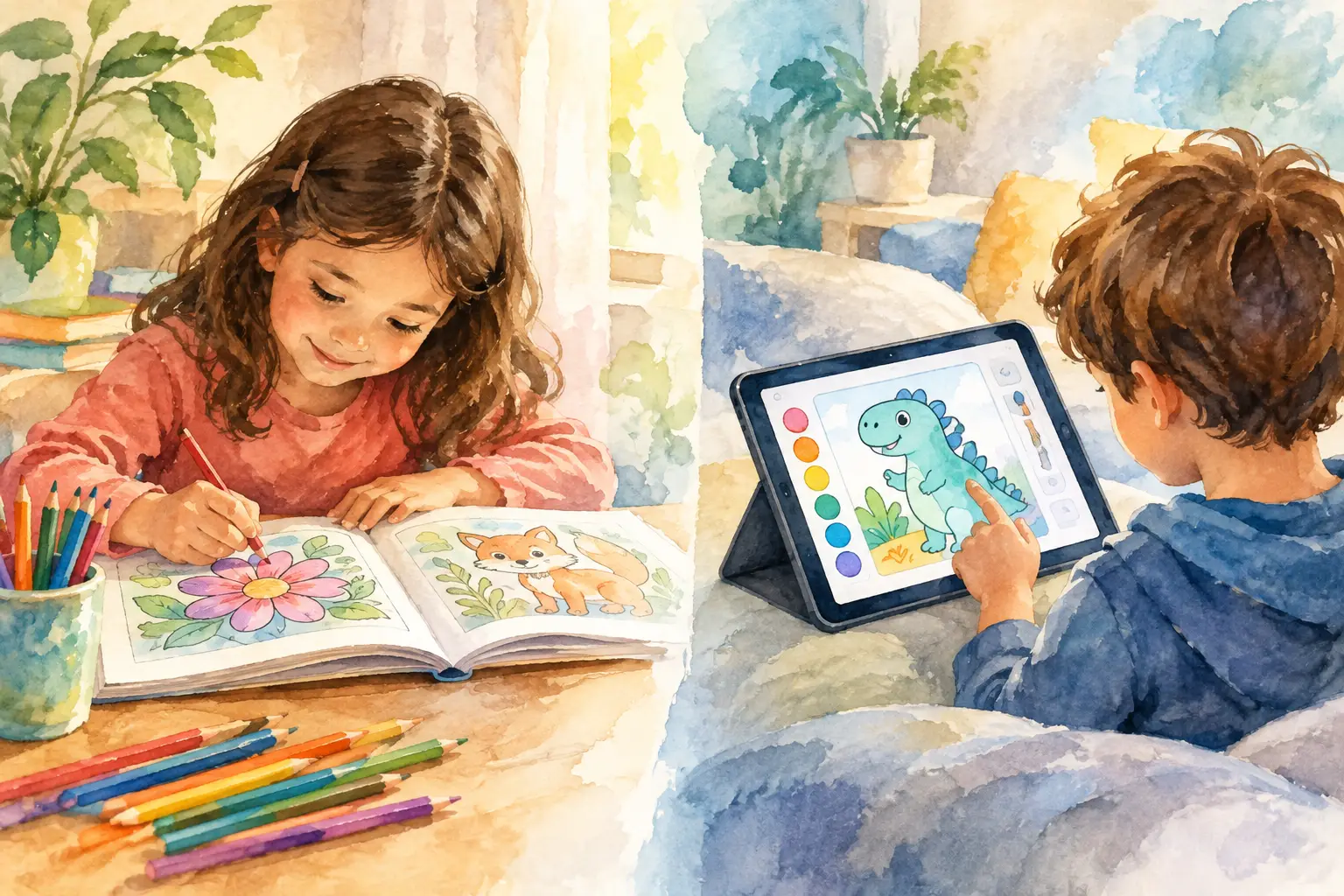
The biggest difference is the experience itself. A printed coloring book puts a child in charge of real materials. They choose a crayon or marker, practice holding it, press lightly or firmly, and see the color build on the page. There is no battery, no notification, and no temptation to tap into another video or game.
Coloring apps offer a different kind of convenience. A child can select colors with a touch, fill large spaces quickly, and start over without worrying about mistakes. Some apps include simple prompts, drawing tools, or animated rewards that can make a child feel excited to keep going.
Neither format automatically creates a meaningful activity. A paper book can become a rushed scribble session, and an app can be thoughtful and creative. The difference comes from the child, the content, and the way adults guide the activity.
Why Printed Coloring Books Still Matter
Printed books give children a full sensory experience. Crayons feel different from colored pencils. Markers make bold lines. Paper can be smooth, thick, or textured. These small details help young children learn through their hands while they create.
For toddlers and early learners, coloring on paper also builds skills that screens cannot fully copy. Turning pages, choosing tools, staying within a simple shape, and making marks in different directions all support hand strength and coordination. Those skills can help with later tasks such as writing letters, using scissors, and fastening buttons.
Paper also makes room for a slower pace. A child can pause to talk about a picture, invent a superhero name, or ask why a character is helping a friend. That conversation matters. When a caregiver sits nearby and joins in, coloring becomes a chance to build language and connection, not just complete a page.
A printed book can also become something a child owns. Finished pages can go on the refrigerator, into a folder, or in a card for a grandparent. Looking back at older pages helps children see their progress. A wobbly first attempt is not a failure. It is proof that they are learning.
There are trade-offs, of course. Paper books need supplies, and supplies can make a mess. Pages run out. Younger children may press too hard, color on the table, or lose interest after a few minutes. These are normal parts of learning, especially when the space is set up for success with washable materials and an easy-to-clean surface.
When Coloring Apps Can Be a Helpful Choice
Coloring apps can be useful when paper and supplies are not practical. They travel easily in a waiting room, on a long car ride, or during a quiet moment away from home. For a child who gets discouraged by coloring outside the lines, tap-to-fill features can offer an encouraging start.
Apps may also be more accessible for some children. A child with limited hand control may find tapping or dragging easier than gripping a pencil. Adjustable colors, large images, and simple menus can make creative play feel more welcoming. The best choice is the one that lets a child participate with pride.
Still, not all coloring apps are made for young children. Some are crowded with ads, purchases, fast-moving rewards, or links that lead children away from the activity. Others use so much animation that the coloring becomes secondary. Before handing over a device, adults should try the app first and check what appears on screen.
A good app for children is simple, age-appropriate, and easy to leave. It does not pressure a child to keep clicking, buying, or watching. If an app makes it difficult to stop, it may not be the calm creative tool your family hoped for.
Choosing the Right Option for the Moment
A helpful question is not, “Should my child use paper or an app?” Try asking, “What do we want coloring time to do today?”
If the goal is fine motor practice, a printed book and real coloring tools are usually the stronger fit. If the goal is a quick, quiet activity while traveling, a carefully chosen app may be practical. If the goal is family connection, paper often makes it easier for everyone to sit together and talk. If a child needs a confidence boost after feeling frustrated with drawing, an app’s undo button can reduce pressure.
Age matters, too. Toddlers usually benefit most from short, hands-on coloring sessions with thick crayons and large, clear pictures. Elementary-age children may enjoy more detailed pages, mixing materials, and making their own stories. They can also begin to understand basic screen-time boundaries and help choose when an app is appropriate.
Content matters just as much as format. Positive characters, kind actions, familiar letters, and cheerful scenes can give children ideas to talk about while they color. A page featuring a helpful hero, a musical moment, or friends working together can turn creativity into a gentle lesson about character. That is part of the fun behind family-friendly art activities like those from Alphabetical Man.
Build a Balanced Coloring Routine
Children do not need an all-or-nothing rule. Many families can use both printed books and coloring apps without making either one the center of the day. A simple routine makes the choice feel intentional instead of automatic.
Keep printed coloring supplies easy to reach, but not so scattered that setup feels like a chore. A small box with crayons, washable markers, blank paper, and a few favorite books invites children to create when they have the urge. Save digital coloring for specific situations, such as travel or a planned short activity, rather than using it as the default whenever a child is bored.
When your child colors on paper, resist the urge to correct every color choice. A purple dog, green sun, or striped face may be exactly what the child imagined. You can encourage their thinking with simple questions: “Tell me about this part,” or “What is your character doing?” This supports language without taking over the picture.
When your child uses an app, stay nearby when possible. Ask the same kinds of questions, and help them notice when it is time to stop. A calm ending can be as simple as finishing one picture, saving it if desired, and moving on to a snack, a song, or outdoor play.
Creativity Is Bigger Than the Screen or Page
The best coloring activity is one that leaves a child feeling capable, calm, and ready to share what they made. Printed books offer tactile learning, independence, and a keepsake. Coloring apps offer convenience, flexibility, and a low-pressure way to experiment. Both can support creativity when the content is safe and the time is balanced.
Offer your child a page, a few colors, and room to make it their own. The picture may not look like the one you would create, but the pride on their face will tell you it is exactly right.