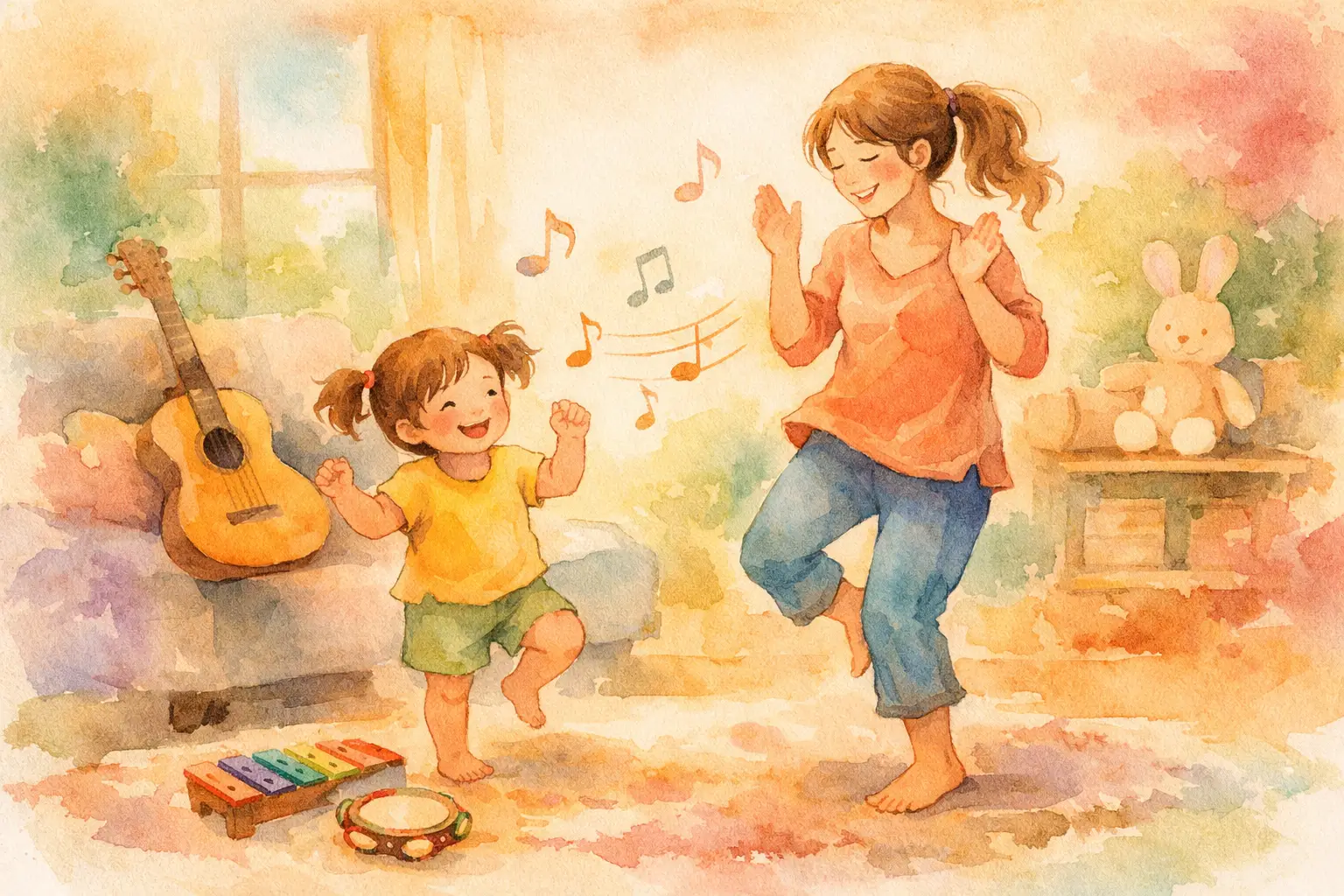
A child who is tapping, stomping, and singing is doing more than burning energy. They are listening closely. When you teach rhyming through movement songs, children can feel the beat, hear matching word endings, and join in before they are ready to explain what a rhyme is. That makes rhyme time feel like play instead of a lesson.
For toddlers, preschoolers, and early elementary learners, movement gives music a job to do. A clap can mark a matching sound. A jump can celebrate a rhyme. A superhero pose can help a child remember a favorite word pair. The goal is not perfect singing or sitting still. The goal is helping children notice that words can sound alike.
Why rhyme and movement belong together
Rhyming is an early literacy skill. It helps children listen for sounds in words, which supports later reading and spelling. But hearing the difference between cat and cap, or noticing that sun and fun match, can take practice. Young children learn best when that practice is active, cheerful, and repeated.
Movement adds a clear signal. If children clap every time they hear a rhyme, they are not only listening – they are showing what they heard. That immediate response helps parents and educators see when a child understands and when they may need another example.
Songs also make repetition easier. A child may not want to say the same word pair five times at a table. They may happily sing it five times while marching around the room. Familiar music creates a safe pattern, and children can focus on the sounds inside the words.
How to teach rhyming through movement songs
Start with two words that clearly rhyme. Keep them simple and familiar: hat and cat, dog and frog, bee and tree. Say the first word, then the second, with a small pause between them. Ask children to do a movement when the words sound alike.
For example, sing a short line to any easy, steady beat: “Cat and hat, clap-clap-clap.” Then repeat it. The next time, offer a pair that does not rhyme: “Cat and car, freeze right where you are.” Children clap for rhymes and freeze for words that do not match.
At first, let the movement rule stay the same for several rounds. Switching directions too quickly can turn a listening game into a memory test. Once children understand the idea, change it up. They can stomp for rhymes, touch their toes for non-rhymes, or march in place while they wait for the answer.
Keep the song short and repeatable
You do not need a long song or a polished performance. A four-line chant is plenty. Use the same tune each time, then change only the rhyming words. Predictability helps children participate with confidence.
Try this call-and-response pattern:
Teacher or caregiver: “I say cake.”
Children: “You say snake!”
Everyone: “Cake and snake rhyme – wiggle and shake!”
Repeat with boat and goat, star and car, or light and kite. Let children suggest the second word when they are ready. If a child offers a silly answer, celebrate the idea and gently model a rhyming word afterward. Playful mistakes are part of learning.
Let the body show the sound
Choose motions children can do safely in a small space. Clapping, knee pats, side steps, arm circles, and pretend flying work well. Big movements can make a song exciting, but they are not always best for every group. A classroom with limited room may need seated motions. A child with mobility differences may prefer hand signals, eye blinks, drum taps, or pointing to picture cards.
The important part is that each movement has meaning. If a rhyme gets a jump, keep using the jump long enough for children to connect the action to the sound. The movement should support listening, not compete with it.
Movement song ideas for everyday rhyme practice
Rhyme-and-freeze
Play music or sing a steady beat while children march. Call out word pairs one at a time. When the pair rhymes, children keep marching. When it does not rhyme, they freeze in a silly pose.
Start with obvious pairs such as mouse-house and book-look. Then add near-matches like ball-bell. Near-matches are useful because they help children learn that rhymes need the same ending sound, not simply words that sound somewhat alike. Keep the mood light. A dramatic freeze is often more memorable than a correction.
Pass the superhero sound
Have children stand or sit in a circle. One child makes a simple superhero pose and says a word, such as moon. The next child repeats moon, adds a rhyming word like spoon, and passes the pose along. If they cannot think of a rhyme, offer two choices: spoon or sock? This keeps the game moving without putting anyone on the spot.
A character-based approach can be especially helpful for reluctant learners. Children may feel more comfortable pretending they are sound-saving heroes than answering a question in front of the group. Alphabetical Man can be a fun inspiration for turning listening practice into a positive mission: hear the rhyme, make the move, help the team.
Action rhyme hunt
Place a few picture cards or household objects around the room. Sing a simple direction: “Find something that rhymes with chair.” Children move to a bear picture, a pair of socks, or another prepared match. Once they find it, everyone performs an action together.
This activity works best with visual clues, especially for children who are still building vocabulary. It also gives caregivers an easy way to reuse familiar toys, books, or drawings. You do not need special materials. A quick sketch of a fish, dish, and wish can begin a lively game.
Make room for different ages and needs
The right level depends on the child. Toddlers may simply copy a clap after hearing matching words. Preschoolers can decide whether two words rhyme. Kindergarten and early elementary children can supply their own rhyming words and notice when a word is close but not quite right.
Do not rush into harder word families just because a child knows the game. Success builds attention. If children are getting every answer right and still enjoying it, add a challenge. If they are guessing, return to clearer pairs and use pictures or gestures.
Some children may focus more on moving than listening. In that case, make the motions smaller and the song slower. Others may need more energy to stay engaged, so add marching or a musical stop-and-go game. It depends on the group, the space, and the time of day. A two-minute rhyme song after breakfast can work beautifully, while the same activity before naptime may need calm hand motions instead.
Help children carry rhymes beyond the song
The best rhyming songs leave little sound echoes throughout the day. At snack time, ask whether pear and bear rhyme. During cleanup, sing about putting a block in a sock, then laugh together at the silly picture. On a walk, listen for words that rhyme with tree, sky, or road.
There is no need to turn every moment into a quiz. Offer rhymes naturally, pause for a response, and move on. Children learn that sounds are everywhere when adults make room for playful noticing.
A simple song, a steady beat, and one joyful movement can give a child a reason to listen again. Keep the words familiar, the expectations kind, and the celebration bigger than the correction. When children feel proud of hearing a rhyme, they will be ready to chase the next one.