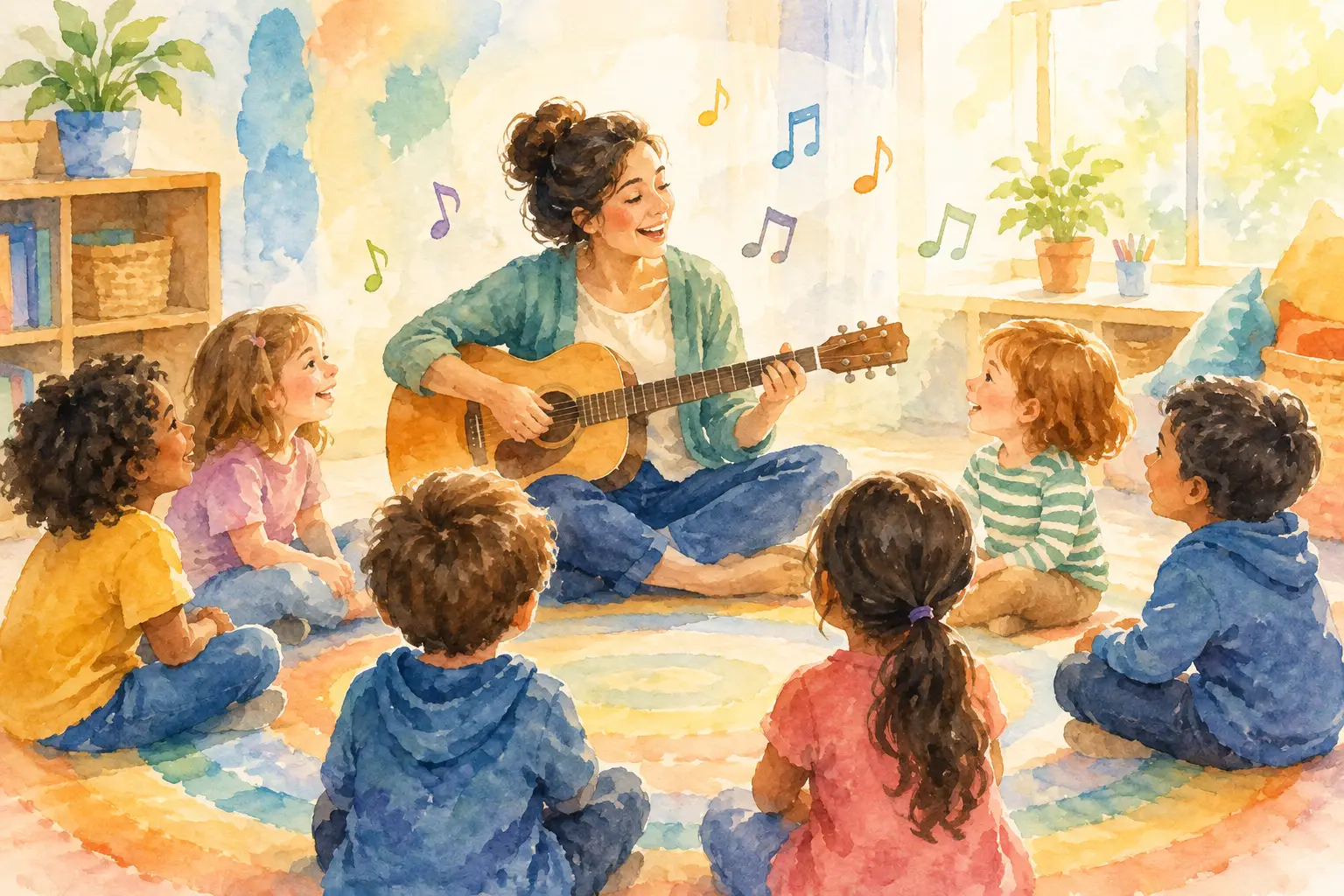
One minute the room is full of blocks, crayons, and big feelings. The next minute you need everyone washed up, lined up, or sitting for circle time. That is exactly why the best preschool songs for transitions matter so much. A simple song can turn a hard stop into a smoother shift, giving children a clear cue, a steady rhythm, and a sense of what comes next.
For preschoolers, transitions are not small moments. They are often the toughest part of the day. Young children are busy, deeply focused, and still learning how to switch gears. When a grown-up suddenly says, “Time to clean up,” it can feel abrupt. Music softens that moment. It adds predictability, lowers stress, and gives children something active to do while they move from one task to another.
Why the best preschool songs for transitions work
Songs work because they give children more than instructions. They give structure. A spoken direction can disappear quickly, especially in a noisy room. A song repeats, sets a pace, and invites participation. Even children who are not ready to follow a long verbal prompt can often join a tune, copy motions, or respond to a familiar phrase.
There is also a strong emotional piece. Preschoolers thrive on routines, and songs become part of that routine. When the same cleanup song plays every day, children begin to connect it with a specific action. Over time, the song itself becomes the cue. That helps reduce power struggles because the music feels less personal than constant adult correction.
Still, not every song works for every class or home. Some children respond well to upbeat music that gets them moving. Others need a softer tempo, especially before nap, story time, or a quiet reset. The best choice depends on the group, the time of day, and the energy in the room.
12 best preschool songs for transitions to use all day
A strong transition song is short, easy to repeat, and tied to one clear purpose. These songs and song styles tend to work especially well in preschool settings.
1. A cleanup song
A cleanup song is the classic for a reason. It gives children one job and a rhythm to follow while they do it. The best cleanup songs are cheerful without being too fast. You want enough energy to motivate, but not so much that the room turns into a dance party instead of a tidying routine.
If cleanup tends to drag on, sing the same song twice and let children know the task ends when the song ends. That creates a gentle boundary. It also helps children build a sense of timing.
2. A line-up song
Lining up can become a bottleneck fast. A line-up song gives children something to focus on instead of bumping, chatting loudly, or racing for first place. Good line-up songs often include directions like standing tall, keeping hands to self, or walking feet only.
The most effective ones are calm and steady. If the tune is too exciting, the line usually gets wigglier, not smoother.
3. A hand-washing song
Hand washing is easier when the song lasts about as long as the routine. That helps children stay engaged long enough to finish the job. A simple repeated verse can guide them through turning on water, using soap, scrubbing, rinsing, and drying.
This is one place where practical songs really shine. Children are not just transitioning to the next activity. They are also learning the steps of self-care.
4. A circle time song
A circle time song helps gather attention and signal that the group is coming together. It can include greetings, clapping, or simple motions. Songs like this work best when they feel welcoming rather than demanding.
For children arriving with different moods and energy levels, a circle time song creates a shared starting point. It tells everyone, “We are here, and we are doing this together.”
5. A sit-down song
Sometimes the transition is not between two rooms or activities. Sometimes it is simply moving from active bodies to ready-to-listen bodies. A sit-down song can help children find their spot, cross their legs, take a breath, and look up.
This kind of song is especially useful after outdoor play or free choice time. It bridges the gap between movement and attention.
6. A walking song
A walking song is helpful when children need to move through hallways, head to the playground, or switch spaces without chaos. The beat should match the pace you want. Too fast, and children may rush. Too slow, and the group can lose momentum.
A steady walking song can also reinforce safety habits in a positive way. Instead of repeating “Don’t run,” you are giving children a better behavior to copy.
7. A snack time song
Snack transitions go better when children know the order of events. A short song before snack can cue washing hands, finding a seat, and getting ready to eat. It also creates a calm pause before the table fills with movement and requests.
For some groups, this is a good place to include gratitude, manners, or community language. Keep it simple and warm.
8. A bathroom break song
Bathroom transitions can feel scattered, especially in larger groups. A bathroom song helps normalize the routine and reduces the sense of interruption. It can be playful, but it should still support calm and order.
This is a good example of a song that does not need to be fancy. Familiarity matters more than performance.
9. A rest time song
Rest time songs should feel noticeably different from the more active songs in the day. Slower tempo, softer singing, and repetitive phrases help children settle. Some teachers use the same melody every day so children start relaxing as soon as they hear the first line.
Not every child will fall asleep, of course. But a restful song can still lower the room’s energy and make quiet time more manageable.
10. A goodbye song
A goodbye song helps close the day with warmth and consistency. For children, endings matter. A familiar farewell song can make pickup feel secure and positive, especially for those who struggle with change.
It is also a sweet way to reinforce names, friendships, and the idea that the group will come back together again.
11. A feelings reset song
Some transitions are hard because emotions are running high. A feelings reset song can help when children need to pause, breathe, and regroup before moving on. These songs often include deep breathing, stretching, or simple phrases about calming down.
This kind of song is not just about classroom management. It supports emotional growth, too.
12. A movement break song
Sometimes the best way to transition is not to quiet children immediately but to help them release energy first. A quick movement song with jumping, marching, or stretching can reset the group before a quieter activity.
This works well when children have been sitting too long or when the room feels restless. The key is choosing a song with a clear ending, so the movement break does not take over the schedule.
How to choose the best preschool songs for transitions
The best songs are not always the most popular ones. They are the ones children can learn quickly and connect with a specific routine. If the lyrics are too long or the melody is too complicated, the song may entertain without actually helping the transition.
It also helps to match the song to the goal. For cleanup, use something active and direct. For rest time, choose a gentler sound. For lining up, stick with a steady beat and very clear expectations. One size rarely fits every part of the day.
Think about your group, too. Some children respond better to call-and-response songs because they get to answer back. Others do well with songs that include hand motions or visual cues. If you teach a mixed-age group, shorter songs often work better because the youngest children can join in sooner.
And keep volume in mind. Louder is not always better. A quiet, familiar song can sometimes calm a room faster than a high-energy one.
What makes a transition song stick
Repetition is a big part of success. If you change songs every few days, children have to relearn the cue each time. That can be fun once in a while, but consistency usually matters more than variety when you want smooth routines.
Delivery matters, too. A song works best when it starts before the room gets fully off track. If adults wait until children are already upset, shouting, or scattered, even a great song may struggle to bring everyone back. The cue needs to come early enough to guide the shift.
Simple motions can help the song stick even more. Patting knees, tapping shoulders, pretending to pick up toys, or walking in place gives children another way to join. Music plus movement is often easier for preschoolers than words alone.
When songs do not help right away
Sometimes a transition song does not click, and that is normal. It may be too long, too stimulating, or not clear enough for the task. It may also be that the transition itself needs adjustment. If children are always melting down before lunch, the issue may be hunger or timing as much as the song.
In those cases, it helps to look at the whole routine. Shorter activities, better visual cues, and more advance warning can make the music more effective. Songs are powerful, but they work best as part of a predictable, child-friendly flow.
For families at home, the same idea applies. You do not need a full classroom routine to use transition songs. A cleanup song before dinner, a hand-washing song after play, or a bedtime wind-down song can make everyday moments feel steadier and more connected. If you want to keep learning playful and positive, even one familiar song can feel a little heroic – something Alphabetical Man understands well.
The real goal is not perfect silence or instant compliance. It is helping children move through their day with more confidence, more joy, and a little less stress.