A child who avoids reading is not necessarily a child who dislikes stories. They may be tired from a long school day, unsure about a tricky word, or worried about making a mistake in front of someone else. Learning how to engage reluctant young readers starts with lowering the pressure and making room for curiosity, play, and small wins.
For young children, reading should feel like an invitation, not a test. A superhero who loves letters, a silly song, a bright picture, or a chance to choose the book can be enough to turn “no” into “maybe.” The goal is not to force a child through more pages. It is to help them see themselves as someone who belongs in the world of books.
How to engage reluctant young readers without pressure
When a child says they do not want to read, it helps to listen before trying to solve the problem. “Reading is boring” can mean many things. Maybe the book feels too hard. Maybe the child would rather move than sit still. Maybe they have not found a topic that feels connected to their own life.
Instead of correcting the feeling, name it with kindness. You might say, “That book did feel like a lot of words. Let’s find something that fits better.” This lets children know that reading challenges are normal, and that they do not have to struggle alone.
Keep early reading time short. Five enjoyable minutes can do more for confidence than twenty frustrated minutes. Stop while the child is still interested when you can. Ending on a laugh, a favorite page, or a successful word makes it easier to come back tomorrow.
It also helps to separate reading from performance. Not every reading moment needs a question, a worksheet, or a correction. Sometimes the best response to a page is simply, “I liked that part too.” Children are more likely to take risks with words when they know they will not be judged for every stumble.
Start with the child, not the reading level
Reading levels can be useful guides, but they are not a child’s identity. A book that is technically easy may feel babyish. A book that is challenging may be worth sharing because the topic is exciting. Interest is often the bridge that keeps a reluctant reader involved long enough to grow.
Offer choices that match what your child already enjoys. A child who loves trucks may be more willing to read a picture book about construction than a classic story chosen by an adult. A child who enjoys animals, superheroes, jokes, sports, space, cooking, or helping others deserves books that reflect those interests.
Choice can be small and still powerful. Let your child choose between two books, pick the reading spot, hold the flashlight, turn the pages, or decide which character gets a funny voice. These choices give children a little ownership without making the routine complicated.
Graphic novels, comic books, joke books, magazines, song lyrics, and illustrated nonfiction all count as reading. So do labels on a recipe, a sign at the park, and a child’s own name written on a drawing. When adults treat these experiences as real reading, children begin to notice that words are useful everywhere.
Let pictures do some of the work
Picture books are not only for children who cannot read independently. Rich illustrations give young readers clues about what is happening, help them predict what comes next, and create chances to tell the story in their own words.
Before reading the text, try taking a picture walk. Ask, “What do you notice?” or “What do you think this character is feeling?” There is no need to turn every page into a quiz. A few relaxed observations build comprehension and show children that they already have something valuable to bring to a book.
Bring reading to life with sound, movement, and color
Some children learn best when reading reaches beyond the page. They may remember letters through a song, understand a story by acting it out, or stay focused longer when their hands have something to do. This is not a distraction from literacy. It can be the path into literacy.
Music is especially helpful for early learners because rhythm makes language easier to remember. Clap out syllables in a child’s name. Sing the alphabet in different voices. Make up a short chant for a new word. When words have a beat, they can feel less mysterious.
A family-friendly character can also give learning a playful purpose. Alphabetical Man, for example, uses a superhero-style identity to make letters, music, and positive messages feel like an adventure. Whether your child connects with a favorite character or one you create together, pretend play can make reading feel active instead of assigned.
Coloring is another gentle reading companion. After a story, invite a child to color a favorite scene, draw a new ending, or make a picture of a word that stood out. As they explain their drawing, write down their words and read them back together. This shows that their ideas can become text too.
Movement works well for children who find sitting still difficult. Put letter cards around the room and ask your child to hop to the first letter of a word. Act out verbs from a story. March while saying a simple rhyme. The activity does not need to last long. A few minutes of movement can reset attention and make the next page easier.
Read together in ways that feel safe
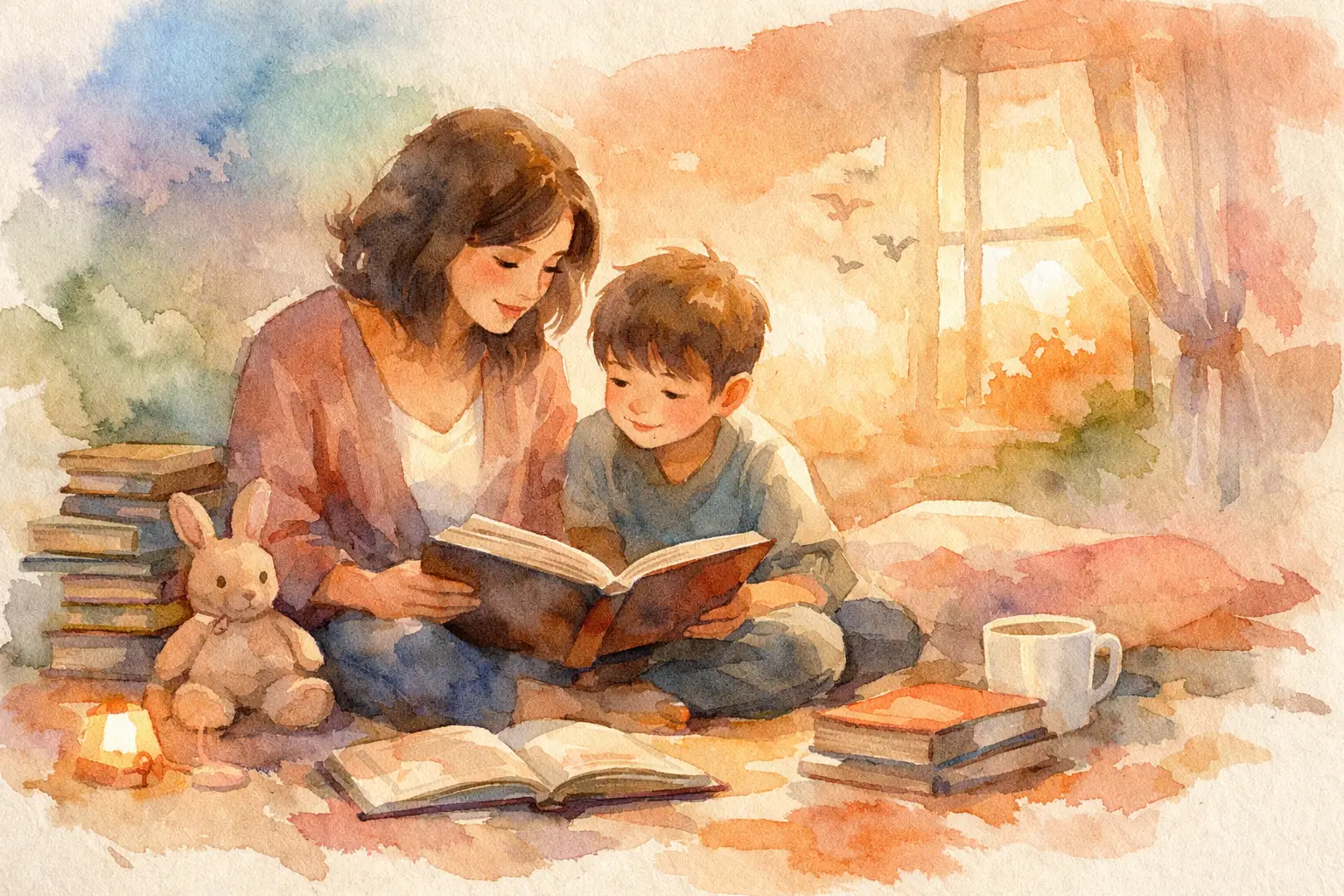
Shared reading lets a child participate without carrying the whole task. You can read most of the book and pause for a repeated phrase. Let your child fill in a familiar rhyme, sound effect, or character name. Over time, those tiny moments become evidence that they can read.
Try echo reading with a short sentence. You read it first with expression, then invite your child to read it after you. If they prefer, they can whisper it, read it with a puppet, or let a stuffed animal “read” with them. The point is practice, not perfection.
For books that feel a little difficult, take turns by page or by paragraph. You can read the harder parts while your child reads dialogue, captions, or repeated words. This keeps the story moving and prevents one challenging word from stopping the whole experience.
If your child guesses a word from the picture or context, celebrate the thinking before offering help. You might say, “You noticed the dog was running, and that helped you figure it out.” Then, if needed, gently point to the letters. Confidence grows when children learn that reading is about making meaning, not only sounding out every word perfectly.
Build a routine that can survive real family life
A reading routine does not need a perfect nook, a long book list, or an hour of quiet. It needs a repeatable moment. For one family, that may be ten minutes after dinner. For another, it may be a book in the car before an activity or a bedtime story with the lights low.
Keep a few books where your child can reach them: beside the couch, in a small basket, or near their bed. Rotate choices occasionally so familiar books do not disappear, but new possibilities are always nearby. Re-reading is valuable. Children often return to favorite books because familiarity lets them notice words and details they missed before.
Adults matter here, too. Let children see you read something for enjoyment, whether it is a book, recipe, newspaper, or instructions for a project. Say out loud when you find a funny phrase or learn something new. This sends a simple message: reading is not just schoolwork. It is something people use and enjoy throughout life.
Avoid using reading as a punishment or taking it away as a consequence. Those approaches can make books feel like tools of control. Reading grows best when it is connected to comfort, connection, laughter, and discovery.
Notice progress that does not fit on a checklist
A reluctant reader may make progress before it looks like independent reading. They may bring you a book, ask what a word says, sing part of a rhyme, retell a story, or pretend to read to a younger sibling. These are meaningful signs that the child is building a relationship with language.
Praise the specific effort you see. “You kept trying that word,” feels more helpful than a broad “Good job.” “You remembered what happened on the last page,” tells a child that their attention and memory matter. Specific encouragement helps children understand what they are doing well.
If reading remains unusually difficult or stressful, talk with your child’s teacher or a reading specialist. Some children need extra support with decoding, vision, attention, language, or confidence. Early support is not a label or a failure. It is another way to give a child the tools they deserve.
The most helpful thing you can offer is a steady message: stories are for you, words are learnable, and we can take this one page at a time. When reading is wrapped in patience, music, color, and connection, even a hesitant child can find a reason to turn the next page.